Bitcoin Cash-Out Calculator
Select how you want to receive the funds:
ACH Transfer
Low FeeWire Transfer
High FeeDebit Card
Moderate FeePeer-to-Peer
VariableEstimated Results
You’ve watched the charts, you’ve held your breath through the volatility, and finally, the price hits your target. You want that money in your pocket. But can you actually cash out Bitcoin right away? The short answer is: it depends on where your coins are sitting and how you choose to move them. While selling the asset itself takes seconds, getting fiat currency into your usable bank account can take anywhere from minutes to five business days.
This gap between "sold" and "spent" is where most new investors get frustrated. Understanding the mechanics of this process prevents panic when the numbers don't appear instantly. Let’s break down exactly what happens when you hit that sell button, why delays occur, and how to speed up the process if you need liquidity fast.
The Difference Between Selling and Withdrawing
To understand the timeline, you first need to separate two distinct actions: selling the cryptocurrency and withdrawing the resulting fiat currency. When you click "Sell" on an exchange like Coinbase or Binance, the transaction settles almost instantly on their internal ledger. Your Bitcoin balance drops, and your USD, AUD, or EUR balance rises within seconds. Technically, you have cashed out of the crypto market at that moment.
However, that digital balance isn’t spendable yet. It sits inside the exchange’s ecosystem. To use that money for rent, groceries, or investments elsewhere, you must initiate a withdrawal to your external bank account. This second step is where the real clock starts ticking. Exchanges treat these withdrawals as high-security financial events, subjecting them to verification checks, network confirmations, and banking protocols that slow things down intentionally.
How Fast Is Instant Crypto-to-Crypto Exchange?
If you don’t strictly need fiat currency (like dollars or pounds) but just want to exit Bitcoin quickly, swapping for stablecoins is the fastest route. Platforms allow you to trade Bitcoin for USDT, USDC, or DAI in under ten seconds. These stablecoins peg their value to the US dollar, so while they aren’t legal tender, they preserve your purchasing power without exposure to further Bitcoin volatility.
This method is ideal if you plan to move funds to another platform or keep them in a digital wallet for online payments. However, remember that holding stablecoins carries its own risks, such as de-pegging events or platform insolvency. For true "cash in hand," you still eventually need to bridge back to the traditional banking system, which reintroduces the delay factors we’ll discuss next.
Bank Transfer Timelines: ACH vs. Wire vs. SEPA
The speed of your withdrawal heavily depends on the payment rail you select. Different regions and banks support different systems, each with unique processing times.
| Method | Typical Timeframe | Cost | Best For |
|---|---|---|---|
| ACH (US) | 1-3 Business Days | Low ($0-$1) | Non-urgent, large amounts |
| Wire Transfer | Same Day - 1 Business Day | High ($15-$50+) | Urgent needs, international transfers |
| SEPA (Europe) | 1-2 Business Days | Low/Free | Eurozone users |
| Debit Card Cash Out | Minutes - 1 Hour | Moderate (1.5%-3.9%) | Small, immediate purchases |
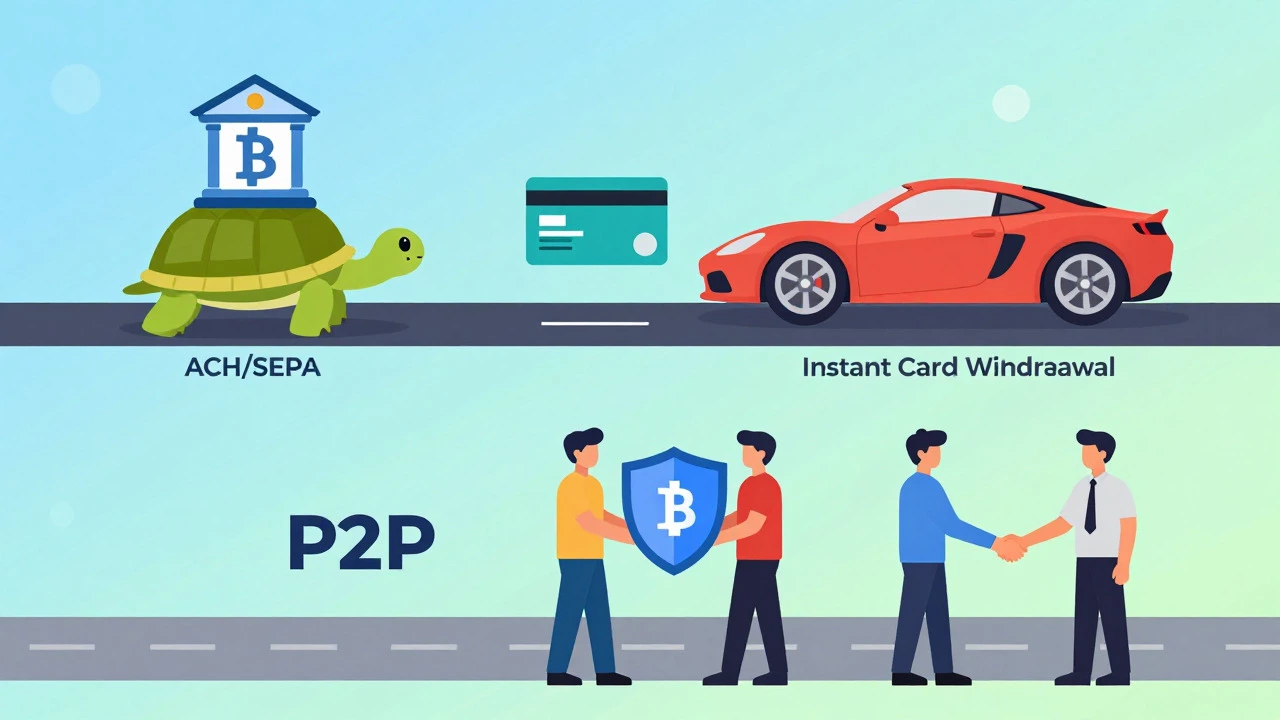
In the United States, ACH transfers are the standard. They are cheap but slow because they batch-process transactions overnight. If you withdraw on Friday afternoon, the money might not arrive until Tuesday. Wire transfers cut through this bureaucracy by moving funds directly between banks in real-time, but exchanges often charge steep fees for this convenience. In Europe, SEPA Instant Credit Transfers are becoming more common, allowing same-day settlement for smaller amounts, though traditional SEPA still lags behind.
Using Debit Cards for Immediate Liquidity
If you need money in your hand today, linking a Visa or Mastercard debit card to your exchange account is the most reliable shortcut. Many major platforms offer a "Cash Out to Card" feature. Once you sell your Bitcoin, you can push the funds to your linked card. The money typically appears in your available balance within minutes, sometimes even instantly.
The trade-off here is cost. Exchanges view card withdrawals as higher-risk due to chargeback possibilities, so they slap on fees ranging from 1.5% to nearly 4%. For a $1,000 withdrawal, you might lose $20-$40 in fees. It’s expensive, but if you’re paying for an emergency repair or a time-sensitive opportunity, the premium is worth it. Just ensure your bank allows incoming transfers from third-party payment processors, as some conservative institutions flag these deposits for review.
Peer-to-Peer Trading: Bypassing the Bank Delay
Another way to bypass standard banking hours is Peer-to-Peer (P2P) trading. Platforms like LocalBitcoins (now localcryptos), Paxful, or the P2P sections of Binance connect buyers and sellers directly. You create a sell order, a buyer pays you via PayPal, Zelle, Venmo, or even cash pickup, and the platform holds your Bitcoin in escrow until payment is confirmed.
This method can be incredibly fast-often completing within 15 minutes. However, it introduces counterparty risk. What if the buyer sends fake proof of payment? Or worse, what if they pay but then dispute the transaction with their bank? Reputable P2P platforms mitigate this with escrow services, but you must follow their rules strictly: never release the crypto until the funds are visible in your actual bank app, not just a screenshot. P2P is excellent for avoiding exchange withdrawal limits but requires more vigilance.
Why Do Exchanges Hold Your Funds?
It’s not always about technology; sometimes it’s about security. Exchanges implement "cooling-off" periods or manual reviews for several reasons:
- New Account Verification: If you haven’t completed full KYC (Know Your Customer) checks, including uploading ID and proof of address, withdrawals will be paused until verified. This can take 24-48 hours.
- Large Transaction Flags: Sudden large withdrawals trigger anti-money laundering (AML) algorithms. The exchange may freeze the transaction to ensure the source of funds is clean.
- Network Congestion: If you are withdrawing Bitcoin directly to a personal wallet rather than selling for fiat, you are at the mercy of the Bitcoin network. During peak times, miners prioritize transactions with higher fees. Low-fee transactions can sit unconfirmed for hours or even days.
- Weekend Delays: Banks operate on business days. Even if the exchange processes your request instantly on Saturday night, the receiving bank won’t touch it until Monday morning.
Tax Implications of Cashing Out
Cashing out isn’t just a logistical hurdle; it’s a taxable event. In most jurisdictions, including the US, Australia, and much of Europe, selling Bitcoin for fiat triggers Capital Gains Tax. The moment you convert BTC to USD, the IRS or local tax authority considers that income. You must report the gain or loss based on the difference between your purchase price (cost basis) and the sale price.
Don’t assume the exchange handles this for you. While some platforms provide tax reports, they rarely calculate the exact liability. Keep records of every transaction date, amount, and fee. Using software like CoinTracker or Koinly can automate this, but human oversight is crucial. Failing to report crypto gains can lead to significant penalties later, especially as tax authorities increasingly integrate blockchain analytics tools to track unreported activity.
Strategies to Speed Up Future Withdrawals
If you anticipate needing quick access to your funds, preparation is key. Here’s how to optimize your setup:
- Complete Full KYC Early: Don’t wait until you need to sell. Verify your identity immediately after signing up. Upload clear photos of your ID and proof of address.
- Link Multiple Payment Methods: Connect both a bank account for low-fee withdrawals and a debit card for emergencies. Having options gives you flexibility.
- Use Trusted Exchanges: Stick to regulated, well-known platforms like Coinbase, Kraken, or Binance. Smaller, obscure exchanges often have slower support teams and less robust banking partnerships.
- Avoid Weekend Withdrawals: If possible, schedule sales and withdrawals during weekday business hours (9 AM - 4 PM local time). This ensures bank staff are available to process any manual checks.
- Keep Small Amounts Liquid: Maintain a small portion of your portfolio in stablecoins or fiat on the exchange itself. This acts as a buffer for urgent needs without triggering long withdrawal queues.
Common Pitfalls to Avoid
Many users make costly mistakes when rushing to cash out. One common error is sending Bitcoin to a centralized exchange deposit address instead of using the internal "Sell" function. If you send BTC to an exchange, you still have to wait for network confirmations (usually 1-6 blocks, taking 10-60 minutes) before you can sell it. Then, you face the bank withdrawal delay again. Always sell internally if the coins are already on the platform.
Another pitfall is ignoring withdrawal limits. Free accounts often have monthly caps on how much fiat you can withdraw. If you exceed this, you might be forced to upgrade your account tier, which involves additional verification steps. Check your limit status before initiating a large sale.
Finally, beware of scams targeting anxious sellers. If someone contacts you offering to buy your Bitcoin for a premium via direct transfer, it’s likely a fraud. Stick to the official exchange interfaces or reputable P2P platforms with escrow protection.
How long does it take to cash out Bitcoin to a bank account?
It typically takes 1 to 3 business days for ACH transfers in the US, 1 to 2 days for SEPA in Europe, and same-day for wire transfers. Debit card withdrawals can be instant but carry higher fees.
Is there a faster way to get cash from Bitcoin than waiting for the bank?
Yes, you can withdraw directly to a linked Visa or Mastercard debit card, which often processes within minutes. Alternatively, Peer-to-Peer (P2P) trading allows you to receive payment via PayPal, Zelle, or cash pickup almost instantly.
Do I have to pay taxes when I cash out Bitcoin?
In most countries, yes. Selling Bitcoin for fiat currency is considered a taxable event. You owe capital gains tax on the profit made since you purchased the Bitcoin. Consult a tax professional for specific advice in your jurisdiction.
Why is my Bitcoin withdrawal stuck pending?
Pending statuses usually result from network congestion, weekend banking closures, or manual security reviews by the exchange. If it exceeds 48 hours, contact customer support with your transaction ID.
Can I cash out Bitcoin anonymously?
On regulated exchanges, no. You must complete KYC verification. Anonymous cash-outs are only possible through decentralized exchanges (DEXs) or P2P networks, but converting those proceeds to fiat anonymously is difficult and risky due to AML regulations.