
Bitcoin Savings Calculator
Based on Bitcoin's current price of $72,000 (as of late 2025), calculate how long it will take to save for 1 Bitcoin based on your monthly contributions.
Enter your savings details to see how long it will take to save for 1 Bitcoin.
Did you know? Only 3.8-4.2 million people own at least 1 Bitcoin worldwide (less than 0.05% of the global population). The top 1,000 wallets hold over 10% of all Bitcoin. Most people own fractions - over 70% of wallets hold less than 0.1 BTC.
Almost everyone who’s heard of Bitcoin has wondered: how many people own 1 bitcoin? It sounds simple - one person, one coin. But the truth is messier. Bitcoin isn’t evenly spread. It’s not even close. And if you think half a million people own a full BTC, you’re way off.
There are only about 4.5 million Bitcoin holders with at least 1 BTC
As of late 2025, roughly 4.5 million unique wallet addresses hold one full Bitcoin or more. That’s not 4.5 million people - it’s addresses. Some people own multiple wallets. Some wallets are held by exchanges, institutions, or dead keys. But even after adjusting for duplicates and cold storage, experts estimate that between 3.8 and 4.2 million actual individuals hold at least one whole Bitcoin.
That’s less than 0.05% of the world’s population. For context: there are over 8 billion people on Earth. You’d need to gather every person in Australia, New Zealand, and the entire Nordic region combined - and then add a few extra countries - just to hit that number.
Why most people don’t own a full Bitcoin
Back in 2010, you could buy a whole Bitcoin for less than a dollar. Today, it trades around $72,000. That’s changed everything. Most people don’t buy full coins anymore. They buy fractions.
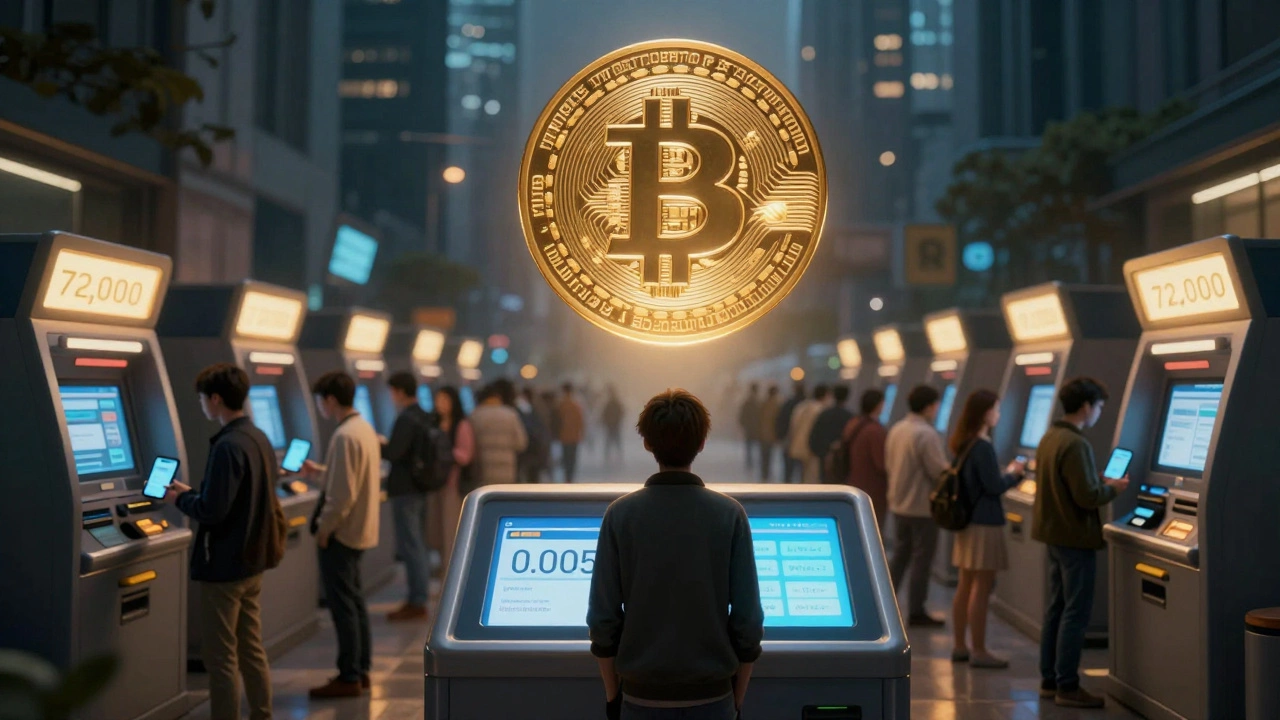
Platforms like Coinbase, Cash App, and Revolut let you buy $5 or $10 worth of Bitcoin. That means the average holder owns 0.005 BTC or less. In fact, over 70% of all Bitcoin wallets contain less than 0.1 BTC. The majority of users are micro-investors. They’re not waiting to become millionaires overnight - they’re just trying to get a small slice of the pie.
And here’s the kicker: the top 1,000 wallets hold more than 10% of all Bitcoin ever mined. One single address - likely belonging to a long-term holder or a crypto fund - holds over 200,000 BTC. That’s worth over $14 billion. Meanwhile, millions of wallets hold less than $100 worth.
Who owns the big stacks?
It’s not just rich individuals. A huge chunk of Bitcoin is held by institutions, exchanges, and early adopters who never sold.
- Exchanges like Binance and Coinbase hold millions of BTC on behalf of users. But those aren’t counted as individual ownership - they’re custodial.
- Public companies like MicroStrategy hold over 200,000 BTC collectively. They bought during dips, often in bulk.
- Early adopters from 2009-2013 still hold massive amounts. Some of them mined Bitcoin when it was easy. One guy mined 1 million BTC in 2010 - he’s never touched it. His wallet is now worth $72 billion.
- Government wallets exist too. The U.S. government seized over 200,000 BTC from Silk Road in 2013. It’s still sitting in cold storage, slowly being auctioned off.
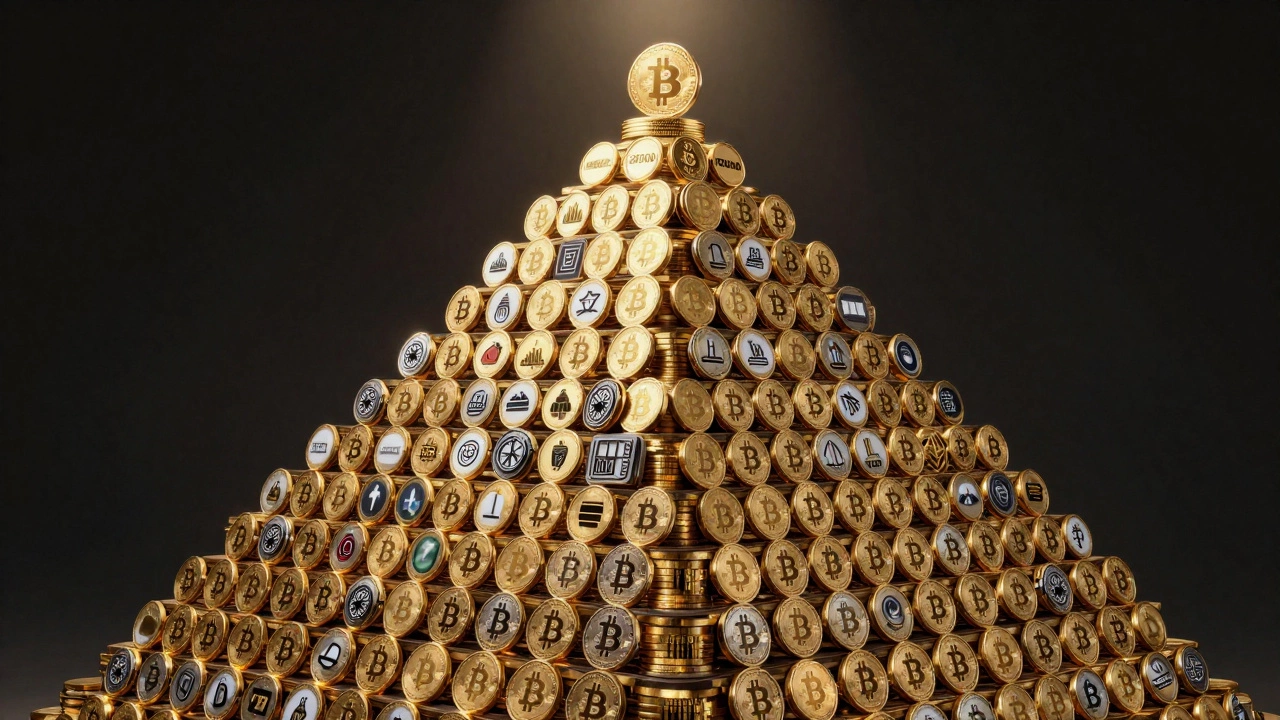
So when you hear someone say “Bitcoin is decentralized,” that’s true - but only if you ignore the top 0.1% of holders. The distribution is more like a pyramid than a circle.
Why the number of 1-BTC holders is shrinking
Here’s something most people don’t realize: the number of wallets holding one full Bitcoin has been dropping since 2021.
Why? Because prices rose so fast that people sold off chunks. A holder who had 1.5 BTC in 2020 might have sold 0.5 BTC in 2021 to buy a house. Now they own 1 BTC - but they’re not counted as a “new” holder. They’re just a former multi-BTC holder who trimmed down.
Meanwhile, new buyers can’t afford a whole coin. So they buy 0.01 BTC. Or 0.003 BTC. The number of wallets holding less than 0.1 BTC has grown by 200% since 2020. The average Bitcoin holder today owns less than 0.05 BTC.
So while the total number of Bitcoin wallets keeps rising - over 100 million now - the number of people holding one full coin is actually going down. It’s not growing. It’s stabilizing. And it’s getting harder to join that club.
What owning 1 Bitcoin really means today
Back in 2017, owning one Bitcoin meant you were in the top 0.1% of global wealth. Today? It’s still impressive, but not life-changing.
At $72,000, one Bitcoin equals about $72,000. That’s more than the median net worth in many countries - including Australia, where the average household net worth is around $450,000. So yes, owning one BTC puts you ahead of most people. But it’s not the same as owning a house or a business.
And here’s the reality check: Bitcoin’s price is volatile. That $72,000 today could be $40,000 in six months. Or $120,000. Most people who bought one BTC in 2021 didn’t hold through the 2022 crash. They panicked and sold. The ones who still hold are either believers, or they’re too scared to sell.
How to get to 1 Bitcoin - and why most won’t
Let’s say you want to own one Bitcoin. How long would it take?
If you save $100 a month, it would take you 60 years to buy one full BTC at $72,000. That’s not realistic. But if you save $500 a month, you’d get there in 12 years. Still a long time.
Most people don’t try to buy one whole coin. They buy small amounts over time - dollar-cost averaging. That’s smart. It reduces risk. But it also means you’ll likely never own a full Bitcoin unless you’re already wealthy or lucky.
And if you’re waiting for the price to drop so you can buy one cheaply? Don’t hold your breath. Bitcoin has only had two real dips below $20,000 since 2020. The rest of the time, it’s been climbing. The days of buying BTC for $50 are gone.
Final thought: It’s not about the number - it’s about control
Whether you own 0.001 BTC or 10 BTC, the real value isn’t in the number. It’s in owning your keys. If you hold Bitcoin on an exchange, you don’t really own it. You’re trusting someone else. If you hold it in your own wallet - even 0.0001 BTC - you control it. No bank. No government. No middleman.
So maybe the real question isn’t “how many people own 1 Bitcoin?”
It’s: “How many people are willing to hold Bitcoin, no matter how little, and never let go?”
That number? It’s growing. Slowly. But it’s growing.
How many people own 1 Bitcoin?
As of late 2025, approximately 3.8 to 4.2 million individuals own at least one full Bitcoin. This number comes from analyzing unique wallets with 1 BTC or more, adjusted for duplicates, exchange holdings, and inactive addresses. It’s a small fraction of the global population - less than 0.05%.
Is it possible to buy 1 Bitcoin today?
Yes, you can buy one Bitcoin, but it costs around $72,000 as of December 2025. Most people buy fractions instead - like $50 or $100 worth - because buying a whole coin is out of reach for most budgets. Platforms like Coinbase, Cash App, and Blockchain.com allow you to purchase any amount down to the smallest unit (a satoshi).
Why are the number of 1-BTC holders decreasing?
As Bitcoin’s price rose sharply after 2020, many holders sold portions of their holdings to cash out profits or fund life expenses. Someone who owned 2 BTC might have sold 1 to buy a car or pay for education. Meanwhile, new buyers can’t afford a full coin, so they buy smaller amounts. The result? Fewer people hold exactly one Bitcoin, even as total ownership grows.
Who owns the most Bitcoin?
The largest holders are early miners, institutional investors, and government-held addresses. MicroStrategy owns over 200,000 BTC. The U.S. government holds around 200,000 BTC seized from Silk Road. One mysterious wallet, believed to belong to Satoshi Nakamoto, holds over 1 million BTC - worth over $72 billion. These top wallets control more than 10% of all Bitcoin in circulation.
Does owning 1 Bitcoin make you rich?
At $72,000, owning one Bitcoin puts you ahead of most people globally - but not necessarily in the top 1%. In Australia, the median household net worth is around $450,000, so one BTC is about 16% of that. It’s valuable, but not life-changing unless you hold it long-term. Bitcoin’s price is volatile - today’s $72,000 could drop to $40,000. True wealth comes from holding through cycles, not from the number on your screen.