
Student Loan Take-Home Cash Estimator
Not all student loan money goes into your pocket. This tool helps you visualize the split between tuition (paid to university) and maintenance (cash for living costs).
Estimated Annual Breakdown
Total Debt Accrued
£0
Understanding the Results
- UK: Maintenance is heavily means-tested. Higher parental income reduces your cash loan significantly.
- US: Federal loans have strict annual caps ($5,500 - $7,500+). Private loans fill gaps but require credit checks.
- Australia: HECS-HELP covers tuition debt only. Living costs are typically covered by work or savings, not a large federal cash loan.
You’ve got the acceptance letter. The excitement is real. But then the math hits you: how much cash are you actually getting from a student loan a form of financial aid provided by governments or private lenders to help cover education costs? It’s not just one number. It depends on where you study, what you study, and whether your parents earn enough to disqualify you from extra help.
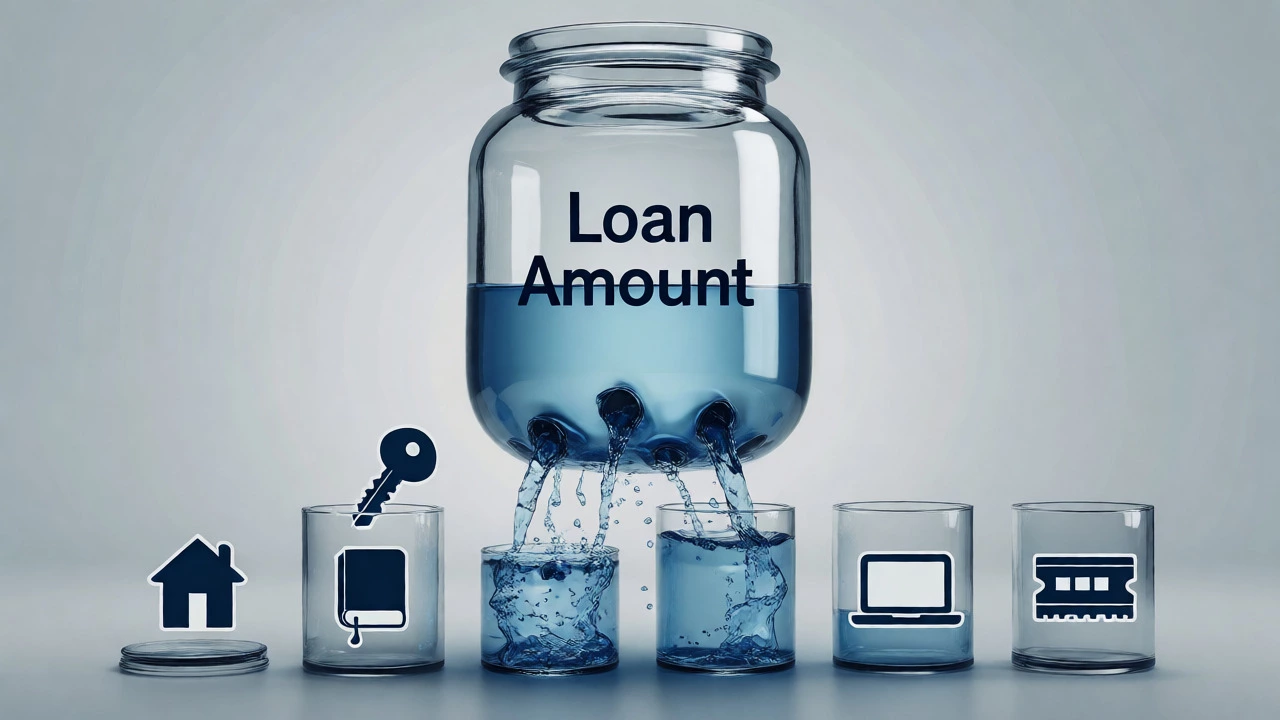
Most people assume there’s a fixed cap, like a salary. There isn’t. Think of it more like a bucket with multiple holes filled by different taps. One tap covers your university bill (tuition). Another covers your rent and food (maintenance). If you’re in Australia, the UK, or the US, the rules change completely. Let’s break down exactly how much money lands in your account, so you aren’t left guessing when the bills arrive.
The Two Buckets: Tuition vs. Maintenance
When you ask "how much," you need to split the question. Student loans generally pay for two distinct things. Mixing them up causes budgeting disasters.
The first bucket is Tuition Fees the cost charged by educational institutions for instruction and facilities. This money rarely touches your bank account. In many systems, the government pays this directly to the university. You don’t get to spend this on new sneakers. It settles the debt between you and the school.
The second bucket is Maintenance Loans funds intended to cover living expenses such as rent, food, transport, and books. This is the cash you can actually touch. It gets paid into your bank account in installments, usually three times a year, aligning with academic terms. This is where the variation happens. Your maintenance loan amount shifts based on where you live while studying and your household income.
| Region | Tuition Coverage | Max Maintenance Loan | Who Pays? |
|---|---|---|---|
| Australia (HECS-HELP) | Full Course Cost | N/A (Living costs separate) | Govt pays Uni; Student repays via tax |
| UK (England) | Up to £9,250 | Up to £12,382 (London) | Means-tested |
| US (Federal Direct) | Varies by School | $57,500 (Undergrad Total) | Fixed caps per year |
Case Study: The Australian Model (HECS-HELP)
If you’re reading this from Sydney, Melbourne, or Brisbane, your situation is unique. Australia doesn’t give you a lump sum cash loan for tuition. Instead, it offers Commonwealth Supported Places (CSP) government-subsidized university places that reduce the cost of tuition for eligible students.
Here is the reality check: The government pays the bulk of your tuition fee directly to the university. You receive a "debt" called a HECS-HELP loan. You don’t see this money in your bank account. You repay it through the tax system once your income exceeds the repayment threshold. As of recent updates, if you earn under roughly $54,000 AUD, you don’t pay anything back yet.
But what about rent? That’s where FOS Free Offer of Support, often confused with general assistance but specifically referring to certain state-based or institutional grants or personal savings come in. Unlike the UK or US, Australia doesn’t have a massive federal "maintenance loan" that automatically gives every student thousands in cash for living costs. Many students rely on part-time work, family support, or specific scholarships. If you are looking for cash flow, don’t count on the HECS-HELP loan to buy your groceries. It only buys your degree.
Case Study: The UK System (Means-Tested Cash)
In England, the system is more generous with actual cash, but it comes with strings attached. Your total package has two parts.
First, the Tuition Fee Loan. Currently capped at £9,250 per year. Again, this goes straight to the university. You never hold this money.
Second, the Maintenance Loan. This is the game-changer. The amount you get depends entirely on your parents’ income. If your household earns less than £25,000, you might get the maximum amount. For a student living away from home in London, that max figure can reach over £12,000 a year. That’s nearly £1,000 a month to survive on. However, if your parents earn over £60,000, your maintenance loan drops significantly, potentially to around £4,000-£5,000. This means rich kids and poor kids go to the same university, but one has a credit card balance and the other has a loan balance. Both debts accrue interest.
Pro Tip: Always apply early. Late applications mean late payments. If you start your course in September but your paperwork clears in November, you’ll be paying rent out of pocket for two months before the loan hits your account.

Case Study: The US Federal Limitations
American students face hard annual caps. You can’t just borrow unlimited amounts because you want to. The Direct Subsidized Loan a federal loan for undergraduates with demonstrated financial need, where the government pays the interest while you are in school limits you to about $5,500 in your first year, rising to $7,500 in later years. The Direct Unsubsidized Loan a federal loan available to all undergraduate and graduate students, regardless of financial need, where interest accrues immediately adds another layer, allowing independent students to borrow more.
Why does this matter? Because tuition at private colleges can hit $50,000+ per year. If your federal loan caps at $7,500, you have a gap. To fill it, you either take out a Private Student Loan a non-federal loan issued by banks or credit unions, typically requiring a credit check or co-signer or hope for scholarships. Private loans often require a co-signer with good credit. If your parents have bad credit, you might get approved, but at a higher interest rate. This changes your "amount" because the effective cost of borrowing rises, eating into your future disposable income.
Hidden Costs That Eat Your Loan
You calculated your loan amount. Great. Now subtract the stuff nobody tells you about until it’s gone.
- Accommodation Deposits: Most rentals require 4 weeks’ rent upfront. If your loan arrives in Term 1, but you signed the lease in July, you’re already in debt before the loan arrives.
- Course Materials: Textbooks and lab kits can cost $300-$800 per semester. These are rarely covered by tuition fees.
- Technology: You need a laptop. If yours dies during orientation week, that’s an unplanned $1,000 hit.
- Travel Home: If you study far from home, flights or train tickets add up. A few trips home can wipe out a month’s worth of maintenance loan.
Many students treat their loan as "found money." It’s not. It’s deferred income. If you spend your maintenance loan on holidays in Year 1, you’ll be scraping by in Year 3 when textbooks get expensive and internships become unpaid.
How Interest Changes the "Real" Amount
The number on your loan statement today isn’t the number you’ll owe in ten years. This is crucial for understanding the true value of the money given to you.
In the UK, interest starts accruing immediately after graduation. Rates vary based on inflation and earnings. In the US, subsidized loans pause interest while you study, but unsubsidized ones do not. If you borrow $10,000 at 6% interest and don’t pay it back for four years, you now owe roughly $12,600. That extra $2,600 was effectively "given" to you in time, but it costs you money later.
Australian HECS-HELP debt is indexed annually. This means it grows with inflation, even if you make no payments. If inflation is 4%, your debt grows by 4%. This isn’t interest in the traditional sense, but it erodes the value of your payment plan. Paying off a HECS debt quickly saves you from this indexing creep.
Checklist: Maximizing Your Take-Home Cash
Before you sign the paperwork, run through this list to ensure you get the most usable money possible.
- Verify Household Income: Submit accurate parental income data. Underestimating it can lead to clawbacks later; overestimating leaves money on the table.
- Apply for Grants: Look for non-repayable bursaries. In the UK, these don’t affect your loan calculation. They are pure profit.
- Open a Student Bank Account: Some banks offer perks like overdrafts or railcards. This stretches your maintenance loan further.
- Budget for Term Time Only: Remember, maintenance loans are split into three payments. Divide that by three to find your monthly survival limit.
Do I get the full loan amount in my bank account?
No. Usually, the tuition portion is paid directly to the university. Only the maintenance/living cost portion is deposited into your personal bank account. Check your specific country's rules, as some allow opting out of tuition loans to save on long-term interest.
Can I use my student loan to buy a car?
Technically, yes, if it’s part of your maintenance loan. However, cars depreciate rapidly and come with insurance, fuel, and repair costs. Financial advisors generally recommend against using student debt for depreciating assets unless necessary for commuting to work or placement.
What happens if I drop out of university?
You keep the money you received for the term you completed. You may have to repay any excess funds received for the upcoming term. Your loan remains active, and interest continues to accrue according to the original terms. You will likely need to repay it once you meet the income threshold.
Does having savings affect how much loan I get?
In some countries, yes. In the UK, your own capital (savings) above a certain threshold can reduce your maintenance loan entitlement. In Australia and the US, personal savings generally do not reduce federal loan eligibility, though they may affect needs-based grants.
Is student loan money taxable?
Generally, no. Student loans are considered debt, not income. You do not pay income tax on the money you receive. However, if you receive a scholarship or grant that covers room and board, that portion might be taxable depending on local laws.