Credit Card Utilization Calculator
How Much Credit Are You Using?
Enter your total credit limit and current balance to see your credit utilization ratio. This is a key factor in your credit score.
Having four credit cards doesn’t automatically mean you’re in trouble. But it also doesn’t mean you’re doing everything right. The real question isn’t how many cards you have-it’s how you’re using them. Many people think more cards equal more rewards or better credit scores, but that’s not always true. In fact, mismanaging just one card can undo all the benefits of having four.
What Happens When You Have Four Credit Cards?
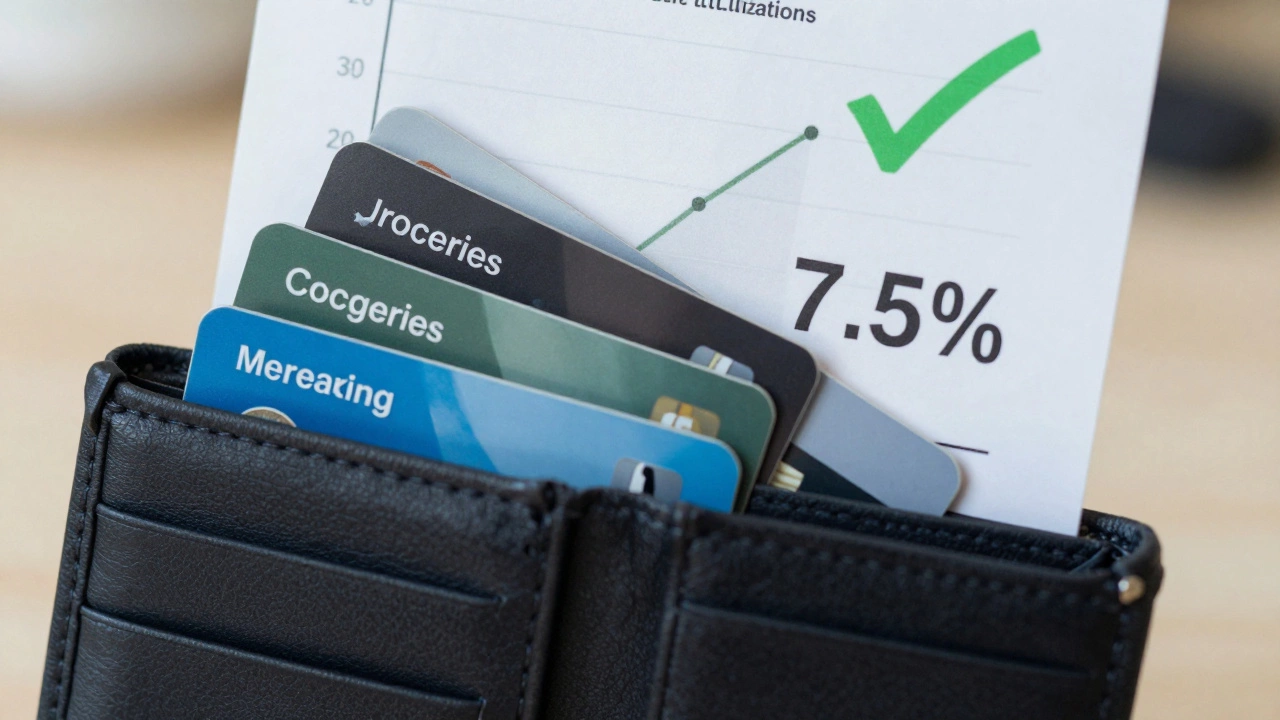
Four credit cards give you more available credit, which can help your credit utilization ratio-if you pay them off each month. Credit utilization makes up 30% of your FICO score, and keeping it under 30% (ideally under 10%) is key. If you have a total credit limit of $20,000 across four cards and only carry $1,500 in balances, your utilization is 7.5%. That’s excellent.
But if you’re running up balances on all four cards, even if you pay them off before the due date, your credit report might still show high utilization. Credit card issuers report your balance to the bureaus once a month, usually right after your statement closes. If you’re spending $5,000 a month across all cards and only paying $1,000 before the reporting date, your utilization spikes to 25%-even if you pay the full balance later.
That’s why people with four cards sometimes see their scores drop, not rise. It’s not the number of cards. It’s the timing of spending and payments.
When Four Cards Make Sense
There are real, smart reasons to have four cards:
- You use one for groceries (5% cash back), one for gas (4% back), one for travel (2% back with no foreign fees), and one for emergencies.
- You’ve paid off all balances and keep them at $0 to avoid interest.
- You’ve been approved for new cards without triggering hard inquiries in the last six months.
- You track spending on each card with a budgeting app like YNAB or Mint.
People who do this well often have FICO scores above 780. They’re not using cards to live beyond their means-they’re using them as tools to optimize rewards and build credit history.
When Four Cards Are a Red Flag
Here’s when having four cards becomes risky:
- You’re making minimum payments on at least one card.
- You’ve opened two or more cards in the past year.
- You don’t know your total credit limit across all cards.
- You’ve missed a payment in the last 12 months.
Each new card application triggers a hard inquiry, which can knock 5-10 points off your score. If you’ve applied for four cards in 12 months, you’ve likely taken 20-40 points off your score already. That’s not recoverable in a few months.
Also, lenders look at your total available credit. If you have $25,000 in unused credit across four cards, they might worry you could suddenly max them out and become a risk. That’s especially true if your income hasn’t grown to match your credit limits.

How Many Cards Is Too Many?
There’s no magic number. Some people manage 10 cards without issue. Others struggle with one. The difference? Discipline.
Most financial advisors agree: if you’re not using more than two cards regularly, you probably don’t need the others. Unused cards can be closed-but not always. Closing a card reduces your total credit limit, which can raise your utilization ratio and hurt your score.
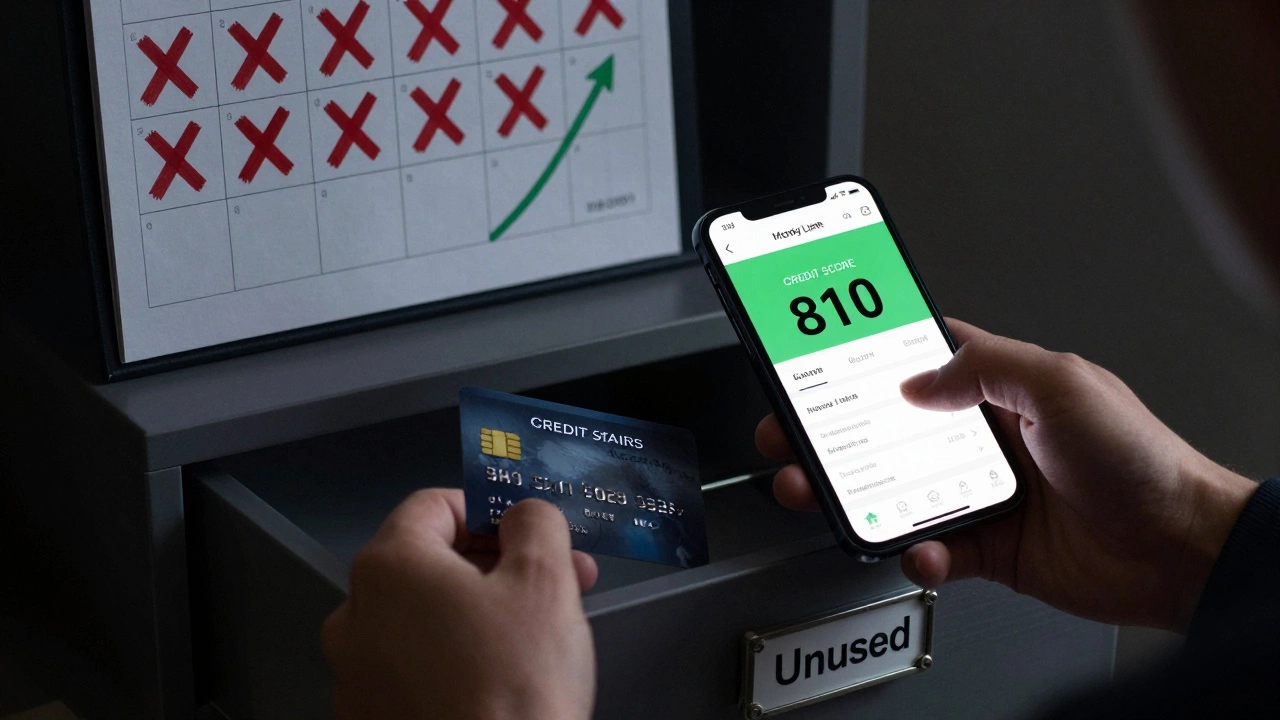
Instead of closing, consider freezing unused cards in a drawer or turning off online purchasing. That way, you keep the credit line open without risking overspending.
What the Data Shows
According to Experian’s 2024 Consumer Credit Review, the average American has 3.8 credit cards. People with credit scores above 800 have an average of 4.2 cards. But here’s the twist: they also have an average balance of just $1,200 across all cards.
People with scores below 600 have an average of 2.1 cards-but carry balances of $3,800. That’s not because they have fewer cards. It’s because they’re using them to pay for things they can’t afford.
So it’s not the number of cards. It’s the debt-to-limit ratio and payment history that matter most.
How to Manage Four Cards Without Stress
If you’ve got four cards and want to keep them, here’s how to do it right:
- Set up auto-pay for the minimum on all cards to avoid late fees.
- Pay the full balance on all cards before the due date-every month.
- Check your credit utilization weekly using a free tool like Credit Karma or your bank’s app.
- Use a spreadsheet or app to track which card gives you the best reward on each purchase category.
- Review your statements every week, not just once a month.
People who do this consistently rarely have credit problems-even with four cards.
What to Do If You’re Overwhelmed
If you’re already feeling stressed about your four cards, start here:
- Cancel the one with the lowest credit limit and the fewest benefits.
- Don’t close the card with the oldest account history-that helps your credit age.
- Call your issuer and ask for a credit limit increase on your best card. That lowers your utilization without closing anything.
- Transfer high-interest balances to a 0% intro APR card, but only if you can pay it off before the promo ends.
Don’t try to fix everything at once. Focus on one card. Pay it off. Then move to the next.
Bottom Line
Four credit cards aren’t too many if you’re using them like tools-not crutches. If you pay them off every month, track your spending, and keep your utilization low, you’re doing better than most. But if you’re juggling payments, missing due dates, or carrying balances, then yes-four cards are too many. The number isn’t the problem. The behavior is.
The goal isn’t to have the most cards. It’s to have the right ones-and use them without stress.
Is it bad to have 4 credit cards?
No, it’s not inherently bad. Having four credit cards can help your credit score if you pay them off in full each month and keep your overall credit utilization low. The problem isn’t the number of cards-it’s how you manage them. If you’re carrying balances, missing payments, or opening too many cards in a short time, that’s when trouble starts.
Does having 4 credit cards hurt your credit score?
It can, but only if you misuse them. Opening new cards triggers hard inquiries, which temporarily lower your score. Closing old cards reduces your total credit limit, which can raise your utilization ratio. But if you’ve had the cards for years, pay them off monthly, and keep low balances, four cards can actually improve your score by increasing your available credit.
How many credit cards is too many?
There’s no fixed number. Someone with a $100,000 income and perfect payment history can manage 10 cards easily. Someone with a $40,000 income and a history of late payments shouldn’t have more than two. The real question is: Can you track all your balances, due dates, and rewards? If not, you have too many.
Should I close a credit card if I don’t use it?
Usually, no-not if it’s one of your oldest cards. Closing it removes that credit line from your utilization calculation, which can hurt your score. Instead, use it for a small recurring bill (like a streaming service) and set up auto-pay. That keeps it active without risk. Only close a card if it has an annual fee you don’t want to pay and you’ve had it for less than five years.
Can I get a new credit card if I already have 4?
You can, but it’s risky. Each application causes a hard inquiry, which can lower your score by 5-10 points. If you’ve opened two or more cards in the last six months, lenders may see you as a higher risk. Wait at least six months between applications, and only apply if you’re confident you’ll be approved and have a clear reason for the new card.