Home Insurance Tax Deduction Calculator
Calculate Your Deduction
Determine exactly how much of your home insurance you can claim based on Australian Taxation Office (ATO) rules
Key ATO Rules
Only claim if:
- For renting: The space is genuinely used for rental (not occasional)
- For home business: Dedicated workspace used primarily for business
- For investment properties: Full premium is deductible
Most people assume home insurance is just another monthly bill-like electricity or internet. But when tax season rolls around, a lot of homeowners start wondering: is home insurance tax deductible? The short answer? Usually, no. But there are important exceptions, and knowing them could save you hundreds-or even thousands-of dollars.
Why Home Insurance Isn’t Usually Deductible
If you own a home and live in it, your home insurance premiums are not tax deductible in Australia. The Australian Taxation Office (ATO) treats your primary residence as a personal expense, not a business cost. That means the $1,200 you pay each year to protect your house from fire, storm damage, or theft? That’s money you pay out of pocket, with no tax break.This rule applies to nearly every homeowner. Whether you’ve got a small unit in Bondi or a large house in the Hills District, if you’re not renting it out or using it for business, the ATO won’t let you claim the insurance as a deduction.
When Home Insurance Is Tax Deductible
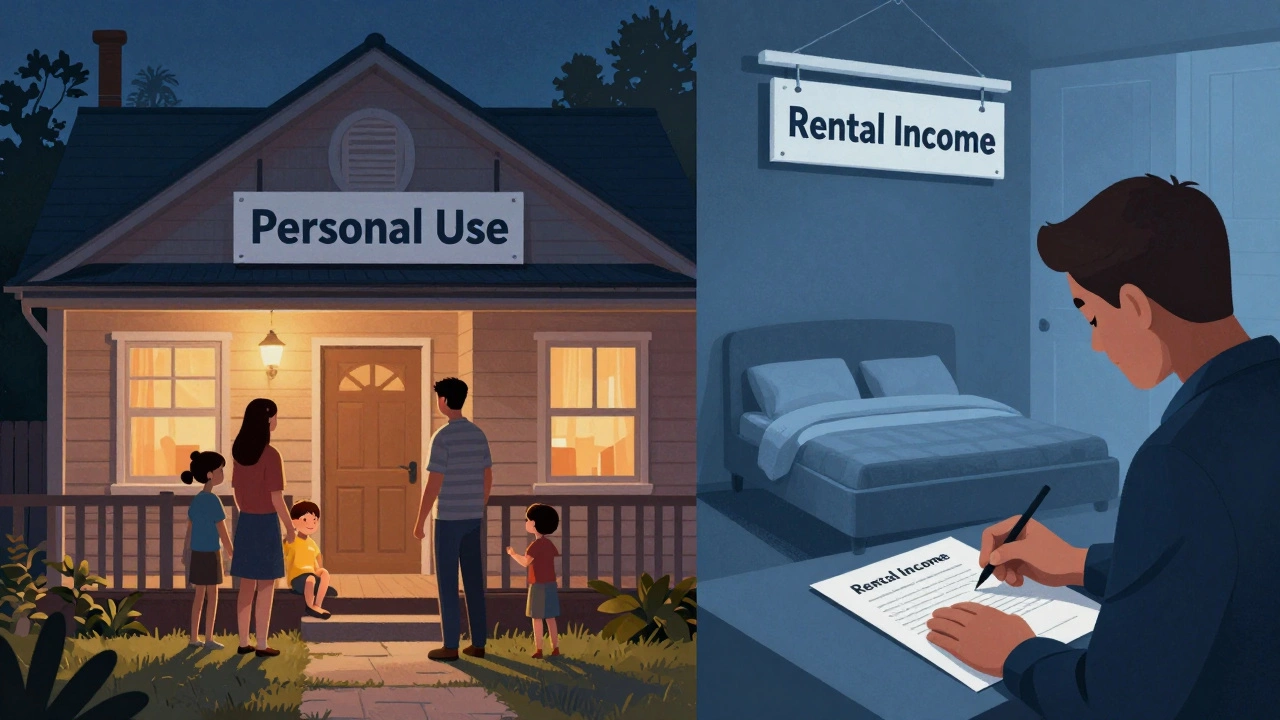
There are three clear situations where you can claim home insurance on your tax return:- You rent out part or all of your home
- You run a business from home
- You own an investment property
Let’s break these down with real examples.
1. Renting Out Part of Your Home
Say you’ve got a spare room and you’re renting it out on Airbnb or through a long-term tenant. You can claim a portion of your home insurance based on the area used for rental. If the spare room is 20% of your home’s total floor area, you can claim 20% of your annual insurance premium.For example: Your home insurance costs $1,100 per year. You rent out a room that takes up 25% of your house. That means you can claim $275 as a tax deduction. You’ll need to keep records of how you calculated the percentage-floor plans, photos, or even a simple spreadsheet will do.
Important: You can’t claim the full amount just because you rented a room for a few weeks. The ATO looks at actual usage over the year. If you only rented it for 3 months, you claim 25% of 25%-or 6.25% of your premium.
2. Running a Business from Home
If you’re a freelance graphic designer, accountant, or online tutor and you’ve set up a dedicated home office, you may be eligible to claim home insurance as a business expense.The key here is dedicated use. You can’t claim insurance for your entire home just because you sometimes check emails at the kitchen table. But if you’ve converted a room into a workspace-complete with a desk, computer, and client meetings-you can claim a percentage based on the room’s size relative to your whole home.
Example: Your home is 180 square metres. Your home office is 18 square metres (10%). Your annual home insurance is $1,000. You can claim $100 as a business expense. You’ll also need to show that the space is used primarily for business-not just occasionally.
Keep receipts, photos of your workspace, and a logbook of business hours. The ATO has been cracking down on vague home office claims in recent years. Be specific.
3. Investment Properties
This one’s straightforward. If you own a property you rent out to tenants, your home insurance for that property is 100% tax deductible. That includes building insurance, contents insurance (if you provide furnishings), and even landlord liability insurance.Example: You bought a two-bedroom apartment in Parramatta and rent it out. Your annual insurance bill is $1,500. You claim the full $1,500 as a deduction on your tax return. You’ll also be able to claim other expenses like council rates, interest on your mortgage, and repairs.
Important: You can’t claim insurance for your primary residence and an investment property under the same claim. They’re treated as separate assets.
What About Home Office Equipment Insurance?
If you run a business from home, you might have separate insurance for your computer, camera, or other equipment. That’s different from home insurance. Equipment insurance is usually claimed as a business expense, not part of your home insurance deduction.For example: You bought a $3,000 professional camera for your photography business. You insure it separately for $120 a year. That $120 is fully deductible as a business cost, regardless of where you store it. Just make sure the equipment is used mainly for income-producing activities.
Common Mistakes to Avoid
Many people get tripped up trying to claim home insurance when they shouldn’t. Here are the top errors:- Claiming your primary residence insurance just because you work from home sometimes. The ATO requires a dedicated, regular-use space.
- Using the wrong percentage. Don’t guess. Measure the floor area. Use a tape measure, not a feeling.
- Not keeping records. The ATO can ask for proof. If you can’t show how you calculated your claim, you’ll lose it.
- Claiming insurance for renovations. Home insurance doesn’t cover upgrades or improvements. Those are capital expenses and handled differently.
What You Can Claim Instead
Even if you can’t claim home insurance, there are other homeowner expenses you might be able to deduct:- Interest on investment property loans-fully deductible.
- Property management fees-if you use an agent.
- Repairs to rental properties-like fixing a leaky roof or broken windows.
- Depreciation on fixtures and fittings-for investment properties, you can claim wear and tear on appliances, carpets, and blinds.
These deductions often add up to more than home insurance ever would. Focus on what you can claim, not just what you think you should.
How to Claim It Right
If you qualify for a deduction, here’s how to do it properly:- Calculate the percentage of your home used for business or rental.
- Get your annual home insurance statement from your provider.
- Multiply the premium by your percentage.
- Record your calculation method and keep supporting documents for five years.
- Include the amount in your tax return under “home office expenses” or “rental property expenses”.
Use the ATO’s Home Office Expenses calculator or a simple spreadsheet. Don’t rely on memory.
What If You’re Not Sure?
If you’re unsure whether your situation qualifies, don’t guess. Talk to a registered tax agent. A good one can help you identify all eligible deductions and avoid costly mistakes.Many people miss out on thousands because they assume they can’t claim anything. Others get audited because they claimed too much. The middle ground? Accurate, documented claims.
Final Thoughts
Home insurance is a necessary cost of owning property-but it’s rarely a tax write-off. Unless you’re renting part of your home, running a business from it, or owning an investment property, you’re not getting a refund on those premiums.But if you do fall into one of those categories, don’t leave money on the table. Track your usage, keep your records, and claim what’s yours. A few hundred dollars here and there adds up over time-and that’s money you can put back into your home, your business, or your future.
Can I claim home insurance if I work from home occasionally?
No. To claim home insurance as a business expense, you need a dedicated space used regularly for work-not just a corner of the couch where you sometimes check emails. The ATO requires consistent, primary use of the area for income-producing activities.
Is landlord insurance tax deductible?
Yes. If you own an investment property, landlord insurance-including building, contents, and liability coverage-is fully tax deductible. It’s treated as a standard expense of earning rental income.
Can I claim home insurance for a holiday home I rent out?
Yes, but only for the portion of the year it’s rented out. If you use your holiday home for personal trips for 6 months and rent it for 6 months, you can claim 50% of your insurance costs. Keep a log of rental dates and personal use.
Do I need a separate policy for my home office?
Not necessarily. Your existing home insurance usually covers your home office. But if you have expensive equipment, you might want separate contents insurance for those items. That separate policy is fully deductible as a business expense.
What if I’m not sure how much of my home is used for business?
Measure it. Use a tape measure to calculate the square metres of your workspace versus your total home. You can also use floor plans or photos with dimensions. The ATO doesn’t require perfect precision, but they do require a reasonable, documented method.