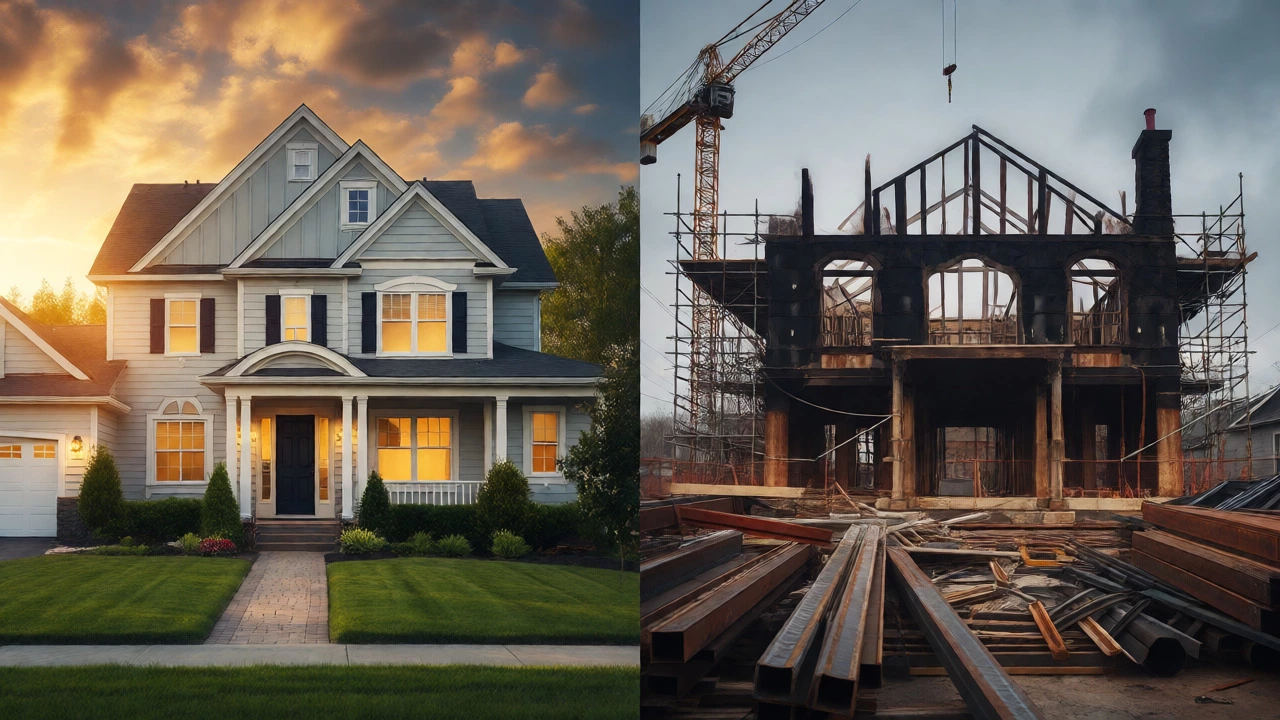
Home Insurance Coverage Checker
Don't confuse what your house is worth with what it costs to rebuild. Enter your details below to check for potential coverage gaps.
Current Policy Details
Estimated Rebuild Factors
You just got a quote for your home insurance. The number looks reasonable. Maybe it’s even lower than you expected. But here is the trap most homeowners fall into: they confuse what their house is worth on the real estate market with what it costs to actually rebuild it if it burns down tomorrow. These two numbers are rarely the same, and getting them wrong can leave you thousands of dollars out of pocket when disaster strikes.
The core problem isn’t that you don’t know your home’s price tag. It’s that standard policies often default to "market value" or fail to account for current construction realities. In Sydney, where labor shortages and material inflation have skewed building costs upward by double digits in recent years, this gap is widening. If you rely on an outdated estimate, you might find your insurer pays enough to buy a plot of land but not enough to put a roof over your head.
Key Takeaways
- Market Value ≠ Replacement Cost: Market value includes land; replacement cost covers only rebuilding the structure.
- Inflation Matters: Construction costs rise independently of property prices; ensure your policy has an inflation guard.
- Underinsurance Risk: Being underinsured means you pay the difference out of your own pocket during a claim.
- Professional Valuation: For homes over $1 million or those with unique features, a professional rebuild assessment is worth the fee.
Defining the Core Concepts
To understand why your premium looks the way it does, we need to strip away the jargon. There are three distinct values attached to your home, and insurers treat them very differently.
First, there is Market Value. This is the amount someone would pay to buy your house today. It includes the land, the location prestige, school zones, and proximity to public transport. In a hot housing market like Sydney’s Eastern Suburbs, market value can be astronomically high due to scarcity of land, even if the house itself is a modest 1970s brick veneer.
Second, there is Rebuild Cost. This is exactly what it sounds like: the total expense required to demolish the ruins and construct a new house of similar size and quality on the same site. Crucially, this figure excludes the land. You still own the land after a fire, so you don’t need insurance to replace it.
Third, there is Replacement Cost Coverage. This is a specific type of insurance clause. Unlike "Actual Cash Value," which deducts depreciation (wear and tear), replacement cost pays what it costs to repair or replace damaged property with materials of similar kind and quality, without subtracting for age. If your 10-year-old carpet is ruined, you get a new carpet, not the depreciated value of the old one.
Why Market Value Is a Terrible Metric for Insurance
Many people assume that because their home is insured for its market value, they are safe. This is a dangerous misconception. Let’s look at a concrete example. Imagine a small cottage in Paddington. The land is incredibly expensive because of zoning laws and heritage restrictions. The market value might be $3 million. However, the actual cost to physically rebuild that cottage, using modern code-compliant materials and current labor rates, might only be $800,000.
If you insure for $3 million, you are paying premiums for coverage you don’t need. You are essentially insuring the dirt under your feet. Conversely, consider a large, modern custom-built home in the outer western suburbs. The land is cheap, so the market value is $1.2 million. But the build quality is high-end, with imported fixtures and complex architecture. The rebuild cost could easily hit $1.5 million. If you insured for market value ($1.2m), you are underinsured by $300,000. When the insurer calculates your claim, they will apply a proportional penalty, meaning you might only receive 80% of your repair bill.
The disconnect happens because real estate markets react to buyer sentiment, while construction costs react to supply chains and labor availability. These two forces do not move in sync. During a property boom, market value skyrockets while rebuild costs stay flat. During a construction shortage, rebuild costs spike while property prices stagnate.
The Hidden Factors That Inflate Rebuild Costs
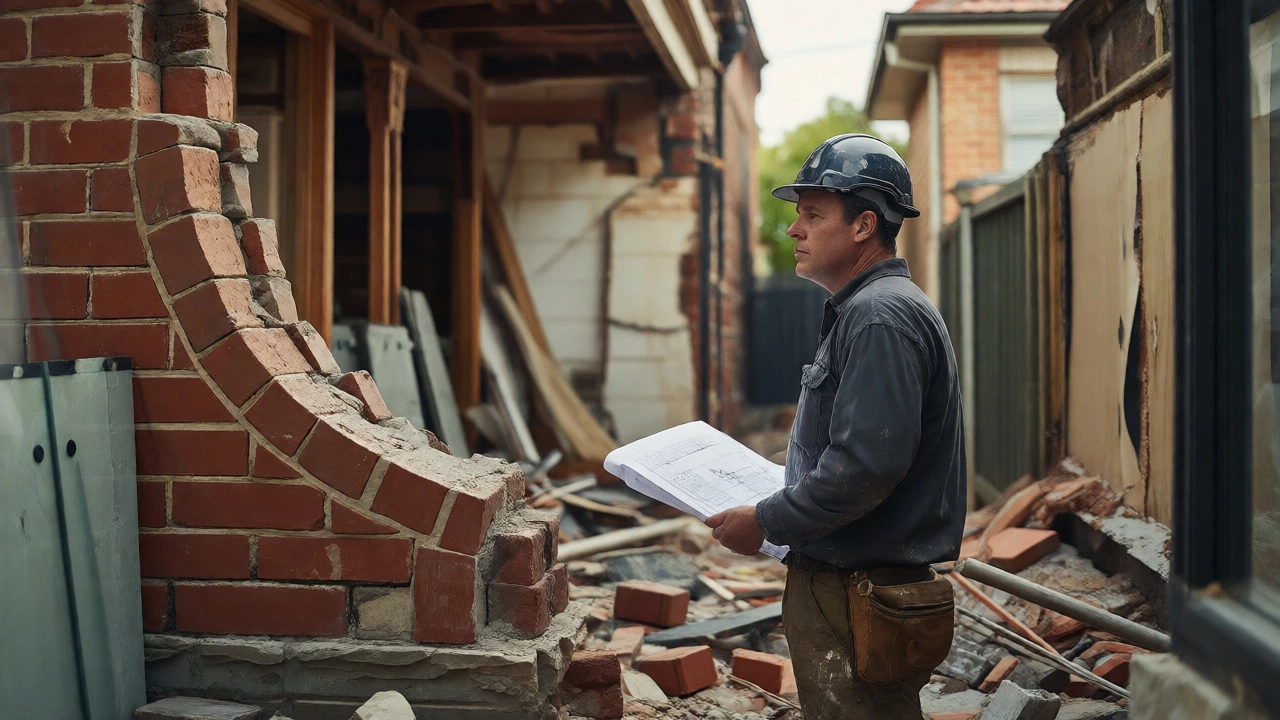
Calculating rebuild cost isn’t just about square meters multiplied by a per-meter rate. Several hidden variables can drastically increase the final bill, and these are often missed in online calculator estimates.
Code Compliance Upgrades: Building codes change. If your house was built in 1995, it likely doesn’t meet 2026 energy efficiency or safety standards. When you rebuild, you must bring the new structure up to current code. This might mean thicker insulation, different window glazing, or upgraded electrical wiring. These upgrades add cost but don’t necessarily add market value in the eyes of a quick-sale buyer.
Debris Removal: After a major loss, the first step is clearing the site. Removing tons of asbestos-contaminated debris or hazardous materials from a suburban block can cost tens of thousands of dollars. Many basic policies cap this amount separately from the main dwelling limit. Check if your policy includes unlimited debris removal or a capped sub-limit.
Architectural Complexity: A boxy rectangular home is cheap to rebuild. A home with multiple gables, curved walls, or non-standard roof pitches requires more skilled labor and waste material. If you have a heritage-listed facade, matching the original brickwork or timber joinery can double the exterior finishing costs compared to standard stock materials.
Access Issues: Can a crane reach your backyard? Do you have narrow side access for scaffolding? If your site is difficult to access, builders charge a premium for manual handling of materials. Online calculators rarely ask about site accessibility, leading to significant underestimates.
How Insurers Calculate Your Premium
When you apply for a policy, insurers use actuarial models to determine your risk. They aren’t guessing; they’re using data. However, the accuracy of that data depends entirely on the inputs you provide.
| Feature | Market Value Basis | Rebuild Cost Basis | Guaranteed Rebuild Cost |
|---|---|---|---|
| Basis of Calculation | Real Estate Appraisal | Construction Estimate | Insurer Guarantee |
| Includes Land? | Yes | No | No |
| Premium Cost | Often Higher (if land is expensive) | Lower (usually) | Highest |
| Risk of Underinsurance | High (if build > market) | Medium (depends on estimate accuracy) | None (within policy limits) |
| Best For | Investors focusing on asset value | Standard owner-occupiers | Custom builds / High-value homes |
Most Australian insurers now use specialized software that pulls data from local construction indices. They adjust for regional labor rates-building in Sydney is significantly more expensive than building in rural NSW due to union rates and traffic logistics. They also factor in your home’s specific attributes: roof type, wall construction, floor area, and number of bathrooms.
However, software has limits. It cannot see your custom Italian marble kitchen or your heated driveway. If you haven’t declared these improvements, the algorithm assumes a standard finish. When you make a claim, the assessor sees the reality. If the reality exceeds the algorithm’s assumption, you face a shortfall.

The Danger of Average Increase Clauses
You might think, "I’ll just update my sum insured every year." That’s smart, but be careful how it’s done. Many policies include an "Average Increase Clause" or automatic indexation. This automatically bumps your sum insured up by a percentage each year, typically tied to CPI (Consumer Price Index) or a construction cost index.
Here is the catch: CPI measures general inflation (food, fuel, rent). Construction inflation can run much hotter than CPI. In 2024 and 2025, Australian construction costs rose by nearly 10% annually, while CPI hovered around 3-4%. If your policy only indexed by 3%, you effectively shrank your coverage power by 7% relative to the true cost of rebuilding. Over five years, that compounding error can leave you dangerously exposed.
Don’t rely solely on the automatic bump. Review your sum insured manually every two to three years, or immediately after any major renovation. If you added a second story or renovated the kitchen, your rebuild cost has jumped. Tell your insurer.
Practical Steps to Ensure Accurate Coverage
So, how do you fix this? You need to align your policy limit with the true rebuild cost, not the Zillow or Domain listing price.
- Use a Professional Rebuild Calculator: Don’t use generic online tools. Use services provided by organizations like the Master Builders Association or your insurer’s proprietary tool. These require detailed inputs: ceiling height, roof pitch, external wall type, and internal finishes.
- Conduct a Room-by-Room Audit: Walk through your home. Note high-cost items: stone benchtops, tiled floors, built-in wardrobes, air conditioning units, and solar panels. Add these as separate schedules if necessary.
- Consider Guaranteed Rebuild Cost: Some insurers offer a "Guaranteed Rebuild Cost" option. They promise to pay whatever it takes to rebuild, even if costs exceed your stated sum insured (usually up to 20-25%). This costs more upfront but eliminates the anxiety of underinsurance.
- Review Annually: Set a calendar reminder. Every year, check the current construction cost index for your postcode. Adjust your sum insured accordingly.
What Happens When You Are Underinsured?
This is the scenario nobody wants. Let’s say your home needs $500,000 in repairs. Your policy limit is $400,000. You are underinsured by 20%. Because of the "Condition of Average" clause common in many contracts, the insurer won’t just pay the $400k limit. They will reduce the claim proportionally.
They calculate the ratio of your coverage to the true value: $400k / $500k = 80%. So, they pay 80% of the claim. 80% of $500,000 is $400,000. Wait, that seems fine? No. If the claim was smaller, say $100,000, they would pay 80% of $100,000, which is $80,000. You lose $20,000 instantly. This penalty applies regardless of whether the damage is partial or total. It’s a harsh mechanism designed to encourage accurate valuation, but it punishes honest mistakes severely.
Does home insurance cover the value of the land?
No. Standard home insurance policies cover the structure of the building and its contents. The land is considered a permanent asset that does not burn down or flood away (though the ground may shift). Therefore, you do not pay premiums to insure the land value. This is why replacement cost is always lower than market value in areas with high land prices.
What is the difference between replacement cost and actual cash value?
Replacement cost pays the full amount needed to repair or replace damaged items with new ones of similar quality, ignoring age. Actual cash value (ACV) deducts depreciation from the replacement cost. For example, if your 5-year-old roof costs $10,000 to replace, ACV might only pay $6,000 based on its remaining lifespan. Replacement cost coverage is generally more expensive but offers better protection.
How often should I update my sum insured?
You should review your sum insured at least once a year. Additionally, you must update it immediately after any significant renovation, extension, or addition of valuable fixtures. Relying solely on automatic indexation is risky because construction inflation often outpaces general economic inflation.
Do I need a professional valuation for my home?
For standard suburban homes, online calculators provided by insurers are usually sufficient if used correctly. However, if you have a custom-built home, a heritage-listed property, or a residence valued over $1.5 million, hiring a registered valuer or quantity surveyor to produce a formal rebuild cost report is highly recommended. This document serves as proof of value if a dispute arises with the insurer.
What happens if I am underinsured?
If you are underinsured, most policies apply a "condition of average." This means the insurer reduces your payout proportionally to the level of underinsurance. For instance, if you are 20% underinsured, you will only receive 80% of any valid claim, even if the claim amount is below your policy limit. This can result in significant out-of-pocket expenses.