
Student Loan "7-Year Rule" Reality Checker
Many borrowers believe student loans vanish after 7 years. This tool clarifies the reality: while negative marks may fade from your credit report, the obligation to pay often remains indefinitely (Federal) or depends on specific state laws (Private).
Debt Status Analysis
You’ve probably heard the rumor whispered around graduation ceremonies and late-night study sessions: "Just wait seven years, and your student loans disappear." It sounds too good to be true. You stop paying, let time do the heavy lifting, and suddenly you’re debt-free. But does this 7-year rule actually exist? The short answer is no, not in the way most people think it does. There is no magical expiration date that wipes out your federal or private student loan balance simply because seven years have passed since you took out the loan.
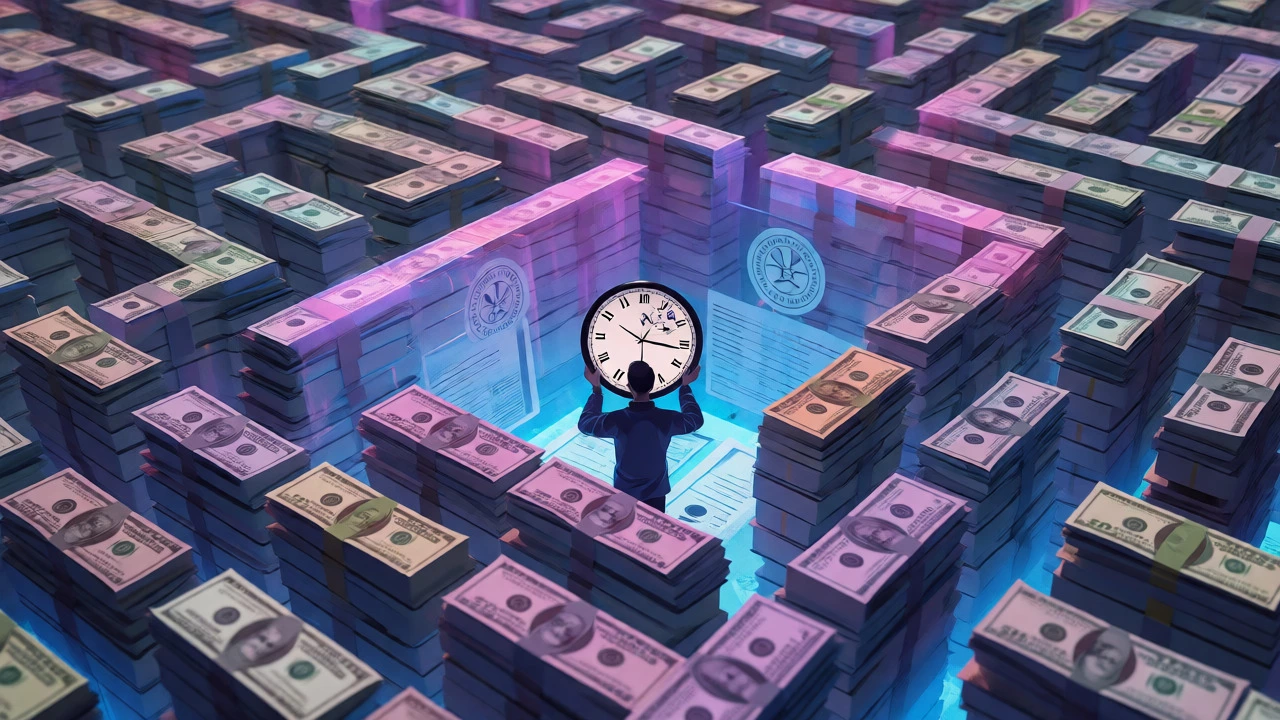
This myth persists because it confuses two very different legal concepts: the lifespan of negative information on your credit report and the actual obligation to repay a debt. While certain debts can fall off your credit history after seven years of delinquency, student loans are uniquely sticky. They rarely go away unless you pay them off, qualify for specific forgiveness programs, or navigate the complex maze of bankruptcy courts. If you’re sitting on a pile of tuition bills from a decade ago, understanding what actually happens to your debt over time is crucial for your financial health.
The Origin of the Myth: Credit Reporting vs. Debt Validity
To understand why everyone talks about the seven-year mark, we need to look at how credit bureaus work. In the United States, governed by the Fair Credit Reporting Act (FCRA), most negative items-like missed payments, collections, or charge-offs-are required to stay on your credit report for seven years from the date of the first missed payment. This is likely where the confusion starts. People see their old medical bills or credit card debt vanish from their reports after seven years and assume the same logic applies to student loans.
Here’s the catch: just because an item disappears from your credit report doesn’t mean you don’t owe the money. For most consumer debts, if the creditor doesn’t sue you within the statute of limitations (which varies by state but is often three to six years), they lose the right to force repayment through the courts. However, student loans are different. Federal student loans generally have no statute of limitations. That means the government can pursue you for repayment indefinitely, even if the loan has been in default for fifteen years.
| Debt Type | Credit Report Duration | Statute of Limitations (Lawsuit) | Dischargeable in Bankruptcy? |
|---|---|---|---|
| Credit Card Debt | 7 Years | 3-6 Years (State dependent) | Yes, usually |
| Medical Bills | 7 Years | 3-6 Years (State dependent) | Yes, usually |
| Federal Student Loans | 7 Years from default* | None (Indefinite) | Rarely (Undue Hardship) |
| Private Student Loans | 7 Years from default* | Varies (Often longer than cards) | Rarely (Undue Hardship) |
*Note: Once cured or rehabilitated, the clock may reset or change depending on servicer policies.
Federal Student Loans: Indefinite Liability
If you hold federal student loans, issued directly by the U.S. Department of Education, the seven-year rule is essentially irrelevant to your principal balance. These loans are backed by the full faith and credit of the U.S. government. Because of this status, they enjoy special privileges that other debts do not. First, there is no statute of limitations on collecting defaulted federal student loans. The government can garnish your wages, seize your tax refunds, and withhold Social Security benefits forever until the debt is satisfied.
Second, while the negative impact of a default might fade from your credit report after seven years from the date of the initial delinquency, the account itself remains open and active in the National Student Loan Data System (NSLDS). Your loan servicer still knows you owe the money. If you try to buy a house ten years later, lenders will see that you have outstanding federal debt, even if your credit score has recovered because the negative marks aged off.
So, how do you actually get rid of federal student loans? You don’t wait seven years. You use one of these four proven paths:
- Income-Driven Repayment (IDR) Forgiveness: After making qualifying payments for 20 or 25 years (depending on the plan), any remaining balance is forgiven. This is the closest thing to a long-term "expiration," but it takes decades, not seven years.
- Public Service Loan Forgiveness (PSLF): If you work for a qualifying employer (government or non-profit) and make 120 qualifying monthly payments, the remaining balance is forgiven tax-free after ten years.
- Total and Permanent Disability Discharge: If you become disabled, you can apply to have your loans discharged immediately, regardless of age or payment history.
- Death Discharge: If the borrower dies, the federal student loan debt is discharged and does not pass to surviving spouses or family members.
Private Student Loans: A Gray Area
Private student loans, issued by banks like Sallie Mae, Discover, or local credit unions, operate more like traditional consumer debt. Here, the story gets slightly more nuanced, but the seven-year rule still doesn’t wipe out the debt automatically. Unlike federal loans, private loans do have statutes of limitations. If you stop paying and the lender never sues you, they may lose the legal right to collect after the statute expires. This period varies significantly by state, ranging from three to fifteen years, though many states cap it around six years.
However, relying on the statute of limitations is risky. Most private lenders will sue before the deadline hits. Furthermore, unlike federal loans, private loans are much harder to discharge in bankruptcy. You must prove "undue hardship" under the Brunner test, which is a high bar to clear. Many borrowers mistakenly believe that because private loans aren’t government-backed, they’ll evaporate faster. In reality, if you default on a private loan, it stays on your credit report for seven years from the date of default, severely damaging your ability to borrow for cars, homes, or credit cards during that critical window.
Bankruptcy: The Only Real "Reset" Button
If you are drowning in debt and considering bankruptcy, you might wonder if student loans will be included in the discharge. Historically, the answer was almost always no. Congress changed the law in 1998 and again in 2005 to make it extremely difficult to discharge student loans in Chapter 7 or Chapter 13 bankruptcy. You cannot simply file for bankruptcy and walk away from your tuition bills.
To succeed, you must file an adversary proceeding-a lawsuit within your bankruptcy case-and prove that repaying the loan would impose an "undue hardship" on you and your dependents. Courts typically use the Brunner Test, which requires you to show three things:
- You cannot maintain a minimal standard of living if forced to repay the loans.
- Your current financial situation is likely to persist for a significant portion of the repayment period.
- You have made good faith efforts to repay the loans.
Recent changes in 2024 and 2025 have simplified this process slightly for some borrowers, particularly those with older loans or specific types of disability, but it remains a complex legal battle rather than an automatic outcome. Waiting seven years does nothing to help you qualify for this; in fact, interest capitalization during those years makes the total amount owed larger, making the "undue hardship" argument harder to win.
What Actually Happens After Seven Years?
Let’s say you defaulted on your student loans seven years ago. You haven’t paid a dime. What does your financial life look like now? If the negative reporting period has expired, your credit report should no longer show the missed payments or the collection account. Your credit score might have rebounded significantly, assuming you’ve managed other accounts responsibly. This is a positive step.
But here is the reality check: if you have federal loans, the debt is still there. The Department of Education can still garnish your wages without going to court. They can intercept your tax refund every year. If you apply for a mortgage, the lender will pull your credit report and see a clean slate regarding late payments, but they will also see the outstanding student loan balance via bank statements or direct verification. You will still have to factor that monthly payment into your debt-to-income ratio.
For private loans, if the statute of limitations has passed and the lender hasn’t sued, the debt becomes "time-barred." This means they can’t sue you for it. However, they can still ask you to pay. And if you make a partial payment or acknowledge the debt in writing, you might accidentally restart the statute of limitations clock. This is a common trap for borrowers who try to negotiate settlements after several years of silence.
Strategic Moves Instead of Waiting
Since waiting seven years won’t erase your debt, what should you do instead? The strategy depends entirely on whether your loans are federal or private.
For federal loans, assess your eligibility for Income-Driven Repayment plans. These plans cap your monthly payments at a percentage of your discretionary income. If you earn little, your payment might be $0. After 20-25 years, the rest is forgiven. This is far more effective than hoping for a seven-year miracle. Additionally, keep an eye on legislative changes. Programs like PSLF have had temporary waivers extended recently, allowing more borrowers to count past payments toward forgiveness. Don’t rely on rumors; check the official Federal Student Aid website for current deadlines.
For private loans, focus on refinancing if your credit score has improved. Since private loans lack flexible repayment options, lowering your interest rate can save thousands. If you are already in default, consider contacting the lender to negotiate a settlement. Lenders are often willing to accept less than the full balance to close the account, especially if the debt is old and they fear losing it entirely. Always get any settlement agreement in writing before sending a check.
Common Pitfalls to Avoid
One major mistake borrowers make is ignoring collection calls for years, thinking the debt will expire. As noted, for federal loans, it won’t. For private loans, silence might help, but it’s a gamble. Another pitfall is believing that "forgiveness" means "free money." When a federal loan is forgiven after 20 or 25 years, the forgiven amount is often considered taxable income by the IRS, resulting in a massive tax bill in the year of forgiveness. Plan for this liquidity event.
Finally, beware of predatory companies promising to "wipe out" your student loans for a fee. No company can magically remove valid federal debt. They can only help you enroll in legitimate government programs. If someone charges you upfront fees to enroll in an IDR plan or PSLF, run the other way. You can do these applications yourself for free on the government portal.
Frequently Asked Questions
Do student loans really go away after 7 years?
No, the debt itself does not disappear. After seven years of delinquency, the negative information related to the default may drop off your credit report, improving your credit score. However, you still owe the money. For federal loans, the government can continue to collect indefinitely through wage garnishment and tax offset. For private loans, the debt may become unenforceable in court if the statute of limitations expires, but it does not vanish automatically.
Can I declare bankruptcy to get rid of student loans?
It is possible but difficult. You must file an adversary proceeding within your bankruptcy case and prove that repaying the loans causes "undue hardship." This is a high legal standard requiring proof that you cannot maintain a minimal standard of living while paying the debt and that your financial situation is unlikely to improve. Recent administrative changes have made this slightly easier for some borrowers, but it is not an automatic discharge.
How long does it take to forgive federal student loans?
Under Income-Driven Repayment (IDR) plans, remaining balances are forgiven after 20 years for undergraduate loans and 25 years for graduate loans. Public Service Loan Forgiveness (PSLF) forgives remaining balances after 10 years (120 qualifying payments) if you work for a qualifying employer. These timelines are based on qualifying payments, not calendar years since borrowing.
Does the 7-year rule apply to private student loans?
The 7-year rule primarily refers to credit reporting standards under the FCRA, which applies to both federal and private loans. Negative items stay on your report for 7 years from the first missed payment. However, the legal obligation to repay private loans is governed by state statutes of limitations, which vary widely (often 3-6 years). If the statute expires, the lender loses the right to sue, but the debt technically remains owed.
Will my spouse be responsible for my student loans after 7 years?
Generally, no. Student loans taken out before marriage are considered individual debt. In most states, your spouse is not liable for your pre-marital student loans. However, if you live in a community property state and use marital assets to pay the loans, or if you co-signed the loan together, your spouse may have obligations. Divorce decrees can assign responsibility, but they do not change the contract with the lender.