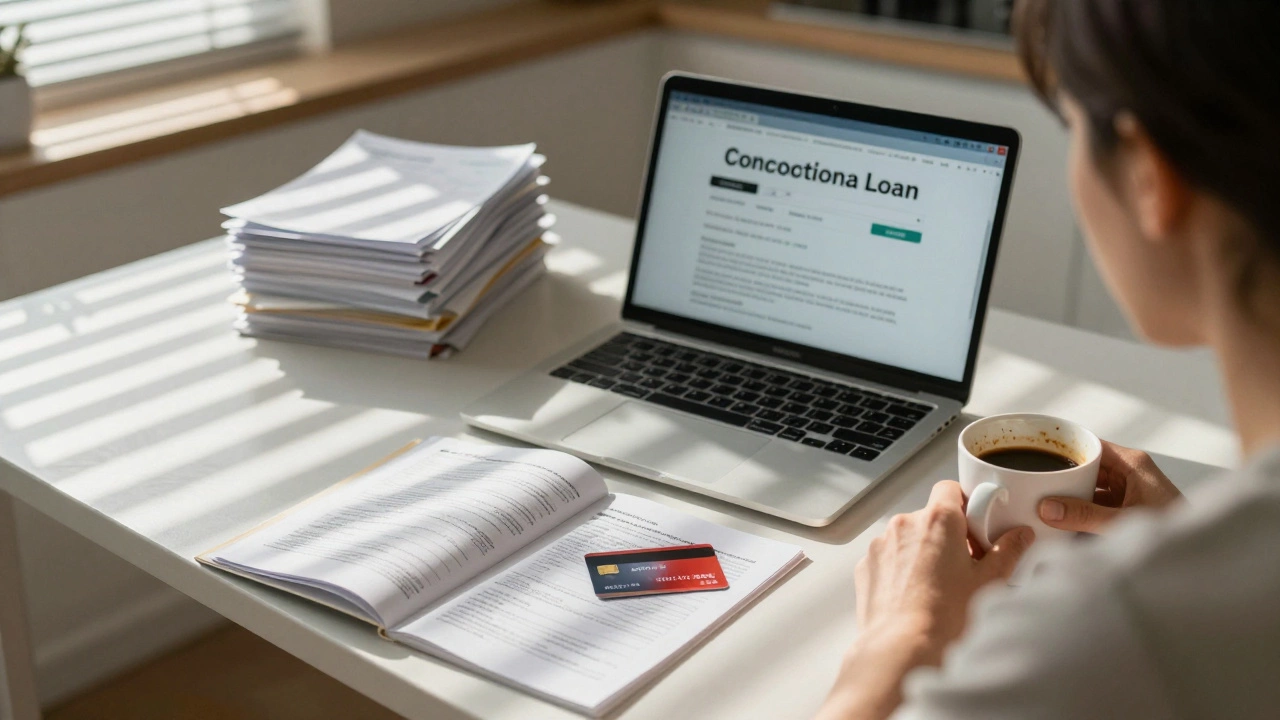
Debt Consolidation Cost Calculator
Debt consolidation sounds like a lifeline. You’ve got multiple credit cards, a personal loan, maybe some medical bills-all with different due dates and interest rates. It feels like juggling knives. So you take out one new loan to pay them all off. Suddenly, you’ve got one payment, maybe a lower rate, and a sense of relief. But here’s the truth most ads won’t tell you: debt consolidation isn’t magic. It can make things worse-if you don’t know what you’re getting into.
You’re not fixing the problem, you’re just moving it
People think consolidation solves debt. It doesn’t. It rearranges it. You still owe the same amount. The only thing that changed is the lender and the payment schedule. If your spending habits haven’t changed, you’ll end up right back where you started-only now you’ve got a new loan on top of the credit cards you didn’t close.
That’s the classic trap. You pay off your $8,000 credit card balance with a consolidation loan. You feel proud. Then, three months later, you’re back to charging $500 a month because you think you’ve "fixed" your finances. Now you’ve got the consolidation loan and new credit card debt. You’ve doubled your problem instead of solving it.
Extended repayment terms mean you pay more in the long run
Let’s say you owe $15,000 across three credit cards at 22% interest. You’re paying $450 a month and you’ll be out of debt in 4 years. Total interest paid? Around $6,800.
You consolidate into a 7-year personal loan at 10%. Your monthly payment drops to $250. That’s a win, right? Not really. Over seven years, you’ll pay $5,500 in interest. But here’s the kicker: you’re paying for three extra years. Total repayment? $20,500. That’s $3,700 more than if you’d stuck with the original plan.
Lower monthly payments feel good. But if you stretch out the loan too long, you’re paying more in interest than you saved. The math doesn’t lie.
Your credit score might take a hit-sometimes permanently
When you apply for a consolidation loan, lenders check your credit. That’s a hard inquiry. One inquiry can drop your score by 5 to 10 points. Not huge. But if you’ve applied for multiple loans in the past six months? That adds up.
Then there’s the new account. A new loan lowers the average age of your credit accounts. That’s another small hit. But the real danger? Closing old credit cards.
People think closing cards improves their debt-to-credit ratio. It doesn’t. It makes it worse. Your credit utilization ratio is calculated as: total balances divided by total credit limits. If you close a card with a $5,000 limit, you just lost $5,000 of available credit. Your utilization jumps-even if you haven’t spent a cent more.
One person I spoke to in Sydney paid off $12,000 in credit card debt with a consolidation loan. She closed all her cards. Six months later, she applied for a car loan. Her credit score had dropped 78 points. The lender denied her. She didn’t understand why-she’d paid everything off.
Secured consolidation loans put your home or car at risk
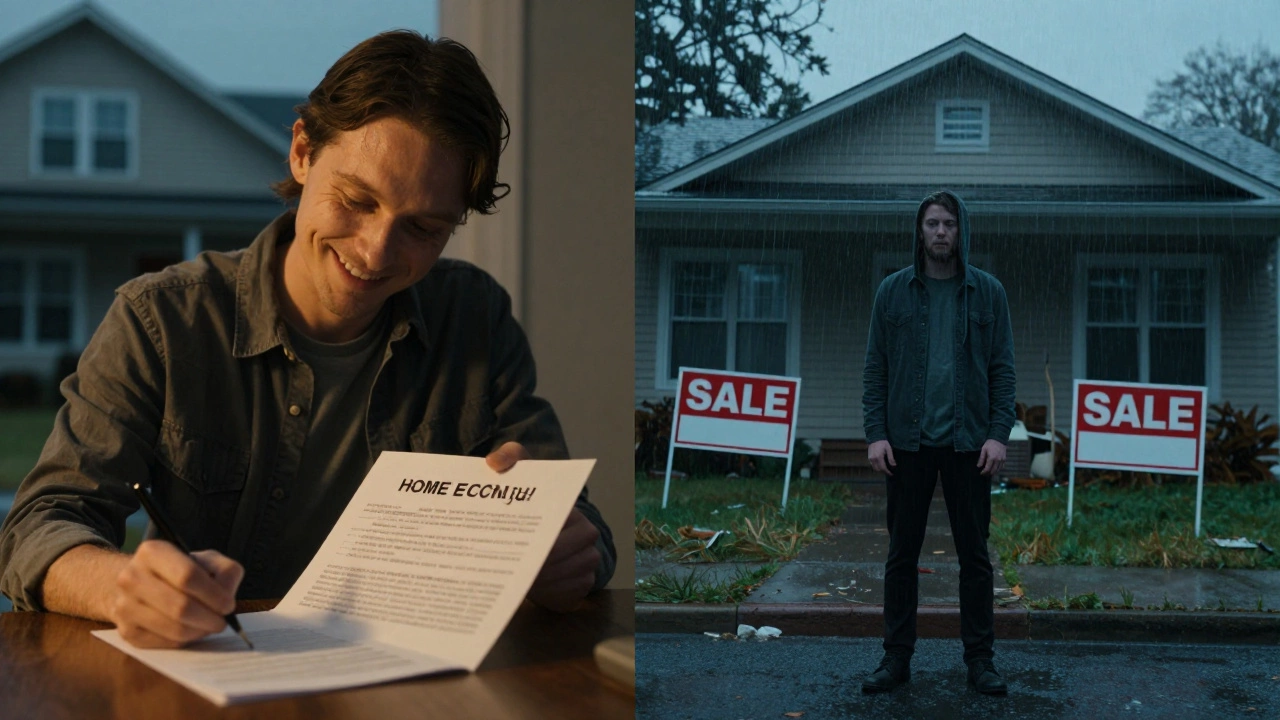
Some lenders offer "secured" consolidation loans. That means you pledge something valuable-your home, your car, even your superannuation-as collateral. The interest rate looks amazing. 5.5%. 4.8%. But here’s the catch: if you miss a payment, they take it.
In 2024, the Australian Securities and Investments Commission reported a 32% increase in home equity loans being used to consolidate unsecured debt. That’s dangerous. People think, "I’ve got equity. It’s safe." But if your income drops, or you get sick, or interest rates rise again-you could lose your house.
One client in Newcastle used a home equity loan to pay off $20,000 in credit cards. He thought he was being smart. Then his hours got cut. He missed a payment. The bank started foreclosure proceedings. He lost his home.
You might get trapped by a bad lender
Not all consolidation lenders are created equal. Some charge hidden fees. Others have balloon payments. Some offer "fixed" rates that reset after two years. Some even require you to buy credit insurance you don’t need.
One common scam: "debt settlement companies" that pretend to consolidate. They tell you to stop paying your creditors and put money into a "savings account" they control. Then they negotiate with your creditors. But during that time, your accounts go into default. Your credit score plummets. And if they don’t settle? You’re left with the original debt, penalties, fees, and a ruined credit history.
In 2023, the ACCC took legal action against three Australian firms for misleading consumers about debt consolidation. They promised to cut debt by 60%. In reality, 8 out of 10 clients ended up owing more after fees and penalties.
It can make you feel falsely secure
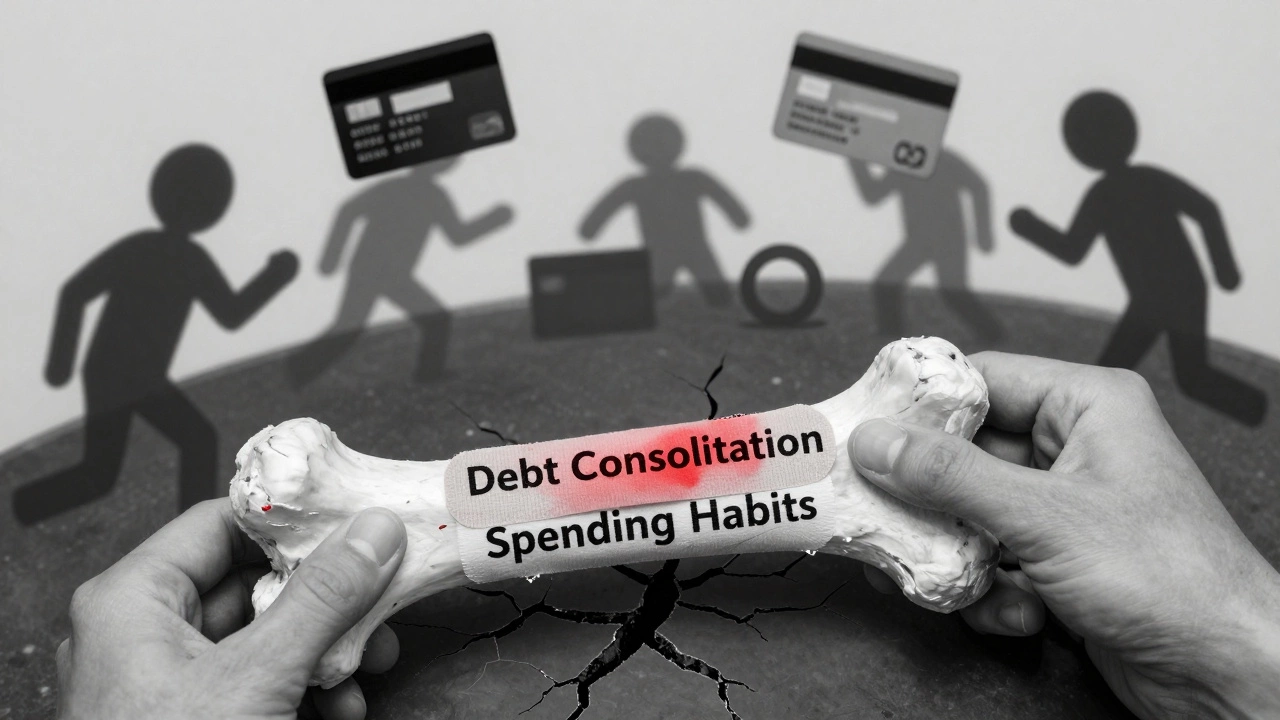
Consolidation gives you a psychological reset. You feel like you’ve turned a corner. That’s why people stop tracking their spending. They think, "I’ve got this under control now." But without a budget, without discipline, you’re just delaying the crash.
Think of it like a bandage on a broken bone. It hides the pain, but the bone’s still broken. You need to fix the root cause: overspending, lack of emergency savings, poor financial habits.
One woman I worked with in Bondi paid off $18,000 in debt with a consolidation loan. She celebrated. Then she went on a $4,000 holiday. Two months later, she maxed out a new card. She was back to square one-with a $12,000 loan payment and $6,000 in new debt.
When consolidation might actually help
It’s not all bad. Consolidation can work-if you do it right.
- You’ve already stopped using credit cards.
- You have a stable income and a realistic budget.
- You’re getting a lower interest rate-by at least 3 to 5 percentage points.
- You’re not extending the term beyond what’s necessary.
- You’re using a reputable lender (like a credit union or major bank).
And even then, you need a plan. Pay extra each month. Cut your expenses. Build a $1,000 emergency fund before you touch the loan. Don’t just aim to break even. Aim to be debt-free faster.
Alternatives to consolidation
There are better ways to tackle debt.
- Debt avalanche method: Pay off the highest-interest debt first, then move to the next. You save the most on interest.
- Debt snowball method: Pay off the smallest balance first. Quick wins build momentum.
- Negotiate with creditors: Call them. Ask for a lower rate or a payment plan. Many will agree-especially if you’ve been a good customer.
- Non-profit credit counseling: In Australia, organizations like Financial Counselling Australia offer free advice and debt management plans.
One man in Melbourne had $22,000 in credit card debt. He called each issuer. He got one card lowered from 24% to 12%. Another from 21% to 10%. He combined it with a side gig and paid it off in 21 months-without a single consolidation loan.
Final thought: Debt consolidation is a tool, not a solution
It’s like a chainsaw. Useful for cutting down a tree. Dangerous if you use it to trim your hedge. If you’re using consolidation to avoid dealing with your spending habits, you’re setting yourself up for failure.
The real fix isn’t a new loan. It’s a new mindset. Track your money. Live below your means. Build savings. Learn to say no.
Consolidation might give you breathing room. But only discipline gives you freedom.
Does debt consolidation hurt your credit score?
Yes, it can-temporarily. Applying for a new loan creates a hard inquiry, which can lower your score by a few points. Closing old credit cards increases your credit utilization ratio, which can hurt your score more. But if you make all payments on time and avoid new debt, your score will recover in 6 to 12 months.
Can I consolidate debt with bad credit?
It’s possible, but risky. Lenders will charge higher interest rates-sometimes over 20%. You might be pushed into secured loans, putting your home or car at risk. If your credit is poor, consider a free debt management plan through a nonprofit credit counselor instead.
Is it better to consolidate with a personal loan or a balance transfer card?
It depends. Balance transfer cards often offer 0% interest for 12 to 18 months, but charge 3% to 5% in fees. They’re good if you can pay off the balance before the promo ends. Personal loans have fixed rates and terms, making them better for larger debts or longer repayment periods. Watch out for hidden fees on both.
What’s the biggest mistake people make with debt consolidation?
Closing old credit cards and then using them again. That’s the #1 reason people end up deeper in debt after consolidation. Keep the accounts open (but don’t use them) to maintain your credit limit and avoid a spike in utilization.
How do I know if consolidation is right for me?
Ask yourself: Have I stopped spending? Do I have a budget? Can I realistically pay off the new loan faster than my current debts? If you answered no to any of these, consolidation isn’t your solution. Talk to a free financial counselor first.