
Student Loan Default Timeline Simulator
Enter your estimated loan balance to see how specific milestones affect your finances if you stop making payments.
Impact Over Time
You graduate. The cap and gown are in the closet, the diploma is framed, and then comes the bill. For millions of Americans, that first student loan payment feels less like a milestone and more like a threat. Life happens-maybe you lost your job, maybe medical bills piled up, or maybe you just forgot about the grace period. So, what actually happens if you stop paying? Does the sky fall immediately? Do debt collectors call at 3 AM? The answer isn't a simple "yes" or "no," but rather a slow-motion train wreck that gets worse the longer you wait.
If you ignore your federal student loans, you aren't just delaying a payment; you're triggering a cascade of legal and financial consequences that can follow you for decades. Unlike a credit card where you might negotiate a settlement easily, federal student loans have unique powers-they can seize tax refunds, garnish wages without a court order, and deny you access to other federal benefits. Let's walk through exactly what goes down, step by step, so you know what to expect before it hits your bank account.
The First Few Months: Delinquency and Late Fees
The moment your due date passes, you enter a status called Delinquency. This starts on day one after your missed payment. It’s not immediate disaster, but it’s the warning light on the dashboard flashing red. During this phase, your loan servicer will start sending notices. These aren't just polite reminders; they are legally required communications that document your failure to pay.
Most federal loan servicers charge late fees, though these vary by contract. More importantly, interest keeps accruing. If you have a fixed-rate loan, that’s annoying. If you have a variable rate or unsubsidized loans, that balance grows faster than you think. You might receive emails and phone calls urging you to make a partial payment. Ignoring them doesn't make the problem go away; it just means you miss out on early intervention options like deferment or forbearance, which can pause payments temporarily if you qualify.
Six Months In: Default Status
The magic number is 270 days. That’s roughly nine months, but many servicers mark you as being in Default after six months (180 days) of non-payment for certain types of loans, while others stick strictly to the 270-day rule for Direct Loans. Once you hit default, the game changes completely. Your entire remaining balance becomes due immediately. This is known as acceleration.
Think about that. Instead of owing $500 a month, you suddenly owe the full principal plus accrued interest-maybe $30,000 or $40,000-all at once. Can you write that check today? Probably not. Now, the government can turn your loan over to a private collection agency. These agencies are aggressive. They will contact your references, your employer, and anyone else listed on your FAFSA application. The goal is pressure. They want you to feel the social weight of the debt because they know shame is a powerful motivator.
| Timeframe | Status | Primary Consequences |
|---|---|---|
| Day 1-90 | Late Payment | Late fees, increased interest accrual, servicer warnings. |
| Day 91-179 | Delinquent | Credit report update (30-60 days late), continued collection efforts. |
| Day 180-270 | Pre-Default | Referral to debt collector, loss of eligibility for some repayment plans. |
| Day 270+ | Default | Full balance due, wage garnishment risk, tax refund offset, credit score drop. |
Your Credit Score Takes a Hit
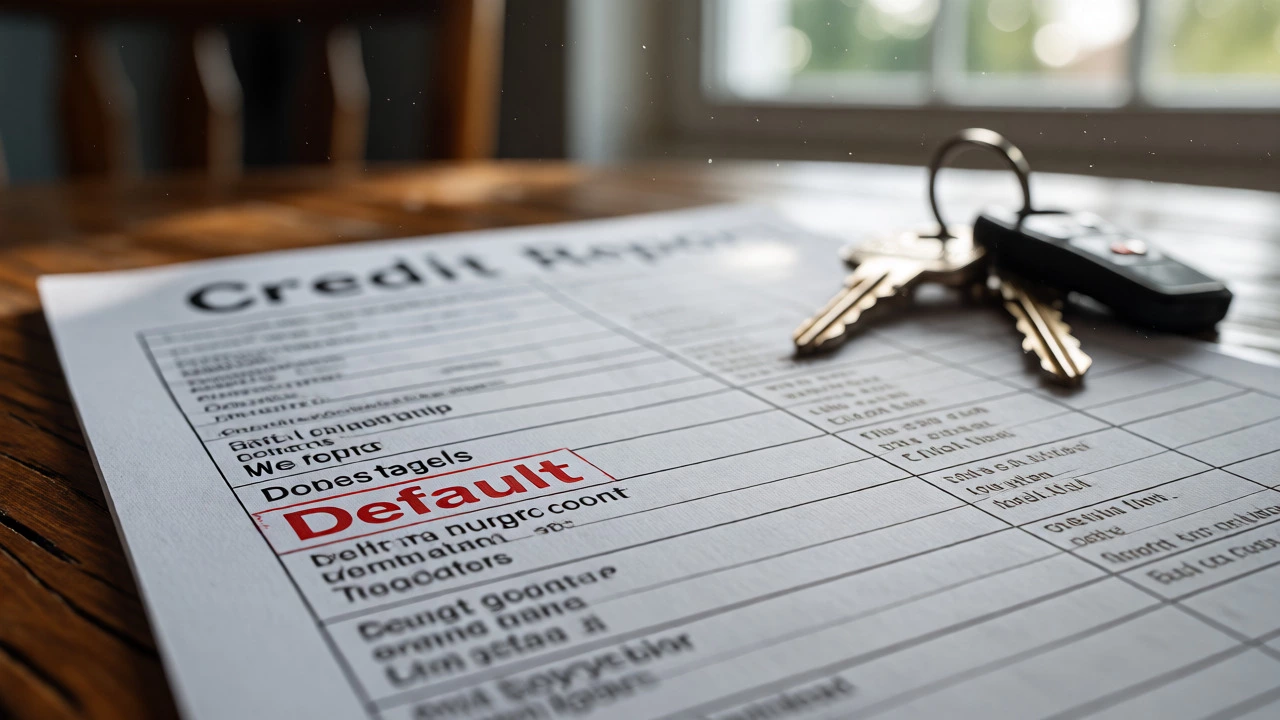
This is where the long-term damage begins. When you default, the Department of Education reports it to all three major credit bureaus: Equifax, Experian, and TransUnion. A default stays on your credit report for seven years from the date of the original delinquency.
A single default can drop your credit score by 100 points or more. Why does this matter? Because lenders view student loan defaults as a high-risk signal. You’ll struggle to get approved for a mortgage, an auto loan, or even a credit card. If you do get approved, your interest rates will be significantly higher. Imagine trying to buy a house with a 7% mortgage rate instead of a 6% rate. Over 30 years, that difference costs you tens of thousands of dollars. And it’s not just banks. Some employers check credit history for positions involving finance or security clearances. Landlords often pull credit reports too. You’re effectively locked out of mainstream financial life until you fix this.

Wage Garnishment and Tax Refund Offsets
Here is the part that surprises most people: the government doesn’t need to sue you to take your money. Under the Administrative Wage Garnishment (AWG) rules, the Department of Education can order your employer to withhold up to 15% of your disposable pay to repay defaulted federal student loans. "Disposable pay" means your gross income minus mandatory deductions like taxes and Social Security. It does not subtract rent, groceries, or child support.
They don’t need a court judgment. They just send a notice to your employer. You get 30 days to request a hearing if you believe the amount is wrong, but the burden of proof is on you. Meanwhile, the Treasury Offset Program (TOP) kicks in. If you’re owed a federal tax refund, the IRS won’t send it to you. They’ll intercept it and apply it directly to your student loan debt. This can happen every year until the debt is paid. If you file jointly with a spouse, they can still take your portion of the refund, though your spouse might be able to claim their share back through an injured spouse claim.
Loss of Federal Benefits
Student loans are tied to your identity in the federal system. If you default, you lose access to several key federal benefits. You become ineligible for additional federal student aid, including grants and new loans. This means if you decide to go back to school for a master’s degree or a certification, you have to pay cash or find private financing, which often lacks flexible repayment terms.
You also lose eligibility for certain federal programs. Want to join the Peace Corps? You might be blocked. Need a small business loan from the Small Business Administration (SBA)? A defaulted student loan can disqualify you. Even applying for a passport renewal can be complicated if there are unresolved federal debts, though this is less common now than in the past. The point is, the ripple effects touch parts of your life you wouldn't expect.
Private vs. Federal: A Critical Difference
Not all student loans behave the same way. The harsh penalties described above apply primarily to federal loans. Private student loans are contracts between you and a bank or lender. They don’t have the same administrative power to garnish wages without a lawsuit. However, that doesn't mean they are softer.
With private loans, the lender must sue you in civil court to collect. If they win, they can get a judgment that allows wage garnishment and bank levies, depending on state laws. Private lenders are also quicker to close accounts and report late payments. While they lack the automatic tax refund seizure power, they are often more willing to litigate because they don't have the bureaucratic overhead of the federal system. Always check your specific loan agreement, but assume private lenders will pursue legal action aggressively after 6-12 months of non-payment.
How to Fix It Before It’s Too Late
Stopping payments doesn't have to end in default. There are escape hatches. The first step is always communication. Call your servicer. Explain your situation. Ask about Income-Driven Repayment (IDR) plans. These plans cap your monthly payments at a percentage of your discretionary income. If you earn little to nothing, your payment could be $0. Yes, zero. And those months still count toward forgiveness timelines.
If you’ve already defaulted, you can use Loan Rehabilitation. This involves making nine voluntary, reasonable, and affordable monthly payments within ten consecutive months. Once done, your loan is removed from default status, and the default notation is removed from your credit report (though the late payments remain). Alternatively, Loan Consolidation allows you to combine multiple loans into one new Direct Consolidation Loan, which brings you out of default immediately if you agree to an IDR plan.
Key Takeaways
- Immediate Impact: Missing a payment triggers late fees and interest accumulation right away.
- Credit Damage: Defaulting stays on your credit report for seven years, severely impacting your ability to borrow.
- Government Power: Federal loans allow wage garnishment (up to 15%) and tax refund offsets without a court lawsuit.
- Rehabilitation Option: You can recover from default by making nine consistent payments, restoring your eligibility for federal benefits.
- IDR Plans: Income-Driven Repayment can lower payments to $0 if your income is low, preventing default in the first place.
Can I go to jail for not paying student loans?
No. Student loan debt is considered a civil obligation, not a criminal one. You cannot be arrested or imprisoned simply for failing to make payments. However, if you fail to appear in court when sued by a private lender, you could face contempt of court charges, but this is rare and usually avoidable by responding to lawsuits promptly.
Does student loan debt disappear after death?
Yes, federal student loans are discharged upon the death of the borrower. The estate does not have to repay the debt. Private loans vary by lender and whether there was a co-signer. Many private lenders offer death discharge, but you must provide a death certificate to process the claim.
Will my spouse be affected by my student loan default?
Generally, no. Federal student loans are individual debts. Your spouse is not responsible for repaying your loans unless they co-signed the loan themselves. However, if you file taxes jointly, the IRS can offset your combined tax refund to cover your debt, potentially affecting your spouse's share unless they file an injured spouse claim.
How long does it take to rebuild credit after default?
The default entry remains on your credit report for seven years from the date of the original delinquency. However, if you rehabilitate the loan, the default status is removed, which helps your score improve faster. Consistent on-time payments after rehabilitation will gradually raise your score over time, even while the historical late payments remain visible.
Can I settle my student loan debt for less than I owe?
It is difficult to settle federal student loans. The Department of Education rarely accepts settlements unless you are already in default and have demonstrated financial hardship. Private lenders may be more open to negotiation, especially if you offer a lump sum payment. Always get any settlement agreement in writing before paying.