
Home Equity Calculator
Your Property Details
Your Equity Analysis
Enter your property details to see your equity position.
This tool helps you understand your current equity position. Remember, equity isn't cash until you access it through remortgaging or selling.
When your house is worth more than what you still owe on your mortgage, you’ve hit something called positive equity. It’s not just a fancy term-it’s real money sitting in your home, waiting to be used. In Sydney, where property prices have climbed steadily over the last decade, this situation is more common than you think. Many homeowners who bought between 2015 and 2020 now find themselves with tens or even hundreds of thousands of dollars in equity. But what does that actually mean for you? And what can you do with it?
Positive Equity Isn’t Just a Number-It’s Power
Let’s say you bought a house for $700,000 in 2018. You put down $140,000 and took out a $560,000 mortgage. Today, your home is valued at $950,000, and you’ve paid off $80,000 of the loan. That leaves you with $480,000 still owed. Your equity? $470,000. That’s the difference between what your home is worth and what you owe. This isn’t cash in your bank account-but it’s just as valuable. Banks see it as collateral. And that opens up options you didn’t have before.
Most people think equity means you’re rich. But unless you sell, it’s locked in. You can’t use it to pay for groceries or a holiday. But you can unlock it-and that’s where remortgaging comes in.
Remortgaging: Turning Equity Into Cash
Remortgaging means switching your existing mortgage to a new one, usually with better terms. When you have positive equity, lenders are eager to give you more money because you’re less risky. You can refinance for a higher loan amount than what you currently owe, and pocket the difference in cash.
For example: You owe $480,000. Your home is worth $950,000. You apply for a new mortgage of $700,000. The lender pays off your old loan ($480,000) and gives you $220,000 in cash. You now owe $700,000 instead of $480,000-but you’ve got a pile of cash to use however you want.
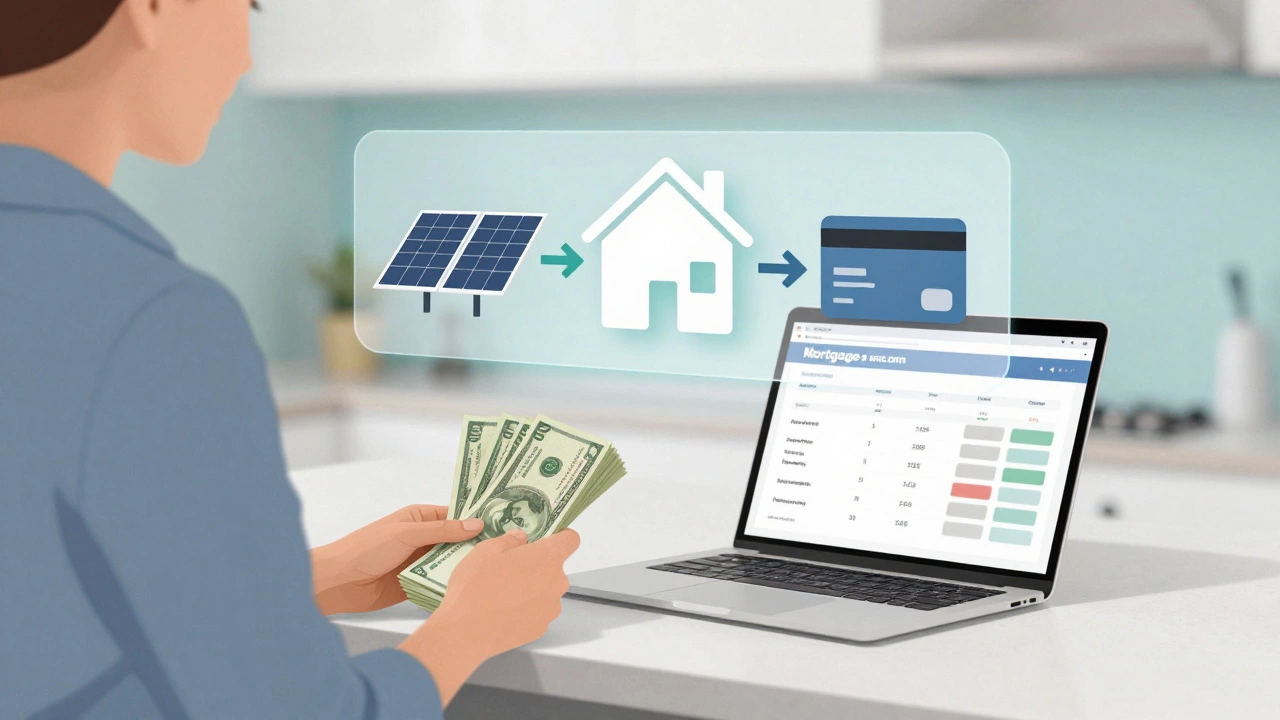
People use this cash for home renovations, paying off high-interest credit cards, funding a small business, or even helping kids with university fees. In Sydney, it’s common to see families remortgage to install solar panels, extend their kitchen, or build a granny flat for rental income.
It’s Not Free Money-Here’s What You Give Up
Before you jump into remortgaging, understand the trade-offs. You’re not getting free cash. You’re borrowing more. That means:
- Your monthly repayments could go up-even if interest rates are low.
- You’re extending your debt longer. Instead of paying off your home in 15 years, you might now stretch it to 25 or 30.
- You’re putting your home at greater risk. If property values drop, you could end up owing more than your house is worth again.
- There are fees: valuation costs, legal fees, lender fees. These can add $2,000-$5,000.
One client I worked with in Marrickville remortgaged to get $150,000 for a kitchen renovation. She thought it would boost her home’s value by $200,000. It only went up by $80,000. She ended up paying more in interest over time than she gained in equity. Not everyone wins.
When Remortgaging Makes Sense
Not every homeowner with equity should remortgage. But these are good reasons to consider it:
- You need to fix major structural issues (roof, foundation, wiring) and can’t afford it out of pocket.
- You have high-interest debt (credit cards at 20%+ interest) and can consolidate it into a mortgage at 5%.
- You’re planning to stay in the home for at least 5-7 years.
- You’re confident property values won’t drop sharply.
- You have a stable income and can handle higher repayments.
One rule of thumb: Don’t borrow more than 80% of your home’s value. That’s the magic number lenders use to avoid mortgage insurance. If your home is worth $950,000, don’t go over $760,000 in total debt unless you want to pay extra fees.
Alternatives to Remortgaging
Remortgaging isn’t your only option. If you don’t want to increase your debt, here are other paths:
- Sell and downsize: Sell your big house, buy a smaller one, and pocket the difference. Many retirees in the Northern Beaches do this to fund travel or move closer to family.
- Equity release schemes: These are designed for older homeowners (usually 60+). You get cash without selling, but your equity shrinks over time. This is different from remortgaging and comes with stricter rules.
- Home equity loan: A second loan on top of your existing mortgage. You keep your current loan and take out another one for a fixed amount. Interest rates are usually higher than your main mortgage.
- Nothing at all: Sometimes the best move is to let your equity grow. Pay extra on your mortgage now, and you’ll own your home outright sooner. That’s financial freedom.
How to Check Your Equity Right Now
You don’t need a fancy app or a real estate agent to know your equity. Here’s how to calculate it in 5 minutes:
- Find your current mortgage balance. Log into your bank’s app or check your latest statement.
- Get a free property estimate. Use Domain, CoreLogic, or RP Data. Don’t rely on Zillow-it’s not accurate in Australia.
- Subtract your loan balance from the estimated value. That’s your equity.
Example: Mortgage balance = $450,000. Estimated home value = $890,000. Equity = $440,000.
Do this every 12-18 months. Property values change fast. In Sydney, some suburbs saw 15% jumps in 2023. Others dropped 5% in 2024. Stay updated.
What Happens If You Sell?
If you decide to sell your home and it’s worth more than your mortgage, the process is simple. The buyer’s money pays off your lender first. Whatever’s left is yours. No taxes in Australia on your primary residence. No capital gains. Just cash in your hand.
Many people use this windfall to buy a bigger house, move to a quieter suburb, or invest in shares. One couple in Bondi sold their three-bedroom for $1.4 million, paid off their $620,000 mortgage, and used the rest to buy a beachside unit in Wollongong and start a small café.
But be careful. Selling costs money too. Agent fees (2.5%-3%), legal fees, moving costs. That’s $35,000-$40,000 on a $1.4 million sale. Don’t forget to subtract those before you celebrate.
When Positive Equity Becomes a Trap
Some people treat equity like a lottery win. They borrow more than they can afford, buy luxury cars, go on expensive trips, or invest in risky startups. Then the market turns.
In 2022, Sydney’s property market cooled. Home values dropped 8-12% in some areas. People who had remortgaged to the max suddenly owed more than their homes were worth. They were stuck. They couldn’t sell without losing money. They couldn’t refinance because lenders saw them as high-risk.
Positive equity is a tool, not a license to spend. Use it wisely-or it can become your biggest financial mistake.
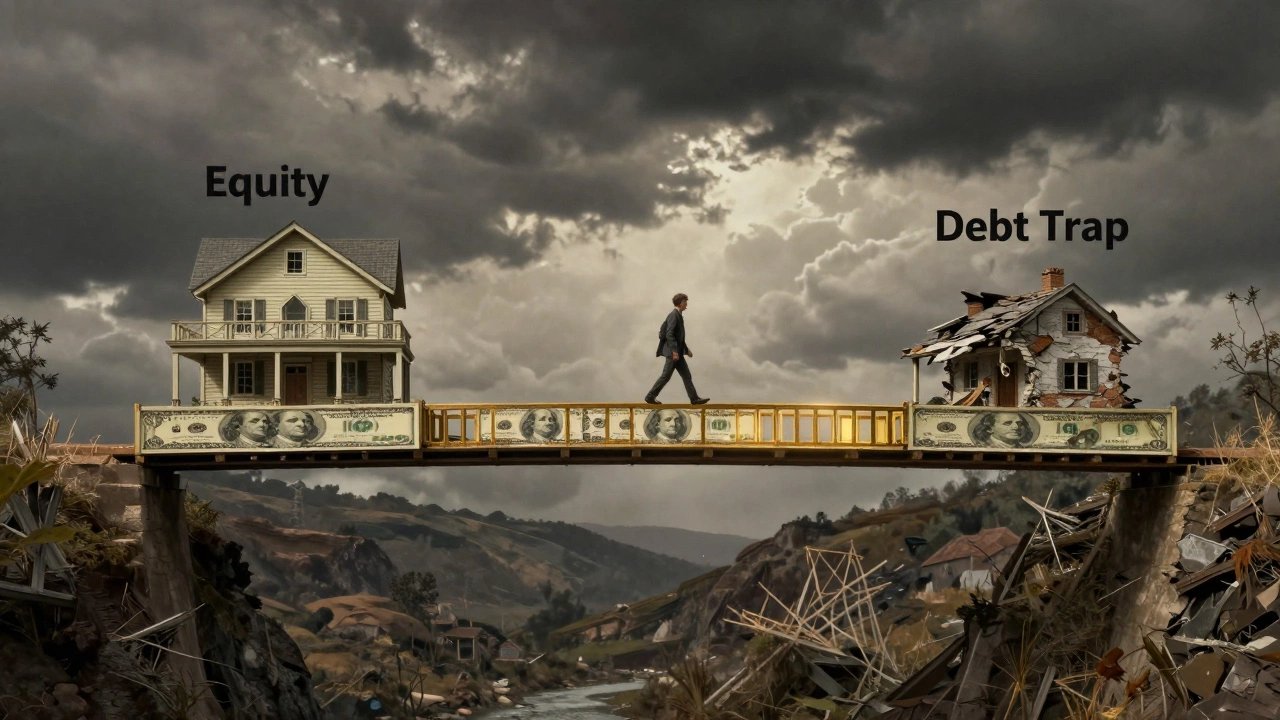
Final Thought: Equity Is a Bridge, Not a Destination
Having more equity than debt is a win. But it’s not the finish line. It’s a bridge. It can take you to better financial health-or deeper trouble, depending on how you cross it.
If you’re thinking about remortgaging, talk to a mortgage broker who doesn’t earn commission on loans. Ask them: “What happens if interest rates rise 2%?” and “What if my income drops next year?” If they don’t have clear answers, walk away.
Equity gives you choices. Don’t let it take them away.
Can I remortgage if I have a fixed-rate mortgage?
Yes, but you’ll likely pay an early repayment fee. Most fixed-rate mortgages have penalties if you break the term early-often $3,000 to $10,000 depending on your loan size and how much time is left. Calculate the fee first. If your new rate saves you more than the penalty over the next 2-3 years, it might still be worth it.
How much equity do I need to remortgage?
Most lenders require at least 20% equity to avoid mortgage insurance. That means you can borrow up to 80% of your home’s value. For example, if your home is worth $900,000, you can borrow up to $720,000. If you owe $500,000, you can get up to $220,000 in cash. Some lenders allow up to 90% loan-to-value, but you’ll pay extra fees and higher interest.
Will remortgaging affect my credit score?
It might, briefly. Applying for a new mortgage triggers a hard credit check, which can drop your score by 5-10 points. If you’re approved and manage the new loan well, your score will recover in 3-6 months. But if you take on too much debt and struggle with repayments, your score could fall further. Keep your credit utilization low and pay on time.
Can I use equity to invest in shares or crypto?
You can-but it’s risky. Borrowing to invest means you’re gambling your home on market performance. If shares or crypto drop 30%, you still owe the full mortgage amount. Many Australians lost money doing this in 2022. Only do it if you’re prepared to lose the borrowed amount and still keep your home.
Is it better to pay extra on my mortgage or remortgage for cash?
It depends on your goals. Paying extra reduces your debt faster and saves you thousands in interest. Remortgaging gives you cash now but increases your total debt. If you need the money for a high-return use (like a rental property upgrade), remortgaging might make sense. If you just want to be debt-free sooner, extra payments win every time.