Debt-to-Income Ratio Calculator
Your Loan Eligibility Check
Lenders often reject applications when your debt-to-income ratio exceeds 40%. This calculator shows if you're at risk.
If you’ve applied for a loan and got rejected-again-you’re not alone. In Australia, over 1.2 million people were turned down for personal loans in 2025, mostly because of low credit scores, high existing debt, or unstable income. But being denied doesn’t mean you’re stuck. There are real, legal ways to regain control without taking on more debt you can’t afford.
Stop applying for more loans
Every time you apply for a loan, a hard inquiry hits your credit file. Too many in a short time make lenders think you’re desperate. That lowers your score further. If you’ve been rejected three or more times in the last six months, stop applying. Don’t chase more credit. Focus on fixing the root problem instead.Check your credit report for errors
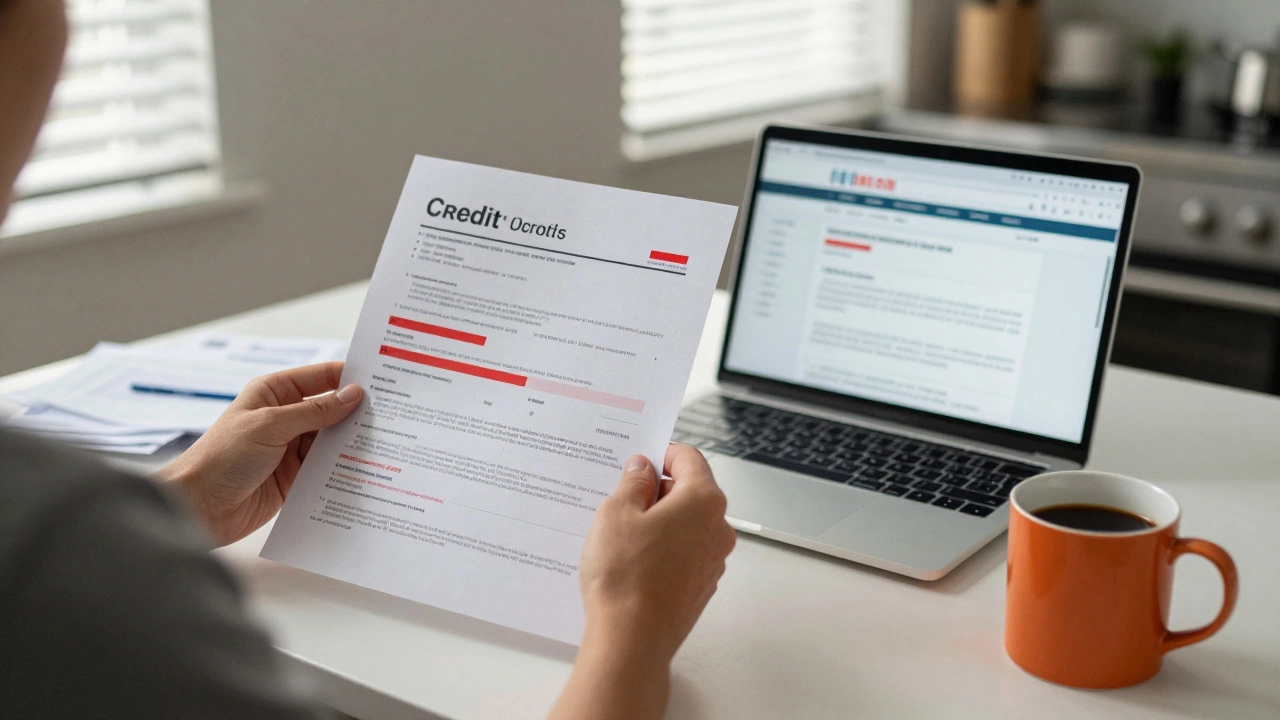
Your credit score isn’t magic. It’s built from data-some of it wrong. In 2025, ASIC found that 1 in 5 Australians had errors on their credit file: old debts that were paid off but still listed, accounts that weren’t theirs, or incorrect payment histories. You can get your free credit report from Equifax, Experian, or Illion. Look for anything that doesn’t belong to you. Dispute it. Fixing one error can raise your score by 50+ points overnight. That might be enough to qualify for better terms later.Use a free debt counselling service
In Australia, non-profit financial counsellors are funded by the government and offer free advice. They don’t sell products. They don’t charge fees. They help you understand your options. Call Financial Counselling Australia (1800 007 007) or visit financialcounsellingaustralia.org.au. A counsellor will look at your income, expenses, and debts. Then they’ll help you build a plan. Many people don’t know this: if you’re struggling, you can ask them to negotiate with your creditors. They can get interest rates lowered, payment plans extended, or even stop collection calls.Try a debt agreement instead of a loan
A debt agreement (Part IX under the Bankruptcy Act) lets you pay back what you can afford over time-usually 3 to 5 years. It’s legally binding. Once accepted, your creditors can’t chase you for more. You won’t get new credit during this time, but you also won’t go bankrupt. To qualify, your unsecured debt must be under $120,000 (as of 2026), your income must be stable enough to make regular payments, and you must not have done a debt agreement in the last 10 years. A registered trustee handles it. You pay them a fee, but it’s often less than what you’d pay in interest over time. Thousands of Australians use this each year to escape the loan cycle.
Consolidate with a low-interest credit card (if you qualify)
Some credit cards offer 0% interest for 12 to 24 months on balance transfers. This isn’t a loan, but it can act like one. If you have decent credit (above 650), you might qualify. Transfer high-interest debts (like store cards or payday loans) to the new card. Then pay it off before the intro rate ends. But be careful: if you miss a payment, the rate jumps to 20% or more. And you can’t use the card for new spending. This only works if you stick to a strict payoff plan. Use a free budgeting app like MoneySmart to track progress.Ask family or friends for help-with a contract
If you have someone willing to lend you money, don’t just say, “Can you help?” Put it in writing. Even a simple agreement protects both of you. List the amount, repayment schedule, and consequences if you miss a payment. This turns emotional pressure into clear expectations. Many families avoid talking about money because they don’t know how. A written plan changes that. You can find free templates from MoneySmart or your local community legal centre.Boost your income-even a little
Lenders don’t just look at your debt. They look at your income. If you earn $500 a week and owe $400 in repayments, you’re already stretched. But if you earn $600? That changes everything. Look for side gigs that fit your life. Drive for a ride-share app a few nights a week. Sell unused items online. Do freelance writing, tutoring, or dog walking. Even an extra $150 a week can make you eligible for a better loan later-or help you pay off debt faster. In Sydney, many people use platforms like Airtasker or Gumtree to find small jobs. You don’t need to quit your day job. Just add a little extra.Build a small emergency fund
You might think, “How can I save when I can’t pay my bills?” But having even $500 saved can stop you from needing a loan again. If your car breaks down or your fridge dies, you won’t have to turn to a payday lender. Start with $10 a week. Put it in a separate account you can’t touch. Use a round-up app like Up or Qantas Money to automatically save spare change. In six months, you’ll have $240. In a year, $500. That’s enough to handle one surprise without going further into debt.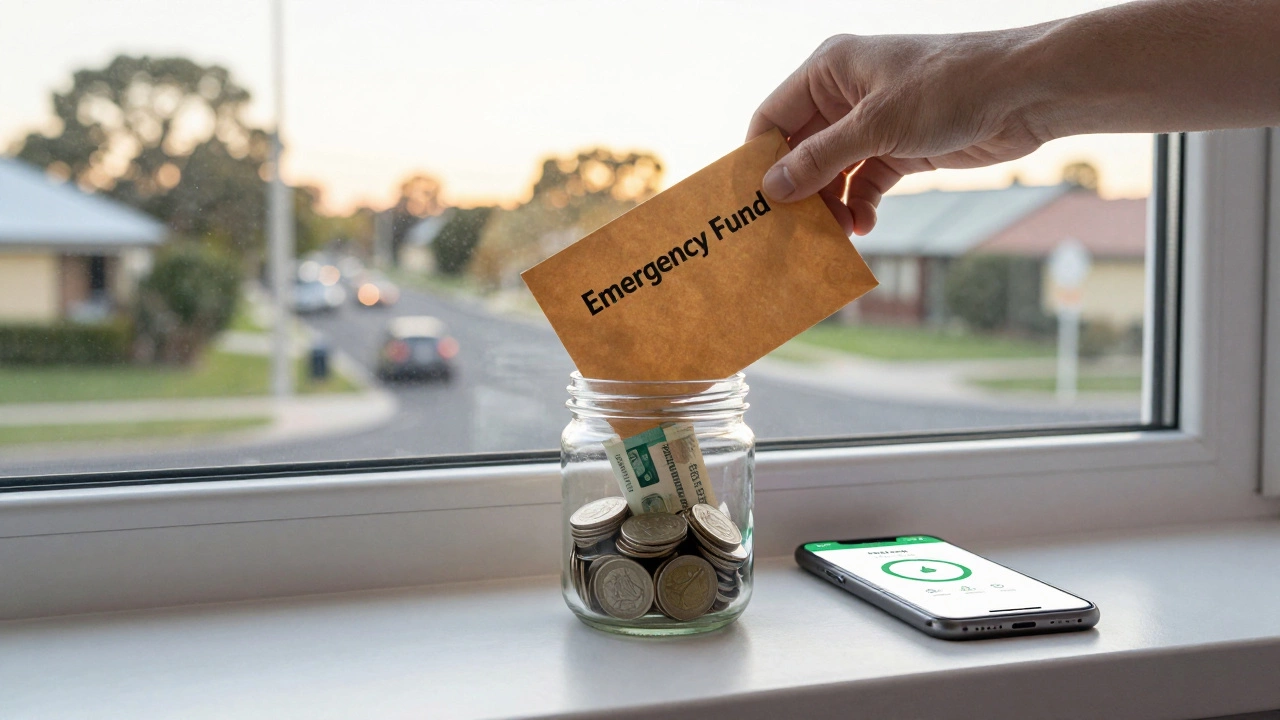
Know what NOT to do
There are predators waiting for people in financial stress. Avoid these traps:- Payday lenders: They charge up to 48% monthly interest. A $500 loan can cost you $1,200 in six months.
- Loan sharks: Illegal lenders who threaten you or your family. Report them to ASIC immediately.
- Debt relief scams: Companies that promise to “erase” your debt for a fee. They take your money and disappear.
- Home equity loans: If you’re already struggling, using your house as collateral is dangerous. You could lose it.
What happens if you can’t pay anything?
If you’re at your limit-no income, no savings, no way to pay-talk to a financial counsellor immediately. You might qualify for a hardship variation. This lets you pause or reduce payments on your existing debts. Banks and credit providers are legally required to consider hardship requests. You don’t need to be bankrupt to ask. You just need to show you’re trying. Many people wait too long because they’re ashamed. But help is there. And it’s free.Long-term recovery: rebuild your credit
Once you’re out of crisis mode, start rebuilding. Get a secured credit card. Put down $500 as a deposit. Use it for one small purchase each month-like groceries-and pay it off in full. Do this for six months. Your score will climb. Then move to a regular card. Keep your balances below 30% of your limit. Never miss a payment. After 12 to 18 months, you’ll be eligible for better loans again. But this time, you’ll be ready.Why was I denied a loan even though I have a job?
Lenders look at your debt-to-income ratio. If you owe $2,000 a month and earn $3,500, you’re already spending 57% of your income on debt. Most lenders want that under 40%. Even with a job, too much existing debt makes you risky. Fix your current debts first before applying again.
Can I get a loan with bad credit in Australia?
Yes-but only from specialist lenders who charge very high interest. These loans often cost more than the original debt. It’s better to fix your credit first using free counselling, debt agreements, or secured credit cards. The goal isn’t to get any loan-it’s to get the right one.
How long does it take to rebuild credit after debt problems?
It usually takes 12 to 24 months of consistent on-time payments and low credit use to see major improvements. Negative marks like defaults stay on your file for five years, but their impact fades over time. The longer you manage your finances well, the faster your score recovers.
Is debt consolidation a good idea if I can’t get a loan?
Debt consolidation means combining multiple debts into one payment. But if you can’t get a loan, you can’t consolidate that way. Instead, use a debt agreement or negotiate directly with creditors through a financial counsellor. These are legal alternatives that don’t require new borrowing.
What’s the difference between bankruptcy and a debt agreement?
Bankruptcy is a legal status that lasts three years and affects your ability to travel, get credit, or hold certain jobs. A debt agreement is a formal arrangement to repay what you can afford, without declaring bankruptcy. It’s less severe, cheaper, and doesn’t affect your employment in most cases. Most people in Australia choose a debt agreement when they can still make some payments.
Next steps: what to do today
1. Request your free credit report from Equifax or Illion. Look for errors. Dispute them if needed. 2. Call Financial Counselling Australia (1800 007 007). Ask about debt agreements or hardship variations. 3. Set up a $10 weekly savings habit-even if it’s just from your coffee money. 4. Write down all your debts: who you owe, how much, and the interest rate. 5. Block all loan apps on your phone for 30 days. No more applications. Focus on fixing, not chasing.You don’t need a loan to get out of debt. You need a plan-and help that doesn’t cost you more.