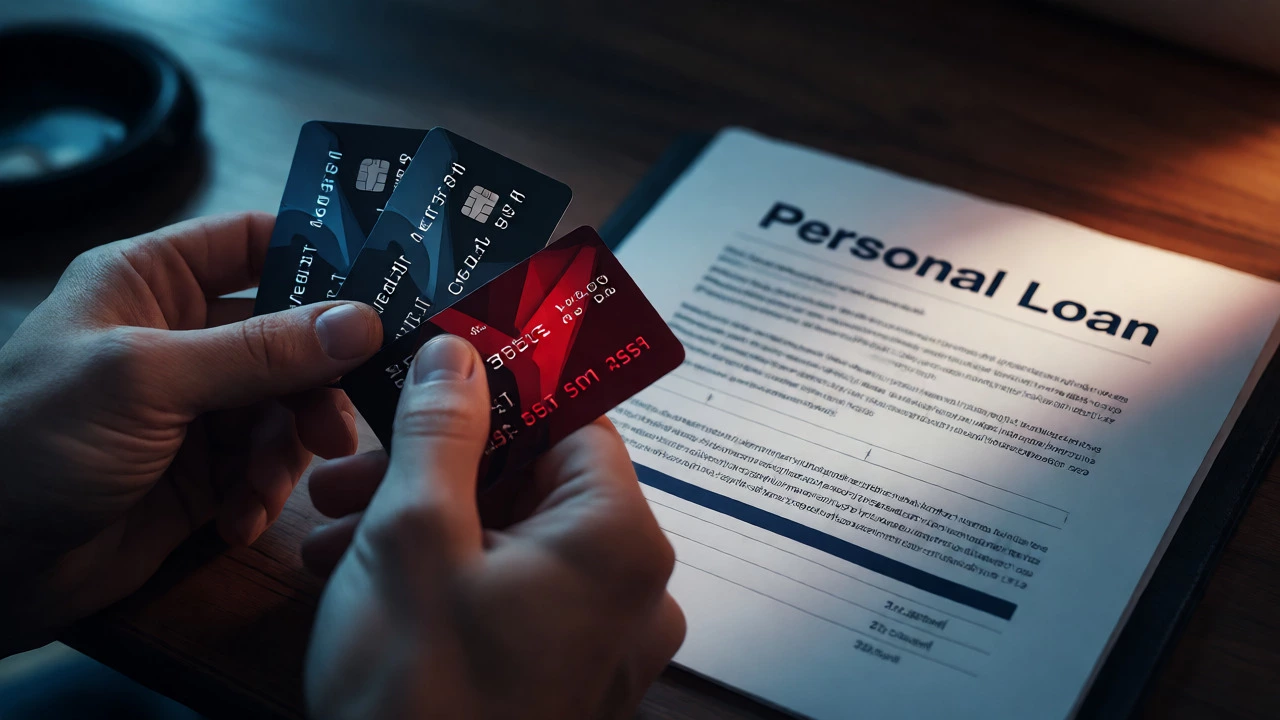
Personal Loan Decision Simulator
Use this tool to estimate how much you could save by consolidating high-interest credit card debt into a single personal loan with a lower fixed rate.
Current Debt Situation
Proposed Personal Loan
New Monthly Payment
$0.00
Total Interest Saved
$0.00
Payoff Time Change
--
Verdict
You’re staring at a bill you can’t pay, or maybe you’re eyeing a home renovation that’s been on your to-do list for years. The credit card balance is climbing, and the minimum payments feel like a treadmill you can’t get off. It’s tempting to just take out a personal loan and call it a day. But is borrowing money actually a smart move, or are you just digging a deeper hole?
The truth is, a personal loan isn’t inherently good or bad. It’s a tool. Like any tool, its value depends entirely on how you use it. Used correctly, it can save you thousands in interest and clear up messy finances. Used poorly, it adds monthly pressure without solving the root problem. So, when does borrowing make sense? Let’s break down the scenarios where taking out a loan is a strategic win, and where it might be a trap.
Consolidating High-Interest Debt
This is the most common reason people reach for a personal loan, and for good reason. If you’re juggling three credit cards with APRs hovering around 24%, paying them off individually is painful. You’re fighting high-interest charges every month, meaning more of your payment goes toward interest than principal.
A debt consolidation loan combines these balances into one single payment with a fixed interest rate. Ideally, this new rate is significantly lower-say, 8% to 12%. By swapping multiple high-interest debts for one lower-interest obligation, you reduce your total monthly outlay and speed up repayment. According to data from major lending platforms, borrowers who consolidate often see their interest costs drop by 30-50% over the life of the loan.
But here’s the catch: consolidation only works if you stop using the credit cards. If you pay off the cards with the loan but then start charging again because you have available credit, you’ve effectively doubled your debt. You now have the loan payment plus new card balances. This scenario turns a helpful tool into a financial nightmare.
Funding Large, One-Time Expenses
Sometimes, you need cash fast for something big that doesn’t fit into your monthly budget. Think medical emergencies, urgent car repairs, or wedding costs. In these cases, draining your savings might leave you vulnerable to the next surprise expense. A personal loan can bridge that gap without wiping out your safety net.
For example, say your transmission blows up and the repair costs $3,000. Your emergency fund has $5,000. Paying cash leaves you with only $2,000 cushion. If another unexpected bill hits next week, you’re back in trouble. Taking out a short-term personal loan at a reasonable rate allows you to keep your emergency fund intact while spreading the cost of the repair over six to twelve months. The key here is ensuring the loan term matches the urgency and size of the expense. Don’t take out a five-year loan for a $3,000 repair; you’ll pay more in interest than necessary.

Home Improvements That Add Value
Not all spending is equal. Buying a new TV is consumption; fixing a leaking roof or updating a kitchen is investment. When you borrow against future value, the math changes. If a $10,000 bathroom remodel increases your home’s resale value by $15,000, the loan pays for itself-and then some.
However, be realistic about ROI. Not every renovation adds value. A swimming pool might boost your enjoyment but rarely returns its cost upon sale. Before signing loan papers, research local real estate trends. Talk to agents or check recent sales data. If the improvement doesn’t likely increase your property’s marketability or value, you’re better off saving up rather than borrowing. Remember, personal loans are unsecured, so they don’t put your house directly at risk like a home equity line of credit (HELOC), but failing to pay still hurts your credit score severely.
| Scenario | Best Option | Why | Risk Factor |
|---|---|---|---|
| High-interest credit card debt | Personal Loan | Lower fixed rate, structured payoff plan | Resuming card usage after payoff |
| Small, unexpected bill (<$1,000) | Credit Card or Savings | Avoid origination fees on small amounts | High interest if not paid immediately |
| Major home renovation | Personal Loan or HELOC | Lump sum availability vs. draw period flexibility | Over-improving beyond neighborhood value |
| Emergency cash flow gap | Short-term Personal Loan | Preserves emergency fund liquidity | Adding monthly obligation during tight times |
Improving Credit Mix and History
Your credit score isn’t just about how much you owe; it’s also about how well you manage different types of credit. Credit bureaus look at your "credit mix," which accounts for about 10% of your FICO score. If you only have revolving credit (like credit cards), adding an installment loan (like a personal loan) can diversify your profile.
Making consistent, on-time payments on an installment loan demonstrates reliability to lenders. Over time, this positive history can boost your score. Just remember, applying for the loan triggers a hard inquiry, which temporarily dings your score. But if you’re disciplined, the long-term benefit of a higher score outweighs the short-term dip. This is especially useful if you’re planning to apply for a mortgage soon, as a stronger credit profile can unlock better mortgage rates.
When You Should Avoid a Personal Loan
Now, let’s talk about when saying "no" is the right answer. First, never take out a personal loan to cover lifestyle inflation. If you want a vacation, buy designer clothes, or upgrade your phone because the old one still works, save up instead. These are discretionary expenses. Financing them means you’re paying for past pleasures with future income, often at a premium due to interest.
Second, avoid loans if you lack a clear repayment plan. If your income is unstable or you’re already struggling to meet basic needs, adding a fixed monthly payment creates stress. A personal loan requires strict discipline. Unlike a credit card, where you can sometimes skip payments (at a cost), missing a loan payment can lead to default faster because the terms are rigid.
Finally, watch out for hidden fees. Many lenders charge origination fees, which can range from 1% to 8% of the loan amount. If you borrow $10,000 and there’s a 5% fee, you only receive $9,500 but owe $10,000 plus interest. Calculate the Annual Percentage Rate (APR), which includes both interest and fees, to see the true cost. Sometimes, what looks like a low-interest offer becomes expensive once fees are factored in.
How to Decide: A Quick Checklist
Before you sign anything, run through this mental checklist. If you can’t answer "yes" to at least three of these, think twice.
- Is the interest rate significantly lower than my current debt? If you’re consolidating, aim for at least a 5-10% reduction in APR.
- Do I have a steady income to cover the new payment? Ensure the monthly payment fits comfortably within your budget without cutting essentials.
- Am I borrowing for an asset or necessity? Education, health, home repairs, or debt reduction are good reasons. Vacations and gadgets are not.
- Have I checked my credit report? Know your score beforehand. Better scores qualify for lower rates, potentially saving hundreds.
- Will I close the loop? If consolidating, do you have a plan to avoid re-accumulating credit card debt?
Taking out a personal loan is a decision that affects your financial health for years. It’s not about avoiding debt entirely-that’s impossible for most adults-but about managing it wisely. When used strategically, a personal loan simplifies your finances, reduces interest costs, and helps you build a stronger credit profile. When used impulsively, it adds complexity and cost. The power lies in your hands: define your purpose, calculate the real cost, and commit to the repayment plan. If you can do that, borrowing might just be the smartest financial move you make this year.
Does taking out a personal loan hurt my credit score?
Initially, yes. Applying for a loan causes a hard inquiry, which can drop your score by a few points. However, if you make timely payments, the loan improves your payment history and credit mix, which can raise your score over time. The net effect is usually positive if managed responsibly.
What is the average interest rate for a personal loan in 2026?
Rates vary widely based on creditworthiness. As of 2026, borrowers with excellent credit (720+) might see rates between 6% and 10%, while those with fair credit could face rates from 15% to 25%. Always compare offers from multiple lenders to find the best deal for your profile.
Can I use a personal loan for business expenses?
Yes, many lenders allow personal loans for business purposes. However, check the lender's terms, as some may restrict certain uses. For larger business needs, dedicated business loans or lines of credit might offer better tax advantages and terms tailored to commercial activity.
Are there penalties for paying off a personal loan early?
Some lenders charge prepayment penalties, typically a percentage of the remaining balance or a flat fee. Others allow penalty-free early repayment. Always read the fine print before signing to ensure you won't incur extra costs for clearing your debt ahead of schedule.
How much should I borrow?
Borrow only what you need, plus a small buffer for potential fees. Over-borrowing leads to higher interest costs and longer repayment periods. Calculate your exact deficit or project cost, add 5-10% for contingencies, and stick to that number.