Retirement Budget Calculator
Your Retirement Budget
Your Results
Monthly Budget
Key Recommendations:
Based on your inputs, you may need to adjust your budget.
Can you really live on $3,000 a month in retirement? If you’re planning to retire in Australia - especially in a city like Sydney - that question keeps you up at night. The answer isn’t yes or no. It’s maybe, and it depends on what you’re willing to give up, where you live, and how you’ve prepared.
What $3,000 a Month Actually Buys in Australia
In 2025, $3,000 a month is $36,000 a year. For many retirees, that’s less than the average superannuation payout. The Australian Bureau of Statistics says the typical retiree spends about $45,000 a year if they own their home outright. If you’re renting? That number jumps to over $55,000. So right away, $3,000 a month is below average.
Let’s break it down. In Sydney, a modest one-bedroom apartment in the suburbs - think Parramatta, Liverpool, or Blacktown - costs around $650 to $800 a month in rent. If you own your home, you’re saved from that, but you still pay property rates, insurance, and maintenance. That’s $200-$300 a month, easily.
Utilities? Electricity, gas, water, and internet add up to $250-$350. If you’re on a pensioner concession card, you get some discounts, but not enough to erase the gap. Phone plans? $40. Basic health insurance? $100-$150 if you’re avoiding the Medicare Levy Surcharge.
That’s already $1,200-$1,500 gone before you even buy food, medicine, or leave the house.
Food, Medicine, and Daily Needs
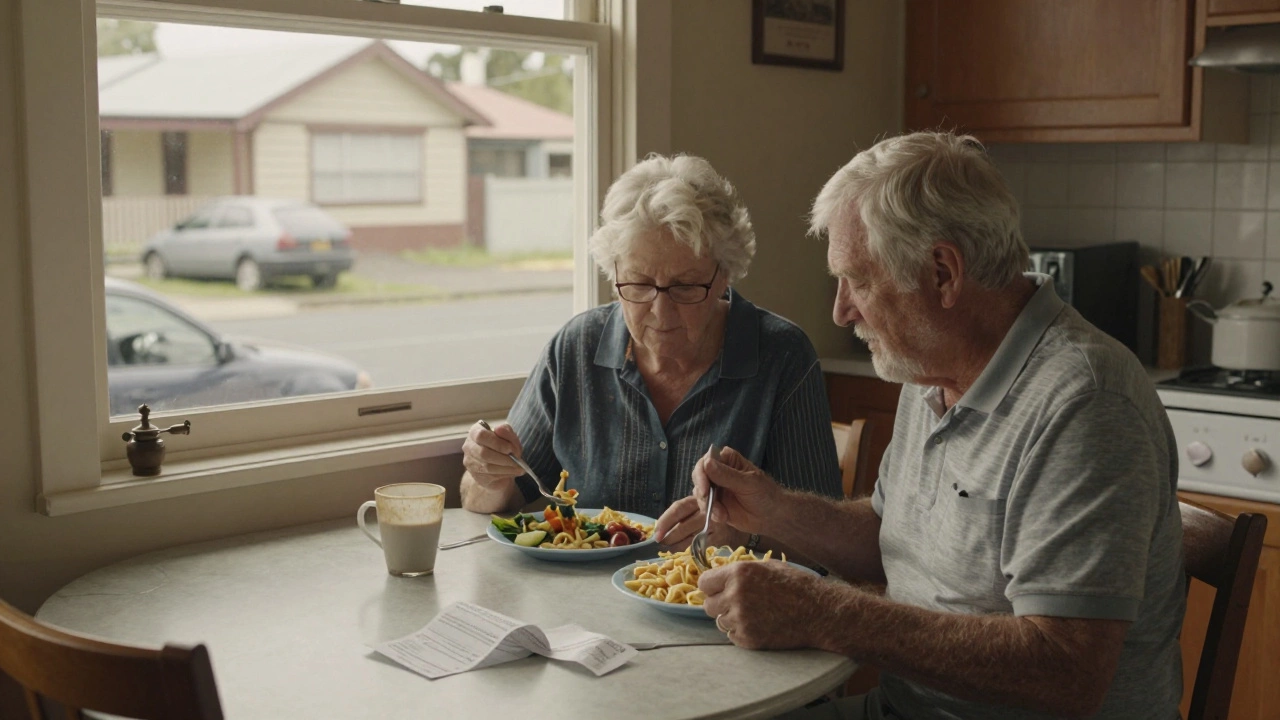
Shopping for groceries on a tight budget? You learn fast. A weekly shop for one person - basic staples, seasonal produce, eggs, bread, meat once or twice a week - runs $80-$100. That’s $320-$400 a month. If you’re eating out once a week? Add $100. Two meals out? You’re at $500.
Medication is the silent budget killer. If you’re on regular prescriptions - blood pressure, diabetes, arthritis - the PBS co-payment is $31.30 per script in 2025. Three scripts a month? That’s $94. Add dental, glasses, or hearing aids? Those aren’t covered. A new pair of hearing aids can cost $3,000-$6,000. You pay out of pocket unless you have savings.
Transportation? If you still drive, fuel’s around $2 a litre. A monthly commute of 500km? That’s $100. Insurance and registration? Another $150. Public transport? A weekly Opal card for seniors is capped at $2.80 per day. That’s $84 a month. But if you need to travel outside the city - to see family, visit specialists - you’re looking at $200-$300 extra a month.
Housing: The Biggest Factor
Here’s the truth: if you own your home outright, $3,000 a month is possible - barely. You’ll need to cut everything else to the bone. No holidays. No new car. No luxury groceries. No impulse buys.
If you’re renting? Forget it. Not in Sydney. Not in Melbourne. Not even in regional cities like Newcastle or Wollongong, where rents have climbed 35% since 2020. A two-bedroom unit in Wollongong now averages $750 a month. That’s half your budget gone before you pay for food.
Some retirees downsize to units or move to regional areas. That helps. But even in places like Toowoomba or Tamworth, rent is $550-$700. And if you’re selling your family home to move, you’re tapping into your super. That reduces your long-term income. You’re trading security now for less security later.
Healthcare: The Hidden Expense
Most people assume Medicare covers everything. It doesn’t. It covers GP visits and hospital stays - but not dental, physio, podiatry, or optical. And as you age, you need those more.
A single physio session for a bad hip? $85. Two a week? $700 a month. A podiatrist for diabetic foot care? $90 per visit. If you need a home care package, the government contributes $200-$400 a week - but you pay the rest. And the waitlist? It’s over 18 months in NSW.
Private health insurance? You might think it’s a luxury. But without it, you pay full price for everything. A knee replacement without insurance? $25,000. With insurance? $5,000 out-of-pocket. That’s the difference between staying in your home and moving into aged care.
How to Stretch $3,000 a Month
It’s not impossible. But it takes discipline - and planning years before retirement.
- Own your home. If you don’t, get a plan to buy one before you retire. Even a small unit counts.
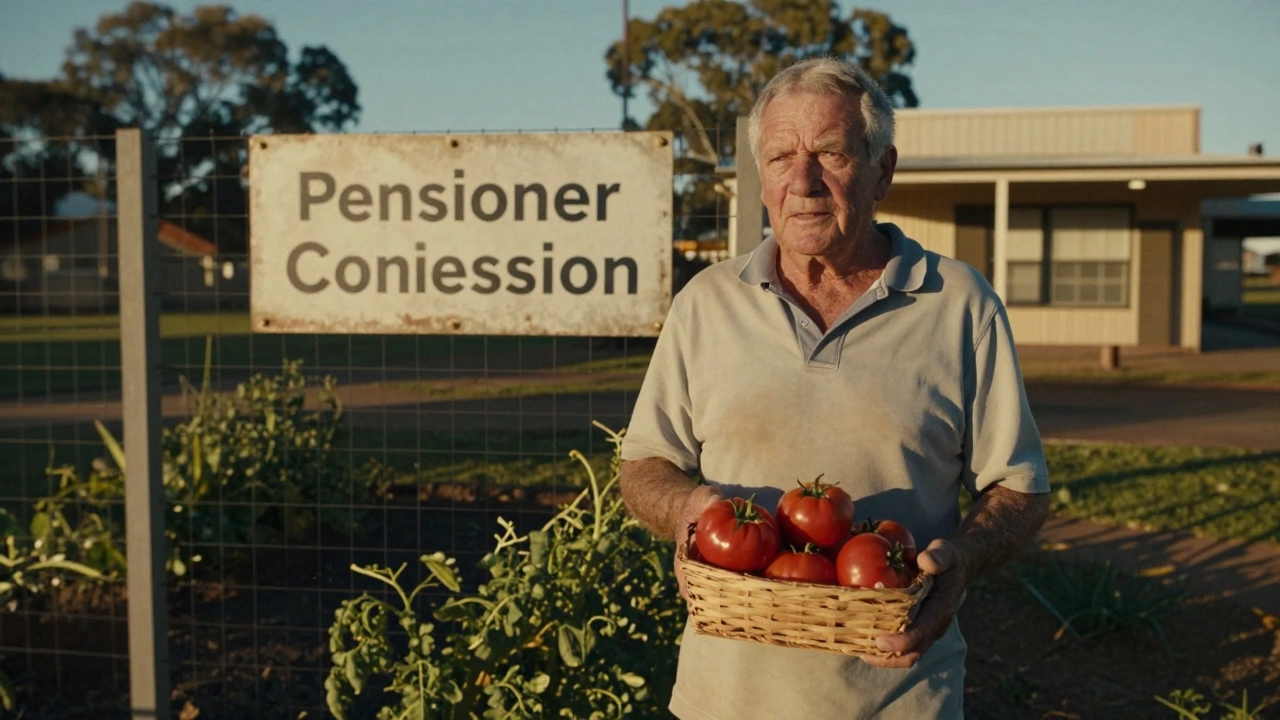
- Use every concession. Pensioner discounts on utilities, public transport, council rates, and prescription meds add up to $2,000-$4,000 a year.
- Buy in bulk, cook at home. Freeze meals. Join a community garden. Shop at local markets on closing day.
- Downsize your car. A used 5-year-old car with low km is cheaper to run than a new one. Or ditch it and use public transport.
- Work part-time. Even 10 hours a week at $30/hour adds $1,200 a month. Many retirees do this - cleaning, gardening, retail, or tutoring.
- Use the Pension Loans Scheme. If you own your home but your income is low, you can get a fortnightly payment from Centrelink against your home equity. It’s not a loan you repay until you die or sell.
What $3,000 a Month Won’t Let You Do
Let’s be clear: this budget doesn’t allow for travel, hobbies, or emergencies. No overseas trips. No cruises. No new boat. No renovating the kitchen. No helping your kids with a deposit.
And if something breaks - your fridge, your roof, your car - you’re stuck. No emergency fund? You’re in trouble. That’s why retirees on this budget need a $5,000-$10,000 buffer. Even $2,000 helps.
One retiree I spoke to in Penrith said: “I used to love golf. Now I watch it on TV. I miss the game, but I don’t miss the $150 a month in green fees.” That’s the reality. You trade experiences for security.
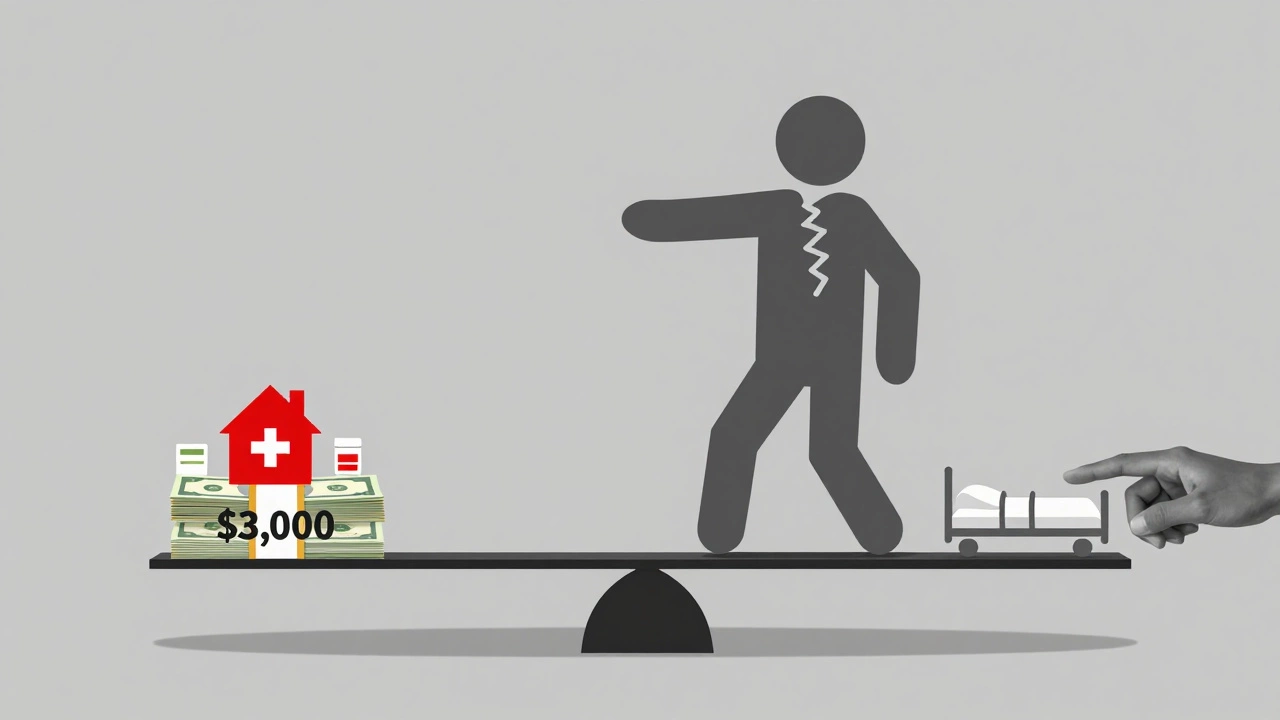
Is ,000 Enough? The Numbers Don’t Lie
The Association of Superannuation Funds of Australia (ASFA) says a single retiree needs $47,000 a year for a “comfortable” lifestyle - that’s $3,900 a month. For a “modest” lifestyle? $31,000 a year - $2,583 a month.
$3,000 sits right between the two. It’s not comfortable. It’s not modest. It’s survival.
If you’re on $3,000 a month, you’re not retired. You’re managing. You’re surviving. You’re hoping your health holds up and your bills don’t spike.
And here’s the hard truth: most Australians won’t have enough. The average super balance at retirement for a 65-year-old is $210,000. That’s $1,100 a month if you withdraw it over 20 years - before tax. Add the Age Pension? You might hit $2,200. Then you’re already below $3,000.
What You Can Do Now
If you’re 10+ years from retirement:
- Boost your super. Even $50 a week extra compounds to over $100,000 by retirement.
- Pay off your mortgage. Every dollar saved on rent is a dollar you can use for food or medicine.
- Build an emergency fund. Start with $5,000. Then $10,000.
- Get your finances in order. Use the free government service MoneySmart to run a retirement projection.
If you’re within 5 years:
- Downsize now. Sell before prices drop.
- Apply for the Age Pension early. You’re entitled to it if your assets are under $618,250 (single) or $927,500 (couple).
- Check if you qualify for the Pension Loans Scheme. It’s not well-known, but it’s a lifeline.
Final Reality Check
Can you live on $3,000 a month in retirement in Australia? Yes - if you own your home, you’re healthy, you cut everything non-essential, and you don’t mind living simply.
But if you’re counting on it, you’re gambling. And retirement isn’t the time to gamble.
The real question isn’t whether $3,000 is enough. It’s whether you’ve planned for what happens when it’s not.
Can I live on $3,000 a month in Sydney with the Age Pension?
Yes, but only if you own your home outright. The full Age Pension for a single person is $1,020.90 every two weeks - that’s $2,217 a month. To reach $3,000, you’ll need to top it up with super, part-time work, or the Pension Loans Scheme. Renting in Sydney on that income isn’t feasible.
How much super do I need to retire on $3,000 a month?
To withdraw $3,000 a month ($36,000 a year) without touching your principal, you’d need about $900,000 invested at a 4% safe withdrawal rate. If you’re also getting the Age Pension, you’d need closer to $400,000-$500,000 in super, assuming you’re withdrawing it slowly over 20-25 years.
What happens if my health declines and I need aged care?
Aged care costs start at $550 a day for a basic room - that’s over $16,000 a year. If you’re on a low income, the government subsidises most of it. But you’ll still pay a daily fee and possibly an accommodation bond. If you own your home, you might need to sell it. Without savings, you’ll rely entirely on government support - which can take months to arrange.
Can I work part-time while on the Age Pension?
Yes. You can earn up to $478 a fortnight (as of 2025) before your Age Pension starts reducing. After that, it drops by 50 cents for every extra dollar earned. Many retirees work 10-15 hours a week in retail, gardening, or hospitality to top up their income without losing benefits.
Is $3,000 a month enough for a couple?
It’s extremely tight. A couple on $3,000 a month has $1,500 each - less than the single person budget. Shared costs help (rent, utilities, food), but healthcare and transport costs don’t halve. If you own your home and cut all non-essentials, it’s possible. But there’s no room for emergencies, travel, or unexpected bills.