Student Loan Myth Buster & Forgiveness Estimator
Loan Configuration
Your Projection
Enter your details and click Calculate to see when your debt might be resolved.
The Truth About the "7-Year Rule"
Myth: Debt Disappears After 7 Years
Many believe student loans vanish after 7 years like other debts. This is false for federal loans and misleading for private loans.
Fact: Credit Report vs. Actual Debt
Negative marks fall off your credit report after 7 years, improving your score. However, the debt itself remains owed and collectible indefinitely for federal loans.
There is a persistent rumor in financial circles that student loans magically vanish after seven years. You hear it from friends, see it on social media threads, and maybe even read it in an outdated blog post. The idea is tempting: pay for seven years, and then *poof*, the debt disappears. It sounds like a get-out-of-jail-free card for anyone drowning in tuition bills. But here is the hard truth: for most federal student loans in the United States, this rule does not exist. Your debt does not simply fall off your balance sheet because the calendar turned.
However, the confusion isn't entirely baseless. There are specific scenarios where seven years plays a role, particularly regarding how long negative marks stay on your credit report or how certain income-driven repayment plans work. If you are trying to figure out when your student loans will actually be gone, you need to separate fact from fiction. Getting this wrong could cost you thousands in interest or damage your credit score unnecessarily. For those looking for clarity on complex financial obligations, understanding the fine print is crucial, much like verifying details before making any significant life decisions; sometimes checking resources like this directory helps people navigate different types of listings, but in finance, you need official government data, not third-party directories.
The Myth of the Seven-Year Rule
Let's address the elephant in the room first. The "seven-year rule" usually refers to the statute of limitations on debt collection for unsecured debts like credit cards or medical bills. In many states, if you haven't made a payment on a credit card for seven to ten years, the creditor can no longer sue you to collect it. This legal time limit varies by state law.
Student loans are different. Federal student loans do not have a statute of limitations. This means the Department of Education can pursue you for repayment indefinitely. Even if you default (stop paying) today, they can still come after you twenty, thirty, or forty years from now. They can garnish your wages, withhold your tax refunds, and take money from your Social Security benefits. There is no expiration date on federal student loan debt.
Private student loans are slightly different but still tricky. While private lenders might eventually give up on collecting if enough time passes, depending on your state's laws, the debt doesn't just disappear. It stays on your record, and if you ever make a partial payment or acknowledge the debt, the clock resets. So, relying on a seven-year timeline to erase your student loan balance is a dangerous strategy.
What Actually Happens After 7 Years?
If the debt doesn't vanish, why do people talk about seven years? The answer lies in your credit report. Under the Fair Credit Reporting Act (FCRA), most negative information, including defaults, charge-offs, and late payments, falls off your credit report after seven years.
Here is what that looks like in practice:
- Credit Score Recovery: Once the default mark drops off your credit report, your credit score may improve significantly. Lenders looking at your history won't see that big red flag anymore.
- The Debt Remains: Just because it's gone from your credit report doesn't mean you don't owe the money. The lender or collector still owns the debt. They can still call you, send letters, and potentially sue you if the statute of limitations allows it (for private loans).
- Federal Exceptions: For federal loans, even if the default is removed from your credit report after seven years, the Department of Education keeps its own internal records forever. They will still pursue collection actions.
So, after seven years, you might look better to a bank approving a mortgage, but you are still legally obligated to pay your student loans. It’s a cosmetic fix, not a financial solution.
Real Ways Student Loans Get Discharged
If waiting seven years doesn't work, how do people actually get their student loans forgiven? There are legitimate paths to debt relief, but they require action, not just patience. Here are the main options available in 2026.
Income-Driven Repayment (IDR) Plans
This is the closest thing to a "time-based" forgiveness program. If you enroll in an IDR plan, your monthly payments are capped at a percentage of your discretionary income. If your income is low, your payments might be very small or even $0.
Here is the catch: the forgiveness timeline is not seven years. It is typically 20 to 25 years. If you stick with an IDR plan for two decades, any remaining balance is forgiven. However, under current tax laws, forgiven debt through IDR plans is often considered taxable income. This means you could face a massive tax bill in the year your loans are discharged. Always consult a tax professional before counting on this path.
Public Service Loan Forgiveness (PSLF)
If you work full-time for a government organization or a non-profit 501(c)(3) entity, you might qualify for PSLF. After making 120 qualifying monthly payments (that’s 10 years), your remaining federal loan balance is forgiven. Unlike IDR forgiveness, PSLF forgiveness is generally tax-free. This is one of the most valuable benefits for teachers, nurses, social workers, and government employees.
Total and Permanent Disability (TPD) Discharge
If you become totally and permanently disabled, you can apply to have your federal student loans discharged. You’ll need certification from a physician or the VA. This isn't based on time; it's based on health status. Private loans may also offer disability discharge, but you must check your specific promissory note.
Borrower Defense to Repayment
If your school misled you about its programs, accreditation, or job placement rates, you might qualify for Borrower Defense. This can result in partial or full loan cancellation. The Department of Education has approved several group claims against major for-profit colleges in recent years. If your school is on that list, you might not have to file anything-the forgiveness happens automatically.
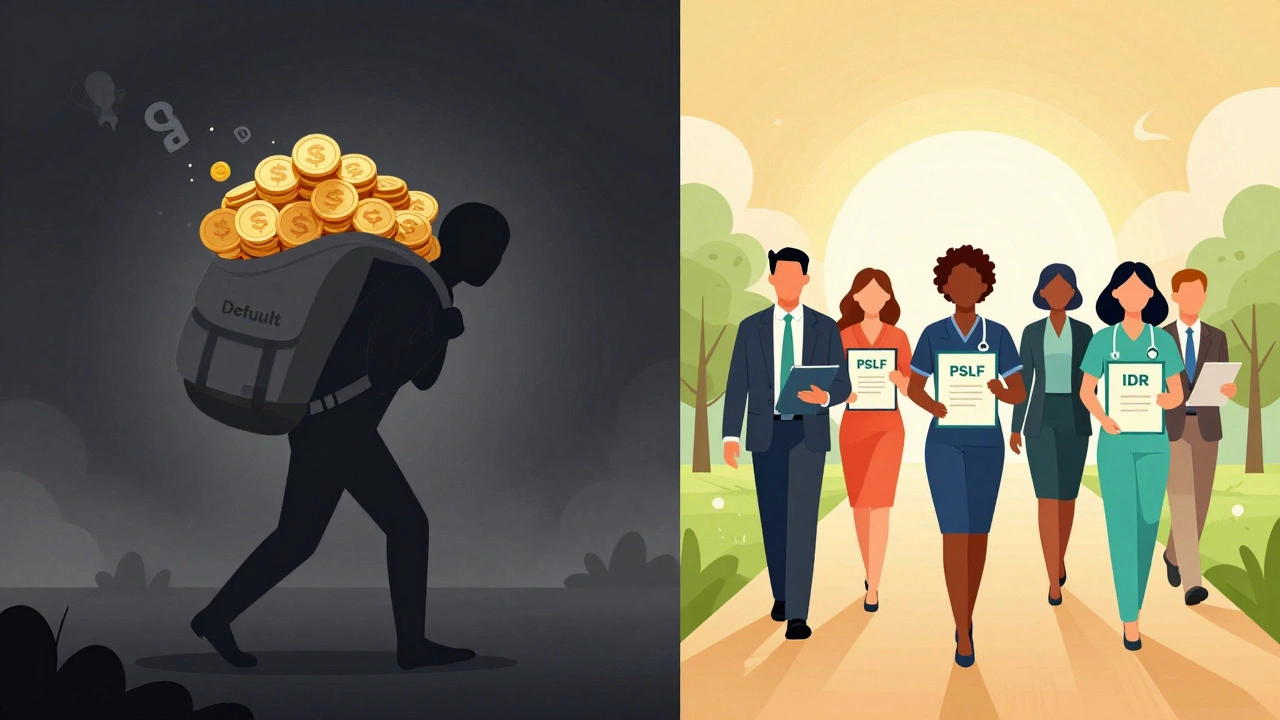
Private vs. Federal Loans: Key Differences
Understanding the type of loan you have is critical. Federal loans are backed by the government and come with robust protections. Private loans are issued by banks, credit unions, or online lenders and operate more like personal loans.
| Feature | Federal Student Loans | Private Student Loans |
|---|---|---|
| Statute of Limitations | None (collectible forever) | Varies by state (typically 3-10 years) |
| Forgiveness Programs | Yes (PSLF, IDR, TPD) | Rarely (only death/disability usually) |
| Credit Report Impact | Default stays until paid/settled | Default falls off after 7 years |
| Interest Rates | Fixed by Congress | Variable or Fixed, based on credit |
| Wage Garnishment | Yes, without court order | No, requires court judgment |
If you have private loans, the seven-year mark might matter more for your credit score, but again, it doesn't erase the debt. If you have federal loans, focus on enrollment in repayment plans rather than waiting for time to pass.
What To Do If You Can't Pay
If you are struggling to make payments, don't just stop paying and hope for the best. Defaulting triggers immediate penalties. Interest capitalizes (adds to your principal), fees pile up, and your credit score tanks. Instead, take these steps:
- Apply for Deferment or Forbearance: This temporarily pauses payments. Deferment is better because interest might not accrue on subsidized loans. Forbearance always accrues interest.
- Switch to an IDR Plan: Lower your monthly payment to an affordable amount. This keeps you in good standing while you build your career.
- Refinance (Carefully): If you have stable income and good credit, refinancing private loans might lower your rate. But beware: refinancing federal loans into a private loan means losing access to forgiveness programs.
- Contact Your Servicer: Loan servicers are required to help you find a suitable repayment option. They have tools to calculate your exact payment under different plans.
Common Mistakes to Avoid
Many borrowers make costly errors when trying to manage student debt. Avoid these pitfalls:
- Ignoring Letters: If your loan goes into default, ignoring communications makes it worse. Respond to resolve the issue.
- Making Partial Payments Without Agreement: Paying less than the minimum without a formal arrangement can lead to default. Always get terms in writing.
- Assuming Automatic Forgiveness: You must actively apply for PSLF or IDR forgiveness. It does not happen automatically. Track your payments carefully.
- Confusing Credit Removal with Debt Cancellation: Remember, just because a debt is off your credit report doesn't mean it's gone. Verify your payoff status with the lender.
Final Thoughts on Student Loan Longevity
The idea that student loans fall off after seven years is a myth that can lead to serious financial trouble. For federal loans, the debt lasts until it is paid, forgiven through a specific program, or discharged due to death or disability. For private loans, the debt might become harder to collect after several years, but it rarely vanishes completely.
Your best strategy is proactive management. Enroll in a repayment plan that fits your budget, explore forgiveness options if you qualify, and never ignore your loan statements. Financial freedom comes from understanding the rules, not hoping they change in your favor. Take control of your debt today, and you'll avoid the stress of unexpected collections tomorrow.
Do student loans expire after 7 years?
No, federal student loans do not expire. They can be collected indefinitely. Private student loans may have a statute of limitations for lawsuits, which varies by state (often 3-10 years), but the debt itself remains owed.
When do student loans fall off your credit report?
Negative marks related to student loans, such as defaults or late payments, typically fall off your credit report after seven years from the date of the first missed payment. However, the debt still exists and can be pursued by collectors.
How can I get my student loans forgiven?
You can get federal student loans forgiven through Public Service Loan Forgiveness (after 10 years of qualifying employment), Income-Driven Repayment plans (after 20-25 years of payments), Total and Permanent Disability discharge, or Borrower Defense to Repayment if your school misled you.
Is forgiven student loan debt taxable?
It depends. Forgiveness through Public Service Loan Forgiveness (PSLF) is generally tax-free. Forgiveness through Income-Driven Repayment (IDR) plans was previously taxable, but recent legislation has made it tax-free until 2025. Check current tax laws for updates beyond 2025.
Can student loans affect me after 7 years if they are off my credit report?
Yes. Even if the debt is removed from your credit report, the lender or collector can still attempt to collect the money. For federal loans, wage garnishment and tax refund offsets can still occur regardless of credit report status.