
Home Equity & Refinance Calculator
Your Property Details
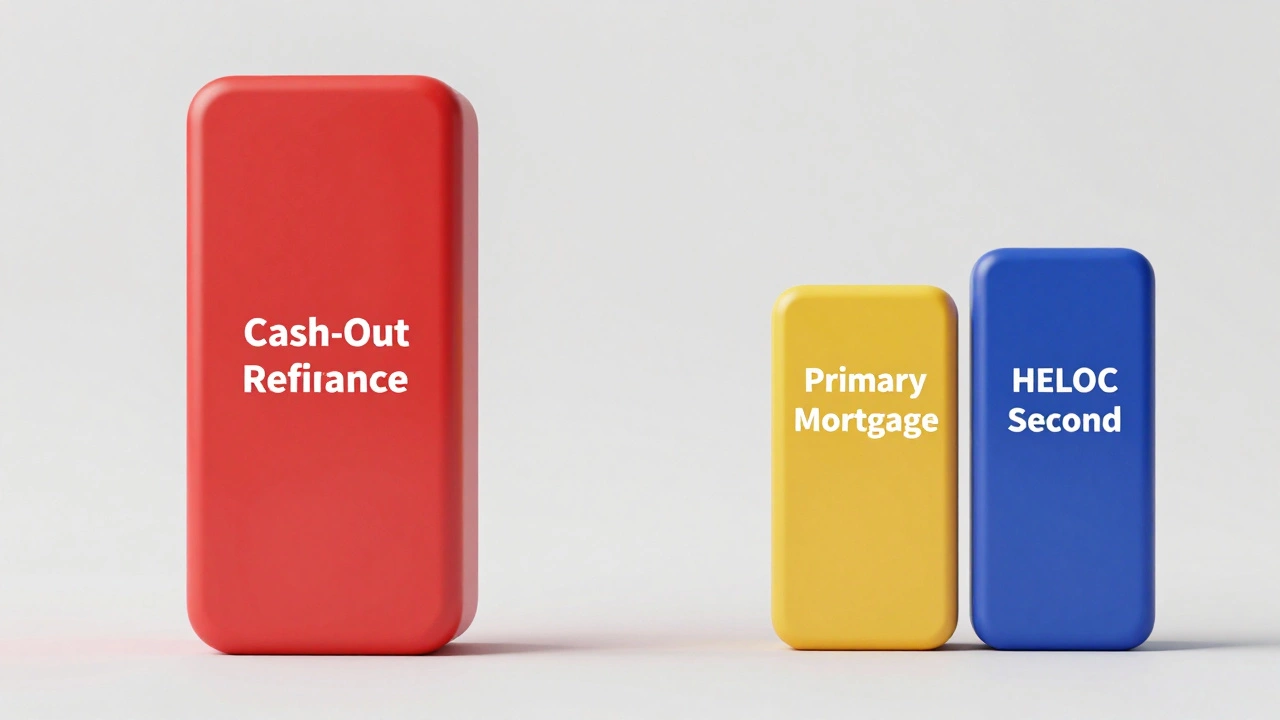
Method 1: Cash-Out Refinance
One single loan replacing the old oneMethod 2: HELOC / Second Loan
Keep original loan + add new loanYou have built up years of hard-earned equity in your Sydney home. Maybe you want to renovate the kitchen, pay off high-interest credit card debt, or fund a child’s university education. It feels like free money sitting there. But when you tap into that value, does your existing mortgage just get bigger? Or do you suddenly owe two separate loans?
The short answer is yes, your total debt on the property increases. However, whether your *original* mortgage goes up depends entirely on how you access that equity. You might be rolling it into one big loan, or you might be starting a second, distinct line of credit. Understanding this distinction saves you from surprise fees and higher monthly payments.
Understanding Home Equity vs. Mortgage Balance
Before we look at the mechanics of borrowing, let’s clear up a common confusion. Your home equity is not cash in the bank. It is the difference between what your house is worth today and what you still owe on your loan.
If your home in the Inner West is valued at $1.2 million and you owe $600,000 on your mortgage, you have $600,000 in equity. That number represents ownership, not liquidity. To turn that paper wealth into spendable dollars, you must borrow against it. This process changes your financial obligation.
When people ask if their mortgage goes up, they are usually asking one of two things:
- Will my monthly repayment amount increase?
- Will the total principal I owe on the property increase?
In almost every case, the answer to both is yes. Borrowing costs money. When you take out equity, you are increasing the principal balance of your debt secured by your home.
Method 1: Cash-Out Refinancing (The Consolidation Route)
This is the most common way Australians access equity. Instead of keeping your current loan and adding a new one, you replace your entire existing mortgage with a brand-new, larger loan.
Here is how it works. Let’s say you owe $500,000 on your current fixed-rate mortgage. You want $100,000 for renovations. You apply for a new loan for $600,000. The lender pays off your old $500,000 loan, gives you the $100,000 cash, and now you have one single mortgage for $600,000.
| Metric | Before Refinance | After Refinance |
|---|---|---|
| Loan Principal | $500,000 | $600,000 |
| Interest Rate | 4.5% (Fixed) | 5.9% (Variable) |
| Monthly Repayment | $2,530 | $3,580 |
In this scenario, your "mortgage" definitely went up. You erased the old contract and signed a new one with a higher balance. The benefit here is simplicity. You have one bill, one interest rate, and one due date. However, you often lose any benefits from your original loan, such as a low fixed rate or a paid-off offset account setup.
Method 2: Home Equity Line of Credit (HELOC) or Second Mortgage
Some borrowers prefer not to touch their primary mortgage. Instead, they open a Home Equity Line of Credit (HELOC) or a second mortgage. This creates a separate legal agreement secured by the same property.
Your original mortgage stays exactly as it is. The balance doesn’t change. The interest rate doesn’t change. But you now have a second debt instrument. Think of it like a credit card attached to your house. You can draw funds up to a limit, but you only pay interest on what you use.
Does your mortgage go up? No. Does your total debt on the house go up? Yes. This method keeps your stable, predictable primary payment intact while giving you flexible access to cash. It is often better for ongoing projects where you don’t know the final cost upfront, like a multi-stage renovation.
How Lenders Calculate How Much You Can Borrow
You cannot borrow 100% of your equity. Lenders need a safety buffer. In Australia, most banks use a Loan-to-Value Ratio (LVR) cap, typically around 80% for standard applications without Lenders Mortgage Insurance (LMI).
If your home is worth $1 million, the maximum loan amount is usually $800,000. If you already owe $500,000, you can only borrow an additional $300,000. Even though you have $500,000 in equity, you can only access $300,000 of it.
Factors that influence this limit include:
- Credit Score: A higher score may allow for a slightly higher LVR.
- Income Stability: Lenders assess your serviceability-can you afford the repayments on the new, higher balance?
- Property Type: Houses generally get better rates than apartments or townhouses.
The Hidden Costs: Fees and Interest Rates
Taking out equity isn’t free. Beyond the increased principal, you face several costs that impact your bottom line.
First, there are establishment fees. These can range from $500 to over $1,000 depending on the bank. If you are refinancing, you might also face discharge fees from your old lender. Second, consider the interest rate environment. As of mid-2026, variable rates have stabilized, but they remain sensitive to Reserve Bank of Australia decisions. If you move from a fixed 4% loan to a variable 6% loan via a cash-out refinance, your monthly payment could jump significantly even before accounting for the extra borrowed amount.
Also, watch out for redraw fees. Some lenders charge you every time you withdraw money from a HELOC. Others charge annual account keeping fees. These small charges add up over time, eroding the value of the equity you accessed.
Impact on Your Monthly Budget
Let’s talk about the real-world impact on your wallet. When you increase your mortgage balance, your monthly repayment usually rises. There are two ways this happens.
If you keep the same loan term (e.g., 25 years), the bank recalculates your payment based on the new, higher principal. Your monthly bill goes up immediately. If you extend the term (e.g., from 20 years to 30 years), your monthly payment might stay similar or even drop slightly, but you will pay significantly more interest over the life of the loan.
For example, borrowing $100,000 at 6% over 25 years adds roughly $644 per month to your repayment. Over 25 years, you will pay back $190,000 in total for that $100,000. That is $90,000 in interest. Make sure the investment you are making with that cash generates a return higher than 6%, or you are losing money.
Strategic Uses of Equity
Not all equity withdrawals are created equal. Financial advisors often categorize them into "good" and "bad" uses.
Good Uses:
- Debt Consolidation: Paying off high-interest personal loans or credit cards (often 15-20% APR) with a lower mortgage rate (around 6%). This saves thousands annually.
- Home Improvements: Renovations that increase the property value. If you spend $50,000 and increase the home value by $70,000, you’ve made a profit.
- Education: Funding university degrees which lead to higher lifetime earnings.
Risky Uses:
- Lifestyle Spending: Buying a luxury car or funding a vacation. These assets depreciate, while your debt accrues interest.
- Speculative Investments: Using home equity to gamble on volatile stocks or crypto without a safety net. If the market crashes, you still owe the bank.

Tax Implications in Australia
Australia has specific tax rules regarding home loans. Generally, interest on your primary residence mortgage is not tax-deductible. However, if you use the equity withdrawal to invest in income-producing assets, such as a rental property, the interest on that portion of the loan becomes deductible.
This requires careful structuring. You cannot mix the purpose of the loan. If you borrow $100,000, using $50,000 for renovations and $50,000 for an investment deposit, only the interest on the $50,000 investment portion is deductible. You must keep these accounts separate and track the usage meticulously. Consult a qualified accountant before proceeding to ensure compliance with Australian Taxation Office (ATO) guidelines.
Alternatives to Borrowing Against Your Home
Before you sign papers, consider if you really need to touch your home equity. It is your most valuable asset and your last line of financial defense.
Personal Loans: For smaller amounts (under $50,000), a personal loan might be faster and less risky. You won’t put your house at risk, though interest rates are higher.
Savings Drawdown: Do you have an emergency fund? Using savings avoids interest entirely.
Selling the Asset: If you need cash because you can no longer afford the house, selling might be a better option than digging deeper into debt.
Conclusion: Weighing the Risks
So, does your mortgage go up if you take out equity? Yes, your total debt secured by your home increases. Whether that means a higher monthly payment on a single loan or a new secondary payment depends on the product you choose.
The key is intentionality. Don’t access equity just because you can. Access it because the math makes sense. Ensure the return on your investment exceeds the cost of borrowing, and always maintain a buffer for unexpected expenses. Your home is a shelter first and a bank account second. Treat it with respect.
Will taking out equity affect my credit score?
Yes, applying for a home equity loan or HELOC involves a hard inquiry on your credit report, which can temporarily lower your score by a few points. Additionally, increasing your total debt load may impact your credit utilization ratio, potentially affecting future borrowing capacity.
Can I lose my home if I default on a home equity loan?
Yes. Both cash-out refinances and HELOCs are secured by your property. If you fail to make payments, the lender has the right to foreclose on your home to recover the owed amount. This risk applies regardless of whether it is your first or second mortgage.
Is it better to refinance or get a HELOC?
It depends on your needs. Refinancing is better if you want a lower interest rate on your entire balance or need a lump sum for a one-time expense. A HELOC is better for ongoing expenses, flexible access to funds, or if you want to keep your existing mortgage terms unchanged.
How much equity do I need to borrow?
Most lenders require you to have at least 20% equity in your home to qualify for a cash-out refinance or HELOC without paying Lenders Mortgage Insurance (LMI). This means your Loan-to-Value Ratio (LVR) should be 80% or lower.
Are home equity loans tax-deductible in Australia?
Generally, no. Interest on loans used for private purposes (like home renovations or lifestyle spending) is not tax-deductible. However, if you use the funds to purchase income-producing investments (like rental properties), the interest may be deductible. Always consult a tax professional.