Home Insurance Deductible Calculator
How much less you pay yearly with a high deductible vs low deductible.
The amount you'd pay out-of-pocket if you choose the high deductible option.
How long you plan to keep this insurance policy.
How many times do you expect to file a claim?
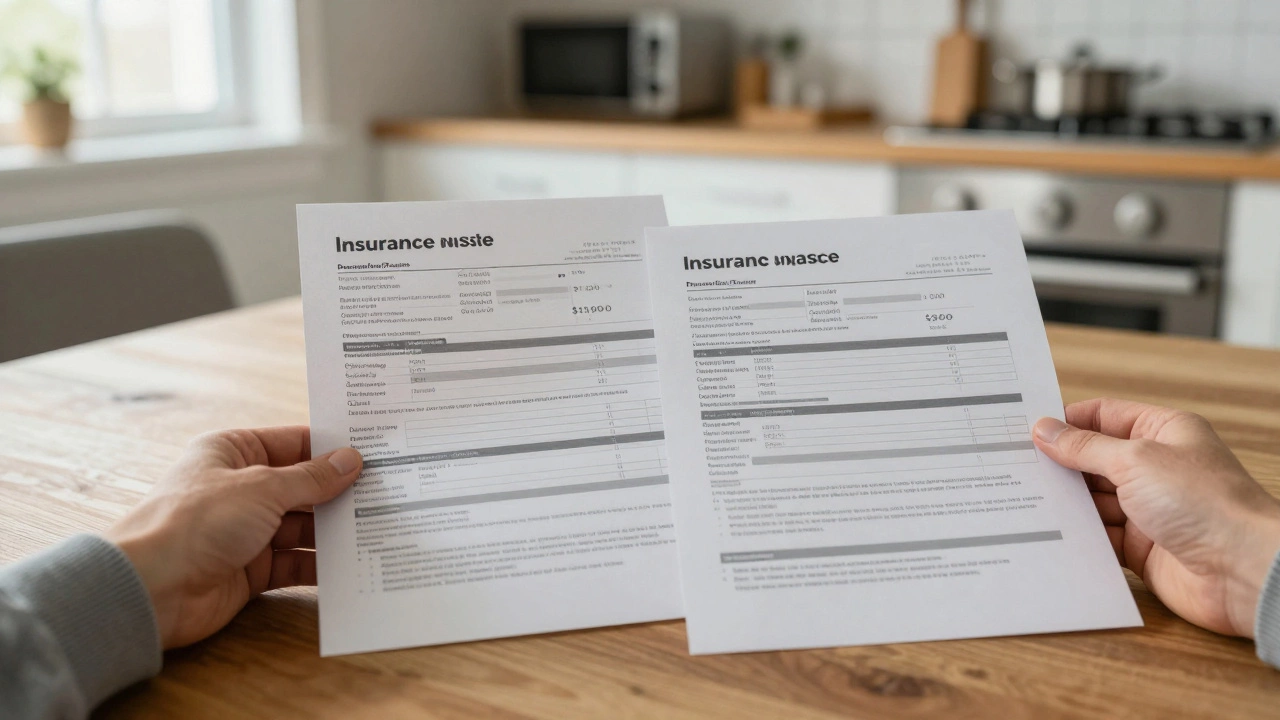
You just got a quote for home insurance is a policy that protects your property and belongings from damage or theft. The agent slides two papers across the desk. One has a premium of $1,200 a year with a $500 deductible. The other is $900 a year with a $2,000 deductible. Your brain immediately starts doing math. Is saving $300 a year worth risking a $2,000 bill if a storm hits? This is the classic dilemma every homeowner faces.
The answer isn't as simple as picking the cheaper option. It depends entirely on your savings, your risk tolerance, and how often you actually claim. Let’s break down exactly how deductibles work so you can stop guessing and start choosing with confidence.
What Exactly Is a Deductible?
Before we compare high versus low, we need to be clear on what the word means. A deductible is the amount you pay out of pocket before your insurance coverage kicks in. Think of it as your share of the loss.
If you have a $1,000 deductible and a tree branch smashes your window causing $3,000 in damage, here is what happens:
- You pay the first $1,000.
- Your insurer pays the remaining $2,000.
If the damage was only $800, you pay the full $800. The insurer pays nothing because the cost didn’t exceed your deductible. This rule exists to prevent people from claiming for tiny scratches or minor leaks. It keeps premiums lower for everyone by filtering out small claims.
The Case for a Low Deductible
Choosing a low deductible-say, $250 or $500-means you pay more each month (or year) for your premium. Why would anyone do this? Because it provides peace of mind and predictability.
Imagine you live in an older house in Sydney is a major city in Australia known for its harbour and diverse suburbs. The plumbing is aging. Pipes burst occasionally. If you have a $500 deductible, a sudden leak that causes $1,500 in water damage is manageable. You write a check for $500, the insurer covers the rest, and life goes on. You don’t have to raid your emergency fund.
Low deductibles are best for people who:
- Have limited cash savings.
- Prefer predictable monthly expenses over large unexpected bills.
- Live in areas prone to frequent minor damages (like hail storms or falling branches).
- Don’t want to worry about whether a repair job is "worth" claiming.
The trade-off is clear: you pay a higher premium. Over ten years, that extra $200 a year adds up to $2,000. But if you never make a claim, that money is gone. If you make one small claim, you might break even. If you make several, the low deductible saves you thousands.
The Case for a High Deductible
On the flip side, a high deductible-$1,000, $2,000, or even $5,000-drastically lowers your premium. This strategy turns your insurance into a true safety net for catastrophic events only.
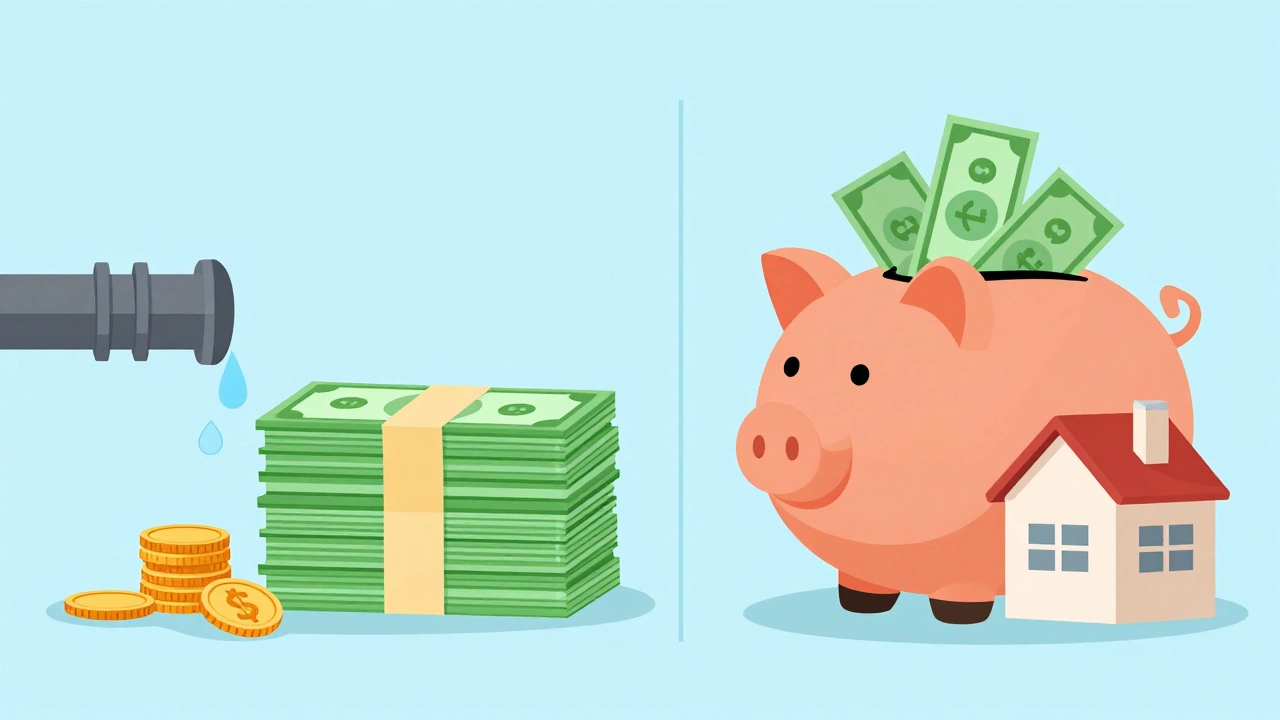
Let’s look at the numbers. If raising your deductible from $500 to $2,000 drops your annual premium by $400, you save $400 every year. After five years, you’ve saved $2,000. That equals your deductible. So, unless you file a claim within those five years, you are financially ahead by choosing the high deductible.
This approach works well if:
- You have a robust emergency fund covering at least $2,000-$5,000.
- You own a newer home with modern materials less likely to suffer minor wear-and-tear issues.
- You are disciplined enough not to claim for small repairs.
- You view insurance strictly as protection against ruinous losses (fire, total storm damage), not maintenance.
Many financial advisors recommend high deductibles because they force you to self-insure for small risks. Small risks are cheap to handle yourself; big risks are expensive and require shared pooling through insurance.
Comparing High vs Low Deductibles
| Feature | Low Deductible ($250-$500) | High Deductible ($1,000-$5,000+) |
|---|---|---|
| Premium Cost | Higher monthly/yearly payments | Lower monthly/yearly payments |
| Out-of-Pocket Risk | Low per incident | High per incident |
| Best For | Cash-strapped homeowners, older homes | Savvy savers, new homes, investment properties |
| Claim Frequency | Encourages filing for minor damages | Discourages small claims |
| Long-Term Savings | Only if you claim frequently | Usually better if claims are rare |
The Hidden Trap: Claim History and Future Premiums
Here is something most people miss. Filing a claim doesn’t just cost you your deductible. It can raise your future premiums. In many markets, including Australia, insurers use your claim history to assess risk. If you claim twice in three years, you might be labeled "high risk."
With a low deductible, you are more likely to claim for a $600 roof patch. With a high deductible, you’d pay that $600 yourself and keep your record clean. A clean record keeps your rates stable. A spotty record can hike them up by 10-20% or lead to non-renewal.
So, the high deductible does double duty: it lowers your current premium AND protects your future premium stability by discouraging small claims.

How to Decide: A Simple Checklist
Still unsure? Ask yourself these three questions:
- Can I comfortably pay the deductible tomorrow? If a fire destroyed part of your kitchen today, could you write a check for $2,000 without selling assets or going into debt? If yes, lean high. If no, stick low.
- How old is my home? Older homes have more things that break (pipes, roofs, wiring). Newer homes are built to stricter codes and last longer. Older homes often benefit from lower deductibles due to higher frequency of minor issues.
- Where do I live? Do you live in a flood zone? A bushfire-prone area? In high-risk zones, premiums are already high. Sometimes insurers mandate minimum deductibles. Check local regulations. In Sydney, coastal properties might face specific windstorm deductibles.
Pro Tip: The "Self-Insurance" Strategy
Take the difference between your low-deductible premium and your high-deductible premium. Put that savings into a high-interest savings account. Do this for five years. Then compare the balance in that account to your deductible.
If the savings account has grown to equal or exceed your deductible, you have effectively "self-insured." You now have the cash to pay the deductible if needed, plus any leftover profit. This is often the smartest financial move for disciplined savers.
Common Mistakes to Avoid
Don’t assume your deductible applies to everything. Some policies have separate deductibles for specific perils like earthquakes or floods. Also, watch out for percentage deductibles. In some Australian states, windstorm or hail deductibles are calculated as a percentage of your sum insured (e.g., 2%), not a flat dollar amount. On a $700,000 home, a 2% deductible is $14,000. That changes the math entirely.
Always read the Product Disclosure Statement (PDS). Look for lines that say "percentage deductible" or "event-based deductible." These can catch you off guard when disaster strikes.
Does a high deductible affect my ability to get a mortgage?
Generally, no. Lenders require you to have home insurance, but they rarely dictate your deductible level. However, if your deductible is extremely high (like 5% or more), some lenders might view it as a risk to their collateral. Always check with your loan officer, but standard high deductibles ($1k-$5k) are usually fine.
Can I change my deductible after buying the policy?
Yes, you can usually adjust your deductible at renewal time or mid-term. If you switch from low to high, your premium will drop immediately for the remaining period. If you switch from high to low, your premium will increase. Just call your insurer or broker to make the change.
Is it better to have a high deductible for contents or buildings?
This depends on your setup. Some policies let you set different deductibles for buildings (structure) and contents (belongings). Since buildings involve larger repairs, a high deductible makes sense there. Contents items are smaller value; you might prefer a low deductible so you don’t pay $1,000 to replace a $1,200 TV stolen in a burglary.
Do discounts apply if I choose a high deductible?
Yes. Most insurers offer a direct discount for higher deductibles. Additionally, bundling your home and car insurance often yields further savings. When shopping around, ask specifically for the "high deductible rate" to see the full potential savings.
What happens if I can't afford the high deductible after a claim?
You still owe the deductible. Insurance companies do not waive it based on hardship. If you cannot pay, you may need to negotiate a payment plan with the contractor or seek personal loans. This is why having an emergency fund is critical before opting for a high deductible.