
Pension Growth & Tax Efficiency Calculator
Enter your details and click "Calculate Projection" to see how your pension grows over time.
Imagine you’re 65 years old. You’ve just handed in your last timesheet, packed up your desk, and walked out the door for the final time. No more alarms at 6 AM. No more commuting. Just you, your coffee, and the rest of your life. But here’s the kicker: where does the money come from to buy that coffee, pay the electricity bill, or book a holiday?
If you’re relying on hope, you might be in trouble. If you have a pension, you’re likely set. But what actually is it? Is it a pot of gold? A government promise? Or just a fancy word for "savings"?
For many people, especially those new to the workforce or feeling overwhelmed by financial jargon, pensions are a black box. This guide strips away the complexity. We’ll break down exactly how a pension works, using plain English and real-world logic, so you can stop worrying about the mystery and start planning for your future.
The Basic Concept: What Is a Pension?
At its core, a pension is a way to save and invest money during your working years so you have income when you retire. Think of it as a long-term savings account with special rules and tax benefits. Unlike a standard bank account, you generally can’t touch this money until you reach a specific age (often called the "preservation age" or "retirement age").
Why lock it away? Because human nature is tricky. If we could access our retirement funds easily, we’d probably spend them on a new car or a vacation before we actually need them. The pension system forces discipline. It ensures that the money saved today is there for you tomorrow, when you can no longer earn an active income.
In Australia, where I live, this system is known as Superannuation (or "Super"). In the UK, it’s often tied to workplace schemes. In the US, you hear terms like 401(k) or IRA. While the names differ, the mechanism is remarkably similar across most developed nations.
Where Does the Money Come From?
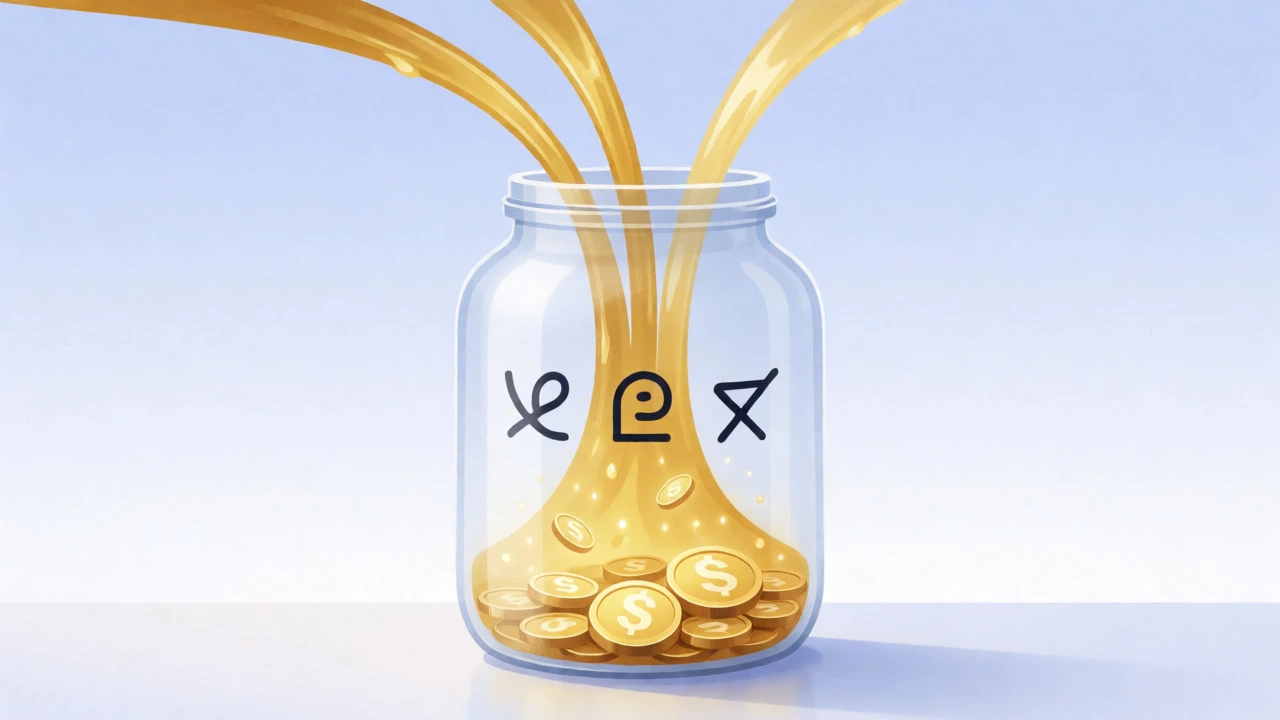
You don’t build a pension entirely on your own. There are usually three streams feeding into your pot:
- Your Contributions: Money you voluntarily put in from your take-home pay. Many systems allow you to do this pre-tax, meaning you save on income tax immediately.
- Employer Contributions: In many countries, employers are legally required to pay a percentage of your salary into your pension fund. For example, in Australia, employers must contribute at least 11.5% of ordinary earnings (as of 2024-2025 rates, rising toward 12%). This is essentially free money you wouldn’t get if you just saved cash under your mattress.
- Government Top-ups: Depending on your country and income level, the government may add contributions to help low-income earners or provide tax relief to everyone else.
This multi-source approach accelerates growth. If you earn $50,000 a year and your employer pays 10%, that’s $5,000 added to your pot annually without you lifting a finger. Over 30 years, even without investment returns, that’s $150,000. With investment returns, it’s significantly more.
The Engine Room: How Your Money Grows
A pension isn’t just a piggy bank; it’s an investment vehicle. When you put money into a pension, it doesn’t sit idle. Fund managers use that capital to buy assets like shares (stocks), bonds, property, and cash equivalents.
Here’s the secret weapon: compound interest. Compounding means earning returns on your returns. Let’s look at a simplified example:
| Year | Start Balance | Annual Contribution ($5k) | Investment Return (7%) | End Balance |
|---|---|---|---|---|
| 1 | $0 | $5,000 | $350 | $5,350 |
| 10 | $48,000 | $5,000 | $3,710 | $56,710 |
| 20 | $110,000 | $5,000 | $8,050 | $123,050 |
| 30 | $200,000 | $5,000 | $14,350 | $219,350 |
Notice how the investment return grows larger each year? By year 30, the return alone ($14,350) is nearly triple your annual contribution. This is why starting early matters more than saving huge amounts later. Time is the fuel for compounding.
Types of Pensions: Defined Benefit vs. Defined Contribution
Not all pensions are created equal. Historically, there were two main models, though one has become dominant in recent decades.
Defined Benefit (DB) plans, often called "final salary" schemes, promised a specific payout based on your salary and years of service. If you worked for 30 years and earned a high salary, you knew exactly what you’d get. These were common in public sectors like teaching or civil service. However, they are risky for employers because they guarantee a payout regardless of market performance.
Defined Contribution (DC) plans are now the norm. Here, nobody promises a specific final amount. Instead, the focus is on how much goes in (the contribution). The final value depends entirely on how well the investments perform. If the stock market crashes right before you retire, your balance drops. If it booms, your balance soars. You bear the investment risk, but you also keep the upside potential.
| Feature | Defined Benefit (DB) | Defined Contribution (DC) |
|---|---|---|
| Payout Certainty | High (Guaranteed formula) | Low (Market dependent) |
| Risk Bearer | Employer | Employee |
| Portability | Low (Hard to transfer) | High (Easy to move jobs) |
| Commonality Today | Rare (Mostly public sector) | Standard (Most private sector) |
Taxes: The Hidden Superpower
One of the biggest reasons governments encourage pensions is taxation. They want you to save for retirement so you don’t end up a burden on state welfare. To sweeten the deal, they offer significant tax breaks.
Consider these common tax advantages (note: specifics vary by country):
- Tax Relief on Contributions: Money going into your pension often comes from pre-tax income. If you earn $60,000 and put $5,000 into a pension, you might only pay income tax on $55,000.
- Tax-Free Growth: Inside the pension wrapper, capital gains and dividends are usually not taxed annually. In a regular investment account, you might owe taxes every year you sell a profitable asset.
- Tax-Free Lump Sum: Upon retirement, many jurisdictions allow you to withdraw a portion of your pension completely tax-free. The remainder is taxed as income, but often at lower rates since you’re no longer in a high-earning bracket.
This triple tax advantage makes pensions highly efficient. A dollar invested in a pension effectively buys more assets than a dollar invested in a taxable brokerage account.

Accessing Your Money: The Drawdown Phase
So, you’ve reached retirement age. You have a pot of money. Now what? You don’t necessarily have to take it all out at once. Most modern systems offer flexible drawdown options.
You can choose to:
- Take a Lump Sum: Withdraw a chunk (e.g., 25%) tax-free and leave the rest invested.
- Draw Down Regularly: Take small, regular payments while keeping the bulk invested. This allows your money to continue growing, potentially lasting longer than inflation-adjusted withdrawals.
- Buy an Annuity: Exchange your lump sum for a guaranteed income for life. This removes longevity risk (the fear of outliving your money) but locks in current interest rates.
The choice depends on your health, spending habits, and risk tolerance. If you’re healthy and expect to live to 90, drawing down regularly might yield more total income. If you’re worried about running out of money, an annuity provides peace of mind.
Common Mistakes Beginners Make
Even with good intentions, people stumble. Here are the pitfalls to avoid:
- Ignoring Fees: High management fees eat into returns. A 1% difference in fees over 30 years can cost tens of thousands of dollars. Always check the Product Disclosure Statement (PDS) or equivalent fee schedule.
- Leaving Money in Default Funds: Many workplace pensions default to conservative or generic mixes. If you’re 25, being too conservative limits growth. Review your asset allocation periodically.
- Not Consolidating Accounts: Changing jobs often leads to multiple small pension accounts. Each charges fees. Merging them reduces costs and simplifies tracking.
- Assuming State Pension Covers Everything: Government base pensions (like Age Pension in Australia or State Pension in the UK) are designed to prevent poverty, not maintain your lifestyle. They are the floor, not the ceiling.
Final Thoughts: Start Where You Are
Pensions aren’t complicated math problems reserved for Wall Street elites. They are straightforward mechanisms for shifting wealth from your working years to your resting years. The earlier you understand the flow-contributions, investments, tax benefits, and withdrawal-the better off you’ll be.
You don’t need to be a finance guru. You just need to know where your money is, who manages it, and how much is coming in. Check your statements once a year. Increase contributions when you get a raise. And remember, consistency beats intensity. A small, steady habit today builds a comfortable tomorrow.
Can I lose money in my pension?
Yes, especially in Defined Contribution plans. Since your money is invested in markets like stocks and bonds, its value fluctuates. If the market drops, your balance decreases. However, over long periods (10+ years), historical trends suggest markets tend to rise, mitigating short-term volatility. Diversification helps reduce this risk.
What happens to my pension if I change jobs?
In most modern systems, you can roll over your existing pension balance into your new employer’s scheme or an individual personal pension plan. You typically won’t face penalties for transferring, but watch out for exit fees on older legacy accounts. Keeping track of all your pots is crucial to avoid losing track of lost accounts.
Is a pension better than buying property for retirement?
Both have merits. Property offers tangible assets and potential rental income but requires maintenance and lacks liquidity. Pensions offer professional management, diversification, and tax efficiency. Many retirees use both: owning their home outright (reducing living costs) and using pension income for daily expenses. Ideally, they complement rather than compete.
When can I access my pension money?
This depends on your country and birth date. Generally, preservation ages range from 60 to 67. Some systems allow early access for severe financial hardship or terminal illness. Always check the specific rules of your provider, as accessing funds early often incurs heavy tax penalties or locks you out of further contributions.
Do self-employed people have pensions?
Yes. Self-employed individuals must set up their own arrangements, such as Solo 401(k)s in the US, SIPPs in the UK, or Self-Managed Super Funds (SMSFs) in Australia. While you miss out on automatic employer contributions, you gain full control over investments and can often make higher voluntary contributions to offset the lack of employer matching.