Retirement Income Calculator
Enter your details and click calculate to see your estimated fortnightly income.
Picture this: You’ve spent forty years working, saving, and watching your superannuation account grow. Now, you’re ready to retire. You expect a steady paycheck to hit your bank account every fortnight, just like it did when you were employed. But here’s the twist-your pension doesn’t work that way. In Australia, there is no automatic "pension" handed to you by the government or your former employer unless you meet very specific criteria. Instead, you have to actively choose how to receive your money.
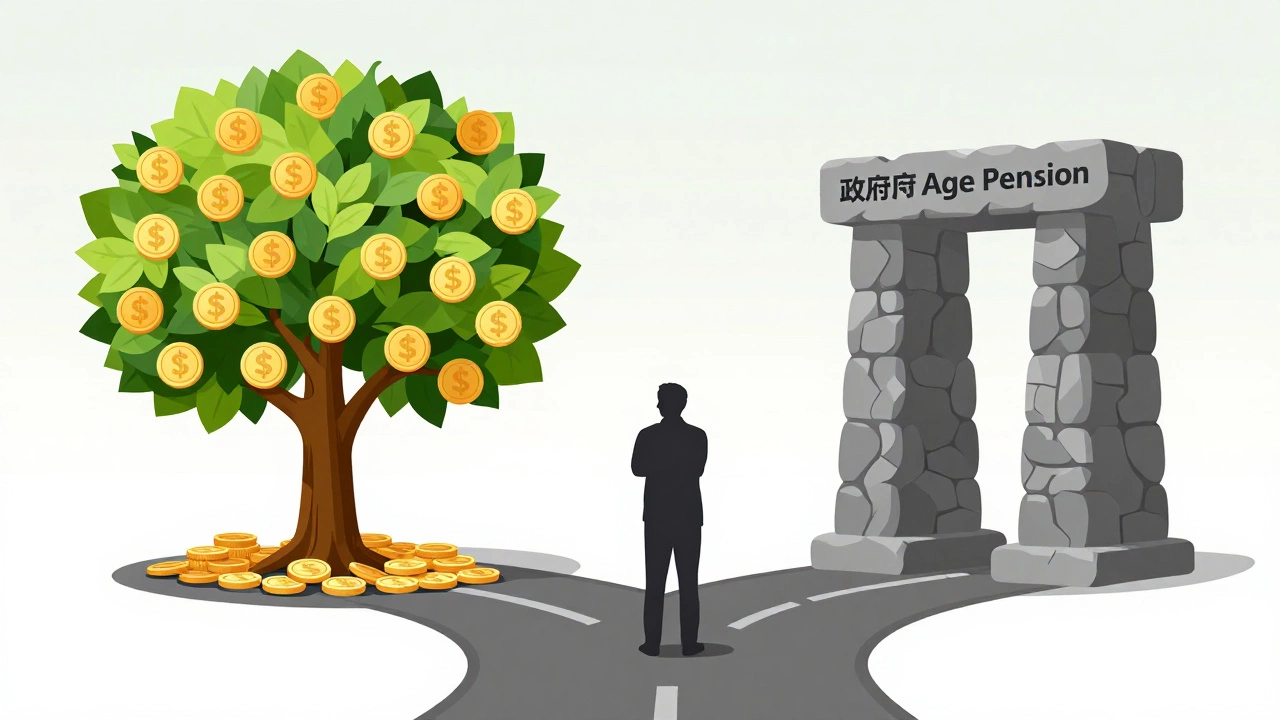
This confusion is incredibly common. Many Australians use the word "pension" to describe their retirement savings, but technically, they are talking about Superannuation, which is a personal nest egg managed by funds. The actual Age Pension is a separate safety net provided by Services Australia for those with limited assets. Understanding the difference between these two sources of income is the first step to securing your financial future.
The Difference Between Superannuation and Age Pension
To understand how your money arrives, you need to know where it comes from. There are two distinct buckets. The first is your private retirement savings, known as Superannuation. This is money contributed by your employer (currently at least 11.5% of your salary in 2026) and yourself over your working life. It belongs to you, but it is locked away until you reach your preservation age.
The second bucket is the Age Pension. This is a taxable payment made by the Australian Government through Services Australia. It is not based on how much you saved; it is based on your age, residency status, and whether you pass an income and assets test. If you have significant savings or property, you might get zero Age Pension. If you have little to no savings, you might receive the full rate. These two systems operate independently, yet both contribute to your total retirement income.
When Can You Access Your Superannuation?
You cannot simply withdraw your super whenever you feel like it. The money is preserved for retirement. However, once you reach your Preservation Age, you can start accessing it if you also meet a condition of release. For most people born after June 30, 1964, the preservation age is 60. If you were born earlier, it could be 55, 56, 57, 58, or 59.
Reaching preservation age alone isn't enough. You generally need to retire permanently. If you turn 60 but keep working full-time, your super remains locked. You can, however, access it if you transition to retirement while still working part-time, though this has strict limits. Other conditions of release include reaching age 65 (regardless of employment status), severe financial hardship, or permanent incapacity. Knowing your exact eligibility date prevents costly early withdrawal penalties or rejected applications.
How Superannuation Is Paid Out
Once you are eligible, you have choices on how to receive your super. You don't have to take it all at once, nor do you have to leave it in the accumulation phase forever. Here are the primary ways your super is paid:
- Lump Sum Payment: You can withdraw your entire balance or a portion of it as a tax-free cash payment (if you are over preservation age). This is popular for paying off a mortgage or buying a car. Be careful: taking it all out means you lose the compounding growth and the regular income stream for later years.
- Account-Based Pension (Income Stream): This is the closest thing to a traditional monthly pension. You move your super into a pension account within your fund. The fund then pays you regular amounts (weekly, fortnightly, monthly, or annually). You must withdraw a minimum percentage each year, calculated based on your age. For example, at age 60-64, the minimum is 4% of your account balance. At 90+, it jumps to 14%. Any amount above the minimum is yours to decide.
- Combination Approach: Many retirees take a small lump sum for immediate needs and put the rest into an account-based pension for long-term stability. This hybrid approach offers flexibility without depleting your capital too quickly.
The key advantage of an account-based pension is tax efficiency. Investment earnings within the pension phase are tax-free. Additionally, the withdrawals themselves are often tax-free for those over 60. This makes it a highly efficient vehicle for generating retirement income.

How the Age Pension Is Paid
If you qualify for the government-backed Age Pension, the payment process is standardized. Services Australia pays the pension directly into your nominated bank account. You can choose to receive it weekly, fortnightly, or quarterly. Most people opt for fortnightly payments to match typical budgeting cycles.
The amount you receive depends on your household status. As of mid-2026, the maximum single person rate is approximately $1,100 per fortnight, while couples receive around $1,650 combined. However, these figures are indexed regularly. If your income or assets exceed certain thresholds, your pension reduces dollar-for-dollar. For instance, if you earn more than the free area threshold, your pension cuts by $1 for every $1 of additional income. This means high-income earners rarely receive the full Age Pension.
To start receiving the Age Pension, you must lodge a claim with Services Australia. Unlike super, it does not start automatically. You can apply up to three months before you turn eligible age. Processing times vary, so applying early ensures no gaps in your income. You will need to provide proof of identity, residency, and detailed financial information, including bank statements and property valuations.
Tax Implications of Pension Payments
Tax treatment varies significantly between super payouts and the Age Pension. For superannuation lump sums taken after preservation age, the benefit is usually tax-free. If you are under 60, a portion may be taxed, but you often receive a tax offset to mitigate this. For account-based pensions, if you are over 60, all withdrawals are tax-free. If you are under 60, the taxable component of the payment is subject to marginal tax rates, minus a 15% tax-free threshold.
The Age Pension itself is taxable income. It must be declared in your annual tax return. However, many retirees pay little to no tax because they also receive the Tax-Free Threshold and low-income tax offsets. The Medicare Levy may still apply unless you hold a Medicare card and meet other exemptions. Always consult a registered tax agent to optimize your position, especially if you have other investment income.

Common Mistakes to Avoid
Many Australians make critical errors when transitioning to retirement. One major mistake is withdrawing the entire super balance as a lump sum immediately upon turning 60. While tempting, this exposes you to longevity risk-the danger of outliving your savings. Without a structured payout plan, you might spend down your capital faster than expected, leaving you reliant on the Age Pension later, which may not cover your lifestyle needs.
Another error is failing to update your banking details with your super fund. If your fund cannot deposit payments due to incorrect account information, the money sits idle, earning no interest and providing no income. Ensure your contact and financial details are current before you request your first payment. Also, beware of scams targeting retirees. Legitimate pension providers will never ask for upfront fees to release your funds. If someone calls claiming to be from your super fund and asks for credit card details, hang up immediately.
| Feature | Superannuation | Age Pension |
|---|---|---|
| Source | Personal/Employer Contributions | Australian Government |
| Eligibility | Preservation Age + Condition of Release | Age Qualification + Income/Assets Test |
| Payment Frequency | Flexible (Weekly to Annually) | Weekly, Fortnightly, or Quarterly |
| Tax Status (Over 60) | Tax-Free Withdrawals | Taxable Income |
| Asset Impact | Counted in Assets Test | Reduces Pension Rate |
Next Steps for Securing Your Retirement Income
If you are approaching retirement age, start by logging into your myGov account linked to ATO to check your total super balance. Then, contact your super fund to discuss setting up an account-based pension. Ask them about their fee structure and investment options during the pension phase. Simultaneously, use the Centrelink Payment Calculator on the Services Australia website to estimate your potential Age Pension entitlement. This gives you a clear picture of your total projected income.
Consider seeking advice from a licensed financial planner who specializes in retirement strategy. They can help you model different withdrawal scenarios to ensure your money lasts. Remember, the goal is not just to get the money out, but to manage it wisely so it supports your lifestyle for decades to come. With careful planning, you can transform your superannuation into a reliable, tax-efficient income stream that complements any government support you may receive.
Is superannuation considered a pension?
Technically, no. Superannuation is a savings scheme. However, once you convert your super into an 'account-based pension' or 'income stream,' it functions like a pension by providing regular payments. The term 'pension' is often used colloquially to refer to any regular retirement income, but legally, only the government Age Pension holds that specific title.
Can I access my super before I retire?
Generally, no. Super is preserved for retirement. Exceptions include severe financial hardship, compassionate grounds (like medical treatment), terminal illness, or permanent incapacity. You cannot access it simply because you want to buy a house or go on holiday unless you meet these strict criteria.
How much is the Age Pension in 2026?
As of mid-2026, the maximum fortnightly Age Pension rate for a single person is approximately $1,100, and for a couple, it is around $1,650. These amounts are subject to change based on indexation. Your actual payment may be lower depending on your income and assets.
Do I have to pay tax on my super pension?
If you are over 60, withdrawals from an account-based pension are generally tax-free. If you are under 60, the taxable component of your pension is taxed at your marginal rate, but you receive a 15% tax offset. The Age Pension, however, is always taxable income.
What happens if I die with money in my super pension?
Any remaining balance in your account-based pension passes to your legal beneficiaries or estate. Death benefits may be tax-free if paid to a dependent (like a spouse or child) or taxable if paid to a non-dependent adult. It is crucial to have a binding death benefit nomination in place to ensure your money goes to whom you intend.