
Remortgage Equity Calculator
Your Results
You’ve built up some equity in your Sydney home over the years. The market has shifted, your salary might have grown, and now you’re looking at that kitchen renovation or paying off a high-interest credit card. You think to yourself: "Can’t I just roll this into my mortgage when I switch lenders?" It’s a tempting idea. But banks don’t hand out extra cash like party favors. They look at hard numbers.
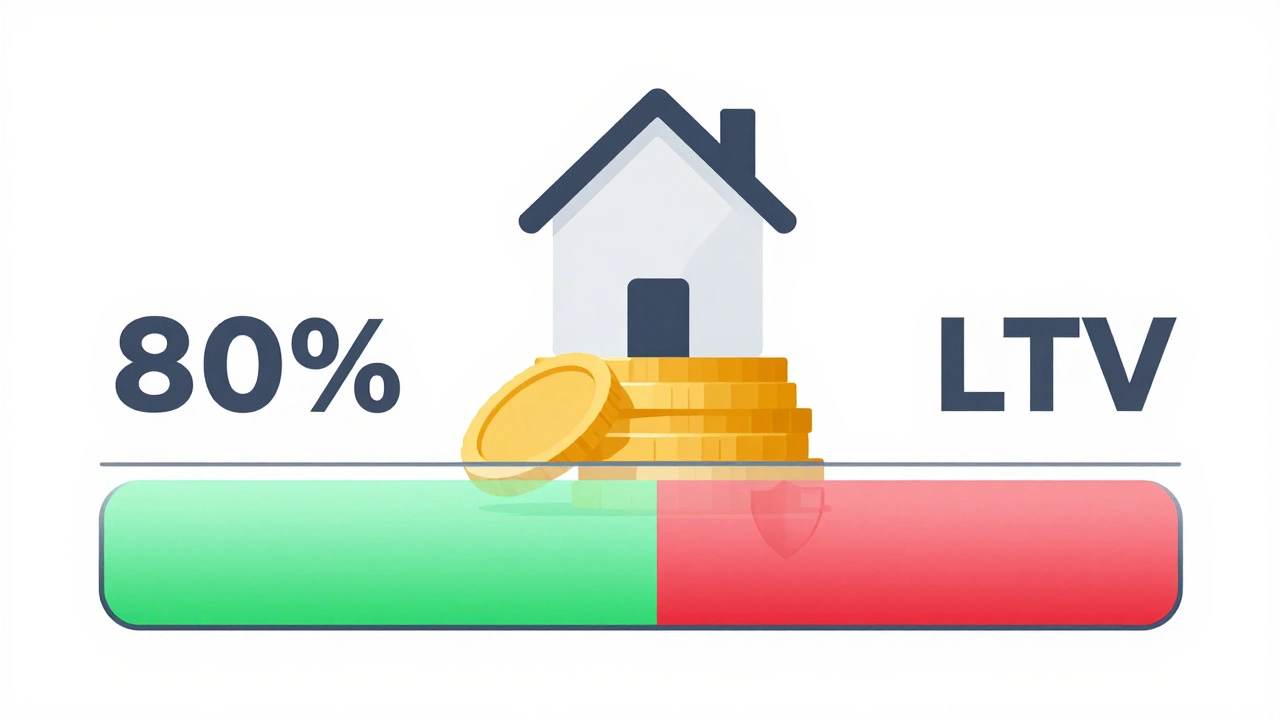
The short answer is: it depends on your Loan-to-Value Ratio (LTV) and your serviceability. In May 2026, with interest rates stabilizing after the hikes of previous years, lenders are slightly more flexible than they were in 2023, but they are still cautious. You can usually borrow up to 80% of your property’s current value without paying expensive mortgage insurance. If you go higher, the costs jump significantly.
Understanding Your Equity Cushion
Before you even talk to a broker, you need to know your starting point. Equity is the difference between what your house is worth and what you owe on it. If your Sydney apartment is valued at $1.2 million and you owe $900,000, you have $300,000 in equity. That sounds like a lot of money, but you can’t take it all out.
Lenders use the Loan-to-Value Ratio (LTV) to measure risk. Most Australian banks will let you borrow up to 80% of the property’s value without requiring Lenders Mortgage Insurance (LMI). LMI is a premium paid by you to protect the bank if you default. It can cost thousands of dollars. So, in our example, the maximum you could borrow without LMI is $960,000 (80% of $1.2m). Since you already owe $900,000, you could theoretically pull out an extra $60,000.
If you want more than that-say, up to 90% or 95%-you’ll pay LMI. Some lenders allow borrowing up to 100% or even 105% (covering stamp duty and legal fees), but this is rare for existing homeowners unless you have exceptional income or significant savings elsewhere.
The Serviceability Test: Can You Actually Repay It?
This is where most people get tripped up. Having equity doesn’t mean you qualify for the loan. The Australian Prudential Regulation Authority (APRA) sets strict rules on how much debt households can carry. Banks assess your ability to repay based on a stress rate, not just the current interest rate.
In 2026, many lenders are using a stress test of around 4% to 5% above the actual interest rate. If your current rate is 6%, they might assess your loan as if it were 10%. This ensures you can handle future rate hikes. If adding $50,000 to your loan pushes your monthly repayments beyond what’s comfortable under this stressed scenario, the application will be rejected.
- Income Stability: Are you employed full-time? Do you have consistent bonuses or commissions? Lenders prefer predictable income.
- Living Expenses: APRA requires lenders to use realistic living expense benchmarks. If you claim low expenses but live in a high-cost area like Sydney, the bank may override your figures with their own standard amounts.
- Existing Debts: Credit cards, personal loans, and HECS debts count against your borrowing power. Paying these off with the remortgage proceeds can actually improve your serviceability because it reduces your minimum monthly commitments.
Why Are You Borrowing More? Purpose Matters
Lenders ask why you want extra funds. The purpose influences their decision and sometimes the interest rate.
| Purpose | Lender Attitude | Impact on Rate |
|---|---|---|
| Home Renovation | Favorable | Usually same rate |
| Debt Consolidation | Cautious | May require lower LTV |
| Investment Property | Strict | Higher interest rate |
| Personal Use (Car, Holidays) | Unfavorable | Often declined or higher fee |
If you’re renovating, lenders often see this as increasing the asset’s value, which mitigates their risk. If you’re consolidating high-interest debt, they’ll want to see that you’ve addressed the behavior that caused the debt in the first place. Using mortgage equity for non-essential spending is a red flag for most banks.
Valuation: The Hidden Variable
Your borrowing power is tied to your property’s value. But who decides that value? The bank’s valuer. In Sydney’s diverse market, values can fluctuate wildly between suburbs. A valuer might come in lower than the recent sales nearby, especially if the property needs work or is smaller than average.
If the valuer comes back at $1.1 million instead of your expected $1.2 million, your 80% limit drops from $960,000 to $880,000. Suddenly, that extra $60,000 you wanted becomes impossible without hitting LMI territory. Always order a private valuation or check recent comparable sales before applying. It saves time and disappointment.

Alternatives to Remortgaging for Extra Cash
If the math doesn’t work for a larger mortgage, consider other options. Sometimes pulling cash out of your home isn’t the cheapest or safest route.
- Home Equity Line of Credit (HELOC): Similar to a credit card but secured against your home. You only pay interest on what you draw. Useful for ongoing renovation costs.
- Personal Loan: For smaller amounts ($10k-$30k), a personal loan might be faster and avoid tying up your home as security. Rates are higher, though.
- Offset Account Top-Up: If you have a variable rate mortgage with an offset account, moving savings there reduces interest instantly. Not cash in hand, but better financial efficiency.
- Refinance Without Drawdown: Sometimes switching lenders just to get a lower rate frees up enough cash flow to handle new expenses without borrowing more principal.
Steps to Maximize Your Borrowing Power
If you’re set on remortgaging to access equity, follow these steps to improve your chances.
- Check Your Credit Score: A score below 600 can trigger stricter lending criteria. Fix any errors on your report.
- Reduce Discretionary Spending: Show three months of bank statements with lower lifestyle expenses. This improves your serviceability assessment.
- Get Pre-Approved: Talk to a mortgage broker before signing contracts for renovations. They can tell you exactly how much you can borrow based on current lender policies.
- Consider a Fixed Portion: Locking in part of your loan might reduce overall risk perception, though it limits flexibility.
Remember, borrowing more means paying more interest over the life of the loan. Even at 6%, an extra $50,000 adds roughly $18,000 in interest over 25 years. Make sure the return on investment-whether it’s increased home value or peace of mind from debt consolidation-justifies the cost.
How much equity do I need to remortgage and borrow more?
You typically need at least 20% equity in your property to avoid paying Lenders Mortgage Insurance (LMI). This means your Loan-to-Value Ratio (LTV) should be 80% or less. If you have less than 20% equity, you may still borrow more, but you’ll pay LMI premiums, which can range from 1% to 3% of the loan amount.
Does remortgaging affect my credit score?
Yes, applying for a remortgage involves a hard credit check, which can temporarily lower your score by a few points. However, once the new loan is established and payments are made on time, your score should recover. Multiple applications in a short period can hurt your score more significantly.
Can I remortgage if I have bad credit?
It’s harder but possible. Non-bank lenders and some specialized banks offer loans to borrowers with impaired credit histories. These loans usually come with higher interest rates and stricter terms. Improving your credit score before applying is always recommended.
What is the maximum LTV for a remortgage in Australia?
Most major banks cap LTV at 80% for standard loans without LMI. Some lenders go up to 90% or 95% with LMI. Very few lenders will approve 100% LTV for existing homeowners unless there are exceptional circumstances, such as significant additional assets or income.
How long does the remortgaging process take?
The process typically takes 4 to 6 weeks. This includes application, valuation, approval, and settlement. Delays can occur if documentation is incomplete or if the valuation comes in lower than expected. Starting early and having all documents ready can speed things up.