ISA vs Savings Account Calculator
Your Details
Enter your details and click Calculate to see which option grows your money faster.
You have £5,000 sitting in your high street bank account. It’s safe. It’s accessible. But it’s also quietly losing value to inflation. You’ve heard about Individual Savings Accounts (ISAs) and wondered if moving that money is worth the hassle. The short answer? Yes, usually. But not always.
The debate between an ISA and a standard savings account isn’t just about interest rates. It’s about taxes, flexibility, and how you view your money. Are you parking cash for next month’s rent? Or are you building a nest egg for a house deposit in three years? Your goal dictates the tool.
The Core Difference: Tax-Free Growth
Let’s cut through the jargon. A standard savings account pays you interest on your balance. That interest is taxable income. In the UK, you get a Personal Savings Allowance-£1,000 of tax-free interest for basic rate taxpayers and £500 for higher rate taxpayers. If you earn more than that in interest across all your accounts, HMRC takes a cut.
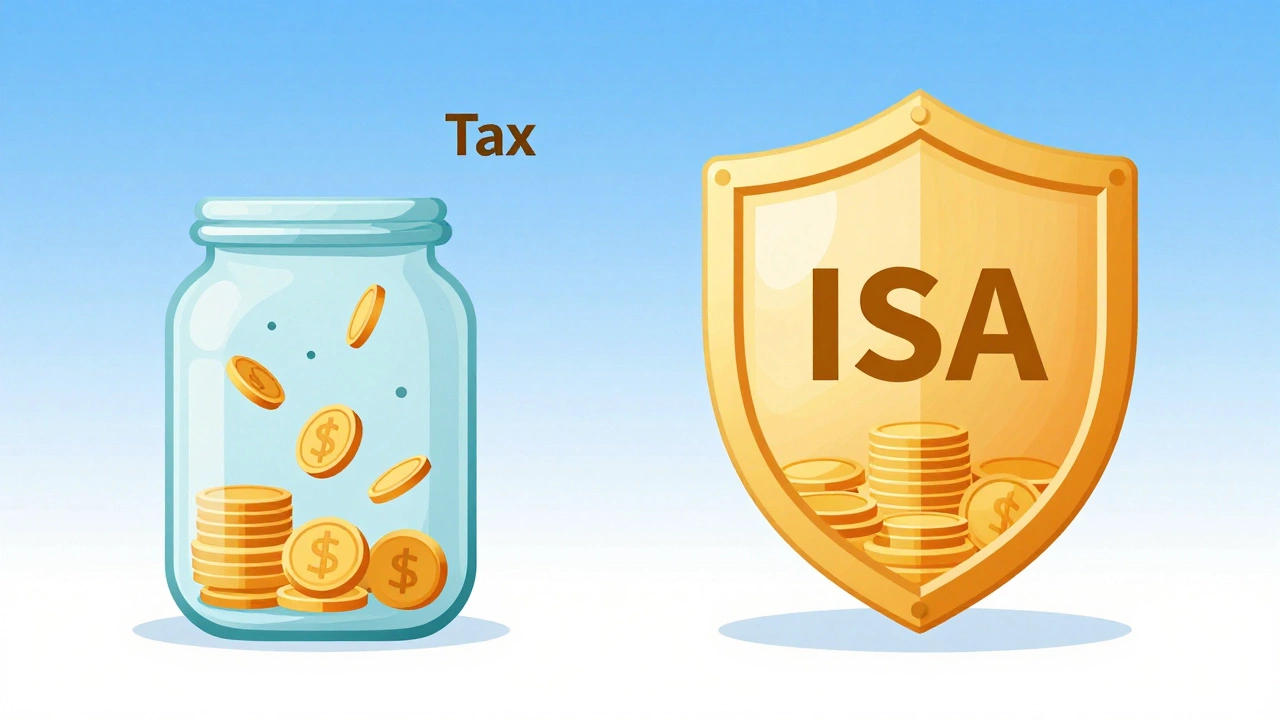
An ISA changes the game completely. Any interest, dividends, or capital gains you make inside an ISA are entirely tax-free. There is no limit to how much tax-free growth you can achieve. If you put £20,000 into a Stocks and Shares ISA and it grows by 10% in a year, you keep every penny of that £2,000 gain. No forms, no declarations, no tax bills.
Is an ISA better than a savings account?
For most people saving medium-to-long term, yes. An ISA offers tax-free growth, which often outweighs slightly higher gross interest rates found in some easy-access savings accounts. However, for immediate liquidity needs or very small balances, a standard savings account may offer better accessibility and simplicity.
Cash ISA vs. Easy Access Savings: The Rate Trap
Here is where it gets tricky. Because ISAs are tax-efficient, providers sometimes charge a premium for that privilege. You might see a Cash ISA offering 4.5% AER while a standard easy-access savings account from a challenger bank offers 5.0%. On paper, the savings account wins.
But let’s do the math. If you are a basic rate taxpayer, that extra 0.5% interest in the savings account is taxed at 20%. So, your real return is only 0.4% higher. Is that tiny difference worth giving up the tax shield? Probably not. More importantly, if you are a higher or additional rate taxpayer, the ISA crushes the savings account. A 4.5% tax-free return is equivalent to a 7.5% gross return for a higher-rate taxpayer. No standard savings account comes close to that.
Also, consider the Annual Allowance. For the 2026/27 tax year, you can subscribe up to £20,000 into ISAs. This is a use-it-or-lose-it allowance. If you leave that money in a taxable savings account, you are wasting a powerful tax break. Even if the rate is slightly lower, the net benefit over five or ten years is significantly larger with an ISA.
Liquidity and Flexibility: Can You Get Your Money Out?
Savings accounts vary wildly in terms of access. Fixed-term bonds lock your money away for one, two, or five years. If you need that cash for an emergency, you’ll face steep penalties, potentially wiping out months of interest. Easy-access accounts let you withdraw whenever you want, but they often come with lower rates.
Most Cash ISAs today are "easy access." You can withdraw money without penalty. However, there is a catch called "flexible" rules. Since 2016, you can replace withdrawn funds within the same tax year without affecting your annual allowance. This makes Cash ISAs incredibly versatile. You can treat them like a current account for short-term parking, then let it grow tax-free when you’re ready.
Compare this to a Notice Account. These require you to give 30, 60, or 90 days’ notice before withdrawing. They offer higher rates because the bank knows your money is stuck there. An ISA gives you the best of both worlds: competitive rates (often matching notice accounts) with instant access. Unless you are absolutely certain you won’t touch the money for years, an ISA’s flexibility usually beats the rigid structure of fixed-term savings products.
Risk Profile: Safety First
If you are risk-averse, you likely prefer the guaranteed principal of a savings account. Both Cash ISAs and standard savings accounts are protected by the Financial Services Compensation Scheme (FSCS). This means if the bank fails, your money is safe up to £85,000 per person, per authorized firm. Whether your money is in an ISA wrapper or a standard account, the safety net is identical.
However, be careful with Stocks and Shares ISAs. These invest in markets. Your capital is at risk. While the tax benefits are huge, you could lose money if the market crashes. A standard savings account never loses nominal value. If your goal is capital preservation above all else, stick to Cash ISAs or standard savings. Do not confuse the ISA wrapper with an investment strategy. The wrapper protects the tax; it does not protect the price.
The Inflation Factor: Why Stagnant Cash Loses
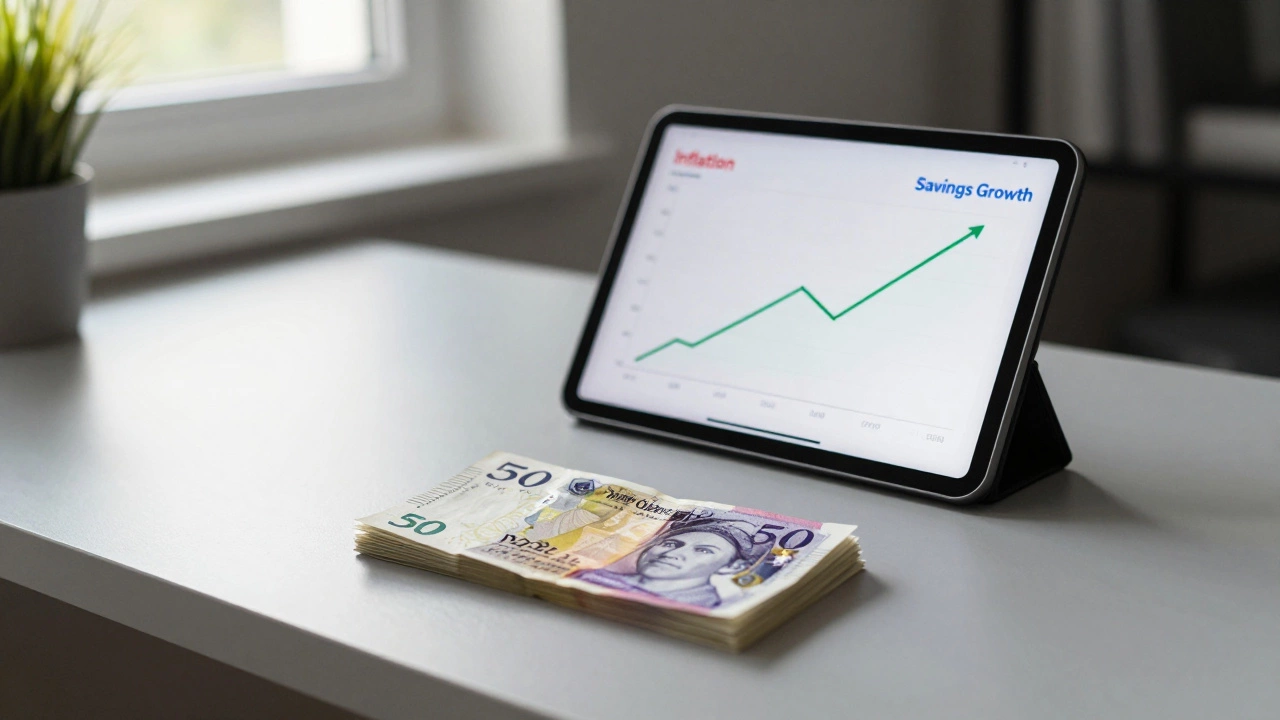
In 2026, inflation has settled around 2.5%. If your savings account pays 3%, you are technically growing your wealth. But barely. After tax, that 3% might drop to 2.4% for higher earners. You are effectively losing purchasing power. Over a decade, this "inflation drag" erodes your ability to buy goods and services.
A Cash ISA paying 4.5% tax-free gives you a real return of 2%. That’s double the real growth of a taxable account for a higher-rate taxpayer. Now, imagine using a Lifetime ISA (LISA) for a first home. You get a 25% government bonus. That’s an instant 25% return, far outstripping any savings account rate. For long-term goals, the compounding effect of tax-free growth in an ISA creates a substantial gap compared to taxable savings.

Who Should Stick With a Standard Savings Account?
Not everyone needs an ISA. Here is who should keep their money in a standard account:
- Non-UK Residents: If you don’t pay UK tax, the tax-free benefit of an ISA is irrelevant. Look for the highest gross interest rate available globally.
- Small Balances: If you have under £1,000, the administrative effort of opening and managing an ISA might not be worth the minimal tax savings. Keep it simple.
- Immediate Needs: If you need the money next week for a car repair, an easy-access savings account linked to your main banking app is faster and simpler. Don’t overcomplicate emergency funds.
- Already Maxed Out: If you have already subscribed £20,000 to your ISA for the year, any new savings must go into taxable accounts. Consider a Stocks and Shares General Investment Account (GIA) instead, which allows unlimited subscriptions.
Strategic Moves for 2026
To maximize your wealth, don’t choose one or the other exclusively. Use a layered approach. Keep three months’ living expenses in a highly liquid, easy-access savings account for emergencies. Park your medium-term goals (like a holiday or car deposit) in a Cash ISA. Invest your long-term wealth (retirement, children’s education) in a Stocks and Shares ISA.
Check your Personal Savings Allowance status. If you are a non-saver or higher-rate taxpayer, prioritize ISAs aggressively. If you are a basic-rate taxpayer with low interest income, you might tolerate some taxable savings for convenience, but remember that the ISA allowance resets every April 6th. Wasting it is leaving free money on the table.
Finally, shop around. Interest rates change monthly. Just because your current ISA provider offered 4% last year doesn’t mean they still do. Switching ISAs is easier than ever. You can transfer existing ISA holdings to a new provider without breaking the tax wrapper. Don’t let inertia cost you thousands in lost interest and tax efficiency.
Can I have both an ISA and a savings account?
Yes, you can hold both simultaneously. Many financial experts recommend keeping emergency funds in a standard easy-access savings account for immediate liquidity, while using ISAs for longer-term savings to benefit from tax-free growth. There is no rule against holding multiple types of accounts.
What happens to my ISA allowance if I withdraw money?
Withdrawing money from a flexible ISA does not restore your annual allowance immediately. However, you can replace the withdrawn amount within the same tax year without it counting towards your £20,000 limit. If you withdraw and do not replace it, that portion of your allowance is used up for the year.
Are ISAs safer than savings accounts?
Cash ISAs are equally safe as standard savings accounts, as both are covered by the FSCS up to £85,000 per institution. Stocks and Shares ISAs carry market risk, meaning the value of your investments can go down as well as up, unlike the fixed value of cash savings.
Do I need to declare ISA interest on my tax return?
No. One of the primary benefits of an ISA is that all interest, dividends, and capital gains are tax-free. You do not need to report ISA earnings to HMRC, regardless of how much you earn or your tax band.
Which is better for a first-time buyer: LISA or Cash ISA?
A Lifetime ISA (LISA) is generally better for first-time buyers because it offers a 25% government bonus on contributions, up to £1,000 per year. This effectively boosts your savings significantly more than typical Cash ISA interest rates. However, LISAs have stricter withdrawal rules and age limits.