Budget Priority Analyzer
Enter your financial details below to discover which priority should come first in your budget. This tool follows the proven three-step hierarchy for building financial stability.
Most people fail at budgeting not because they lack discipline, but because they get the order wrong. You might think you need to save for a vacation first or pay off that small credit card balance immediately. But if you build your financial house on a shaky foundation, it will collapse the moment life throws a curveball. The truth is, there is a strict hierarchy of needs when it comes to managing money. Getting this sequence right is the difference between surviving a crisis and drowning in debt.
If you are looking for a simple rule to follow, here are the three non-negotiable priorities in any solid budget: essential living expenses, an emergency fund that covers unexpected costs like car repairs or medical bills, and high-interest debt repayment. Everything else-investments, luxury spending, even low-interest debt payments-comes after these three pillars are secure.
Priority 1: Secure Your Essential Living Expenses
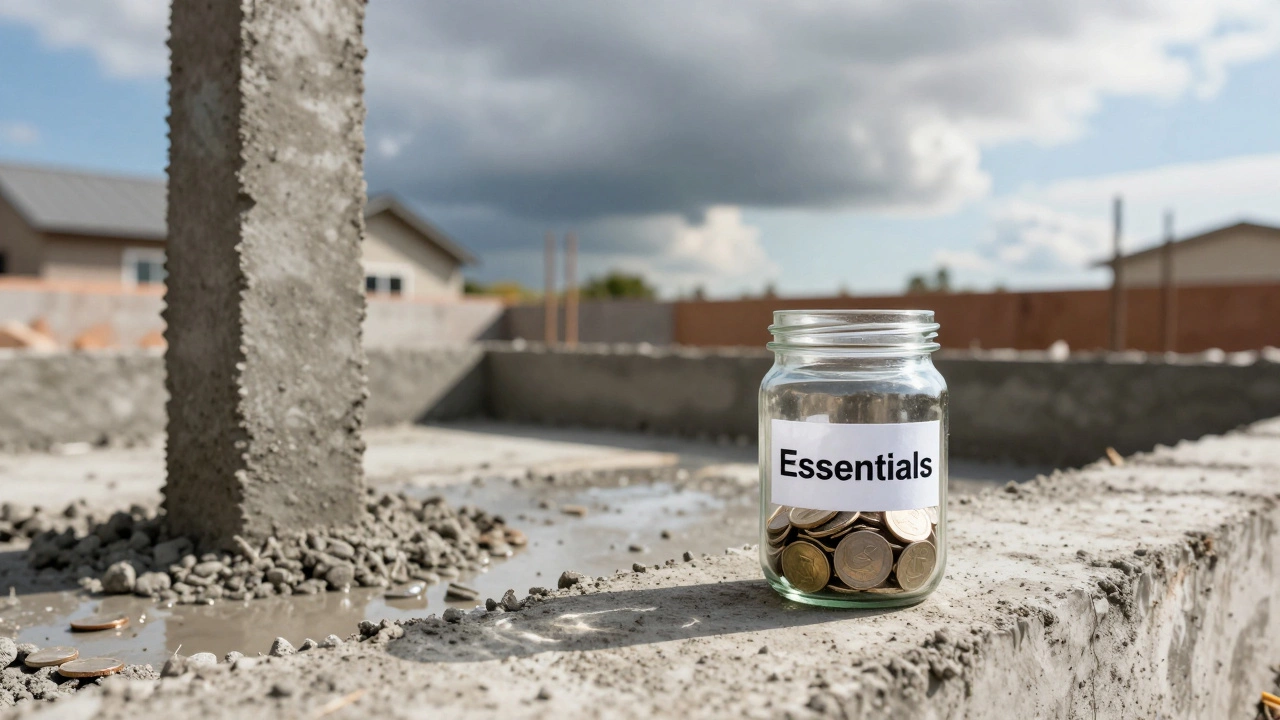
Before you can save or invest, you must survive. This sounds obvious, yet many people try to cut corners on basics to make room for savings goals, which leads to burnout. Your first priority is ensuring your fixed, necessary costs are covered by your income. These are the bills that keep you housed, fed, and employed.
We categorize these as "needs" rather than "wants." This includes rent or mortgage payments, utilities (electricity, water, internet), groceries, transportation costs (fuel or public transit passes), and minimum insurance premiums. If your income does not cover these items, no amount of clever saving tricks will fix the problem. You either need to increase your income or drastically reduce these fixed costs.
A common mistake here is underestimating variable essentials. Groceries, for example, fluctuate wildly based on inflation and dietary choices. In Sydney, where cost of living pressures are significant, setting aside a specific buffer for food price spikes is crucial. Do not just budget for what you spent last month; budget for what you expect to spend next month, plus a small contingency. If your essential expenses exceed 50-60% of your take-home pay, you are in a tight spot, and every other financial goal becomes secondary to stabilizing this ratio.
Priority 2: Build a Starter Emergency Fund
Once your lights stay on and you have food on the table, you face the biggest threat to your budget: unpredictability. Life happens. Cars break down, appliances die, and health issues arise. Without a financial cushion, a $500 repair becomes a $500 credit card charge, which quickly spirals into interest-bearing debt. This is why your second priority is building a starter emergency fund.
Do not aim for six months of expenses right away. That goal is too distant and discouraging for most beginners. Instead, start with a "mini-fund" of $1,000 to $2,000 AUD. Keep this money in a separate, easily accessible account-not under your mattress, but not tied up in long-term investments either. A high-yield savings account works best here. The goal is liquidity. When your laptop crashes before a big presentation, you pull from this fund, not your credit card.
This step breaks the cycle of reactive spending. Many people live paycheck to paycheck, using credit cards to bridge gaps. By having this buffer, you stop digging deeper holes. Once this starter fund is fully funded, you do not touch it unless true emergencies occur. Then, you work on expanding it to cover three to six months of essential expenses. But getting that initial $1,000 is the critical first milestone that changes your psychological relationship with money.
Priority 3: Eliminate High-Interest Debt
With your basics covered and a safety net in place, you turn your attention to the financial leak that drains wealth faster than anything else: high-interest debt. We are talking primarily about credit card balances, payday loans, and some personal loans. These debts often carry interest rates between 15% and 30% annually. Mathematically, paying off a 20% credit card balance is a guaranteed 20% return on your money. No investment in the stock market offers that kind of risk-free guarantee.
To tackle this effectively, choose one of two proven strategies: the Debt Avalanche or the Debt Snowball. The Debt Avalanche method focuses on paying off the debt with the highest interest rate first while making minimum payments on others. This saves you the most money over time. The Debt Snowball method targets the smallest balance first, regardless of interest rate. This provides quick psychological wins that motivate you to keep going.
For most people, the emotional boost of the Snowball method leads to better adherence, so it is often the more practical choice despite costing slightly more in interest. Whatever method you pick, stop adding new charges to credit cards. Cut them up if you have to. Redirect every extra dollar from your budget toward this debt until it is gone. Only once high-interest debt is eliminated should you consider investing for retirement or buying luxury items.
Why This Order Matters More Than You Think
You might wonder why we don't prioritize investing early. After all, compound growth is powerful. However, trying to invest while carrying 20% interest debt is like filling a bucket with a hole in the bottom. The interest you pay on debt far outpaces the average returns of the stock market, which historically averages around 7-10% annually before inflation. Furthermore, without an emergency fund, a single unexpected expense forces you to sell investments at a loss or incur more debt, undoing years of progress.
This hierarchy protects you from behavioral pitfalls. Human beings are bad at long-term planning when short-term stress is high. By securing essentials and creating a buffer, you reduce anxiety. Lower anxiety leads to better decision-making. When you are not panicking about how to pay for a flat tire, you are less likely to impulse-buy expensive electronics to cope with stress.
| Strategy | Best For | Risk Level | Time to Freedom |
|---|---|---|---|
| Essentials First | Stabilizing cash flow | Low | Immediate impact |
| Emergency Fund | Risk mitigation | Medium | 1-3 months |
| High-Interest Debt Payoff | Wealth preservation | High (if ignored) | 6-24 months |

Common Mistakes That Derail Your Budget
Even with the right priorities, execution can fail. One major error is being too rigid. If your budget leaves no room for fun, you will abandon it within weeks. Always include a small "guilt-free spending" category, perhaps 5-10% of your income. This prevents burnout and keeps you engaged with the process.
Another pitfall is ignoring lifestyle creep. As your income rises, your expenses tend to rise with it. You get a raise, so you upgrade your apartment and buy a nicer car. While comfortable, this undermines your ability to build wealth. Stick to your baseline essential expenses even as you earn more, directing the surplus toward your emergency fund and debt payoff.
Finally, do not neglect tracking. A budget is just a plan until you monitor it. Use apps or spreadsheets to track actual spending against your plan. Review your finances weekly, not just monthly. Small leaks sink great ships, and catching a subscription you forgot to cancel or a dining-out habit early makes a huge difference.
Next Steps: Beyond the Basics
Once you have mastered these three priorities, your financial landscape opens up. You can then focus on maximizing retirement contributions, investing in education, or saving for large purchases like a home. But remember, the foundation never goes out of style. Regularly revisit your essentials, replenish your emergency fund after use, and avoid taking on new high-interest debt. Financial freedom is not a destination; it is a habit built on consistent, prioritized actions.
How much should I save in my emergency fund?
Start with a mini-fund of $1,000 to $2,000 AUD to cover small emergencies. Once high-interest debt is paid off, aim to expand this to cover three to six months of essential living expenses. This ensures you can handle job loss or major medical events without going into debt.
Should I pay off debt or invest first?
Always pay off high-interest debt (like credit cards) before investing. The interest rates on debt (often 15-30%) far exceed typical investment returns (7-10%). Paying off debt is a guaranteed return on your money, whereas investing carries risk.
What counts as an essential expense?
Essential expenses are those required for survival and basic functioning. This includes housing (rent/mortgage), utilities, groceries, transportation, and minimum insurance payments. Entertainment, dining out, and subscriptions are generally considered non-essential.
Is the Debt Snowball or Avalanche method better?
The Debt Avalanche method saves more money by targeting high-interest rates first. However, the Debt Snowball method, which targets smallest balances first, often provides better motivation through quick wins. Choose based on whether you need mathematical efficiency or psychological momentum.
Can I skip the emergency fund if I have good insurance?
No. Insurance covers major catastrophic events, but it rarely covers small, frequent surprises like car repairs, dental work, or appliance failures. An emergency fund handles these everyday shocks that insurance deductibles or exclusions leave you responsible for.