50-30-20 Budget Calculator
Enter Your Income
Your Budget Breakdown
Enter your income to see your personalized budget split
Essential Expenses
These are survival costs with immediate consequences if unpaid
- • Rent or mortgage payments
- • Utilities (electricity, water, gas)
- • Basic groceries
- • Insurance premiums
- • Minimum debt payments
- • Essential transportation costs
Discretionary Spending
Fun expenses that make life enjoyable but aren't essential
- • Dining out and entertainment
- • Streaming services and subscriptions
- • Gym memberships and hobbies
- • Travel and vacations
- • Shopping for non-essentials
- • Upgrading devices or gadgets
Future Money
Build wealth and security through consistent saving
- • Emergency fund contributions
- • Retirement accounts (401k, Superannuation)
- • Investment accounts
- • Extra debt payments above minimums
- • Sinking funds for annual expenses
- • Long-term savings goals
💡 Pro Tip: Automate Your Savings
Set up automatic transfers so $0 moves to your savings account as soon as you get paid. This "pay yourself first" approach removes temptation and builds wealth effortlessly.
You know you should be saving more. You also know you shouldn't spend every paycheck on takeout and subscriptions. But when you look at your bank account, it’s just a blur of numbers that don’t add up to anything helpful. That is where the 50-30-20 rule comes in. It is a simple budgeting framework that divides your after-tax income into three categories: needs, wants, and savings. Created by Senator Elizabeth Warren and popularized in her book All Your Worth, this method strips away the complexity of tracking every single coffee purchase. Instead, it gives you broad buckets to fill. It is not about being perfect; it is about being consistent.
If you have tried complex spreadsheets before and quit after two weeks, this approach might be the reset button you need. It does not require an accounting degree. It just requires knowing your net income-the money that actually hits your bank account after taxes and deductions. Once you have that number, the math is easy. The real work starts when you figure out which bucket each expense belongs to.
The Three Buckets Explained
To make this rule work, you need to understand what goes into each percentage. These are not arbitrary numbers; they reflect a balance between living comfortably now and securing your future. Let’s break down the three pillars of this system.
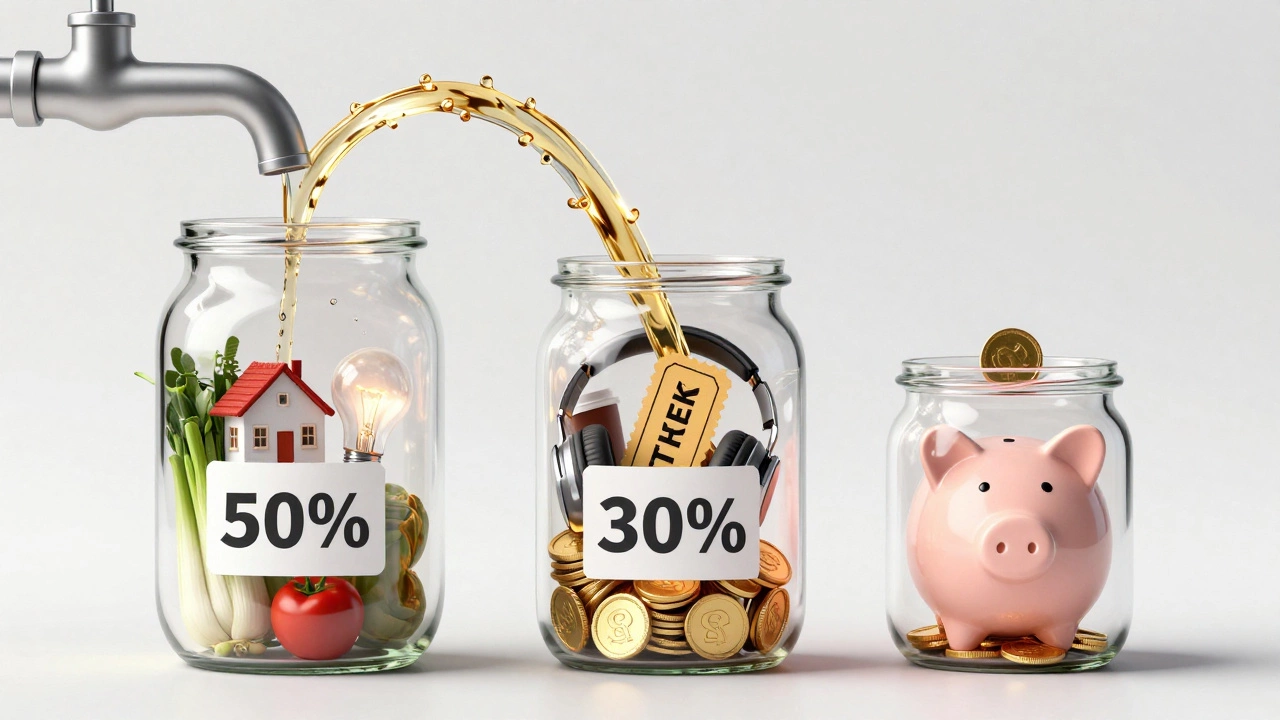
50% for Needs: This is your survival money. If you lost your job today, these are the bills you still have to pay to keep a roof over your head and food on the table. This includes rent or mortgage payments, utilities like electricity and water, basic groceries (not the fancy organic snacks), minimum debt payments, insurance premiums, and essential transportation costs. If you do not pay these, there are immediate consequences, like getting evicted or having your power cut off. The key word here is 'essential.'
30% for Wants: This is your fun money. Life would be pretty miserable if you only paid bills and ate rice and beans. This category covers dining out, streaming services, gym memberships, hobbies, travel, and upgrading your phone. It is the stuff that makes life enjoyable but is not strictly necessary for survival. You can choose to skip a concert or eat at home instead of going to a restaurant. This flexibility is what defines a want.
20% for Savings and Debt Repayment: This is your future money. This portion goes toward building an emergency fund, contributing to retirement accounts like a Superannuation fund in Australia or a 401(k) in the US, investing, and paying down high-interest debt beyond the minimums. This is the engine that builds wealth over time. Even if you think $100 is small, putting it here consistently creates compound interest that works for you.
| Category | Percentage | Examples | Flexibility |
|---|---|---|---|
| Needs | 50% | Rent, Utilities, Groceries, Insurance | Low |
| Wants | 30% | Dining Out, Entertainment, Shopping | High |
| Savings/Debt | 20% | Emergency Fund, Investments, Extra Debt Payments | Medium |
How to Calculate Your Budget
Let’s put some real numbers to this. Say your take-home pay is $5,000 per month. Here is how you split it up.
- Needs ($2,500): Your rent is $1,800. Electricity and internet cost $200. Groceries run about $300. Car insurance and fuel total $200. You are right at the limit. If your rent was higher, you would need to adjust other areas.
- Wants ($1,500): You go out to dinner twice a week ($200). You have Netflix, Spotify, and a gym membership ($100). You buy clothes and gifts occasionally ($300). You save the rest for a vacation fund or random treats ($900).
- Savings ($1,000): You automate $500 into your high-yield savings account. You contribute $300 to your retirement fund. You throw an extra $200 at your credit card balance to pay it off faster.
The magic happens when you automate the savings part. Set up a direct deposit so that as soon as you get paid, $1,000 moves to your savings account. You never see it, so you never miss it. This is called 'paying yourself first.' It removes the temptation to spend that money on wants because it is already gone.
When the Math Does Not Add Up
Here is the hard truth: the 50-30-20 rule assumes you live in a world where your needs are less than half your income. For many people, especially those living in expensive cities like Sydney, London, or New York, rent alone can eat up 60% or 70% of their paycheck. If your needs exceed 50%, the rule breaks. Do not panic. This does not mean you failed. It means you need to adapt.
If your needs are too high, you have two options. First, you can increase your income. This could mean picking up a side hustle, asking for a raise, or finding a higher-paying job. Second, you can reduce your wants. If your needs take 70% of your income, you might have to shrink your wants to 10% and squeeze out 20% for savings. It is tighter, but it is possible. The goal is always to protect that savings portion, even if it means sacrificing leisure activities temporarily.
Another common issue is irregular income. Freelancers and commission-based workers often struggle with fixed percentages. In this case, use your lowest expected monthly income as your baseline. Calculate your 50-30-20 based on that low number. When you have a big month, put the extra money straight into savings or debt repayment. This prevents lifestyle creep, where you start spending more just because you earned more one month.
Common Mistakes to Avoid
Even simple systems have pitfalls. Here are the most common ways people mess up the 50-30-20 rule.
Misclassifying Expenses: People often put things in the 'needs' bucket that belong in 'wants.' For example, is that $8 latte a need? Probably not. Is that premium cable package a need? No. Be honest with yourself. If you can live without it for a month without major hardship, it is a want. Misclassifying expenses inflates your needs category and shrinks your savings potential.
Ignoring Taxes: Always use your net income, not your gross income. Gross income is what your contract says you earn. Net income is what you actually take home. If you calculate based on gross, you will find yourself short on cash every month. Check your last few pay stubs to get an accurate average of your take-home pay.
Forgetting Annual Expenses: Most people forget about car registration, annual insurance premiums, or holiday gifts. These costs come once a year but can wreck your monthly budget. Divide these annual costs by 12 and set aside that amount each month in a separate sinking fund. Treat this as part of your 'needs' or 'savings' depending on the expense.

Tips for Success
Sticking to any budget is hard. Human nature prefers instant gratification. Here is how to make the 50-30-20 rule stick in the long term.
Use Separate Accounts: Open three different checking accounts or sub-accounts. Label them 'Bills,' 'Fun,' and 'Future.' When you get paid, move the money accordingly. When the 'Fun' account is empty, you stop spending on wants until next month. This visual barrier helps prevent overspending.
Review Monthly: Your life changes. Rent might go up. You might get a promotion. Review your budget at the end of every month. Did you overspend on wants? Why? Was it an emergency or poor planning? Adjust the next month’s allocations based on what you learned. Budgeting is not a set-it-and-forget-it task; it is a regular check-in with your financial health.
Start Small: If you are currently saving nothing, jumping to 20% might feel impossible. Start with 5%. Then 10%. Gradually increase your savings rate as you become comfortable. The habit matters more than the initial amount. Consistency beats intensity.
Alternatives to Consider
The 50-30-20 rule is great, but it is not the only way to manage money. Depending on your situation, another method might fit better.
The Zero-Based Budget: Every dollar has a job. You subtract all your expenses from your income until you reach zero. This is more detailed and requires more effort, but it gives you total control. It is ideal if you have variable expenses or are trying to pay off debt aggressively.
The Pay Yourself First Method: You decide on a savings amount and transfer it immediately. Whatever is left is yours to spend however you want. This is less structured than 50-30-20 but easier to maintain if you hate tracking expenses.
The Envelope System: You use cash for discretionary spending. Once the envelope is empty, you stop spending. This is excellent for curbing impulse buys and making the pain of spending more tangible.
Does the 50-30-20 rule apply to gross or net income?
It applies to your net income, which is the money you take home after taxes, insurance, and other deductions. Using gross income will lead to a budget shortfall because you cannot spend money that has already been taken out for taxes.
What if my rent is more than 50% of my income?
If your housing costs exceed 50%, you need to adjust the ratios. You might shift to a 60-20-20 or 70-15-15 split. The priority is to keep saving something, even if it means reducing your 'wants' significantly. Alternatively, consider finding roommates or moving to a more affordable area to lower your needs.
Is student loan payment a need or a want?
Minimum student loan payments are considered a 'need' because failing to pay them damages your credit score and can lead to legal issues. However, any extra payments you make above the minimum should go into the 'savings/debt repayment' bucket to accelerate payoff.
Can I use this rule for a household budget?
Yes, you can combine both partners' incomes and apply the 50-30-20 rule to the total household net income. This ensures that both people are aligned on financial goals. Just make sure you agree on what constitutes a 'need' versus a 'want' for the family.
How often should I review my 50-30-20 budget?
You should review it monthly. Track your actual spending against your planned percentages. If you consistently overspend in one category, adjust the next month's budget. Major life changes, like a new job or marriage, should trigger an immediate review.