Crypto Security Risk Calculator
This calculator shows your risk level for losing crypto based on your security practices. According to the article, over $2.3 billion was stolen in 2024 due to security failures. Your first step should always be securing your assets.
When you first hear about cryptocurrency, it’s easy to get overwhelmed. Bitcoin, Ethereum, NFTs, DeFi, wallets, private keys, gas fees - it feels like a whole new language. But here’s the truth: you don’t need to understand all of it to get started. The first thing to learn in crypto isn’t how to trade or which coin will pump next. It’s how to keep your money safe.
Security Comes Before Everything Else
Most people jump into crypto looking for quick gains. They watch YouTube videos, join Discord groups, and follow influencers promising 10x returns. But the reality? The biggest risk isn’t market crashes - it’s losing your money because you didn’t know how to protect it.
In 2024, over $2.3 billion in crypto was stolen through scams, phishing, and user error, according to Chainalysis. That’s not hackers breaking into exchanges - it’s people giving away their own keys by clicking the wrong link or saving passwords in plain text.
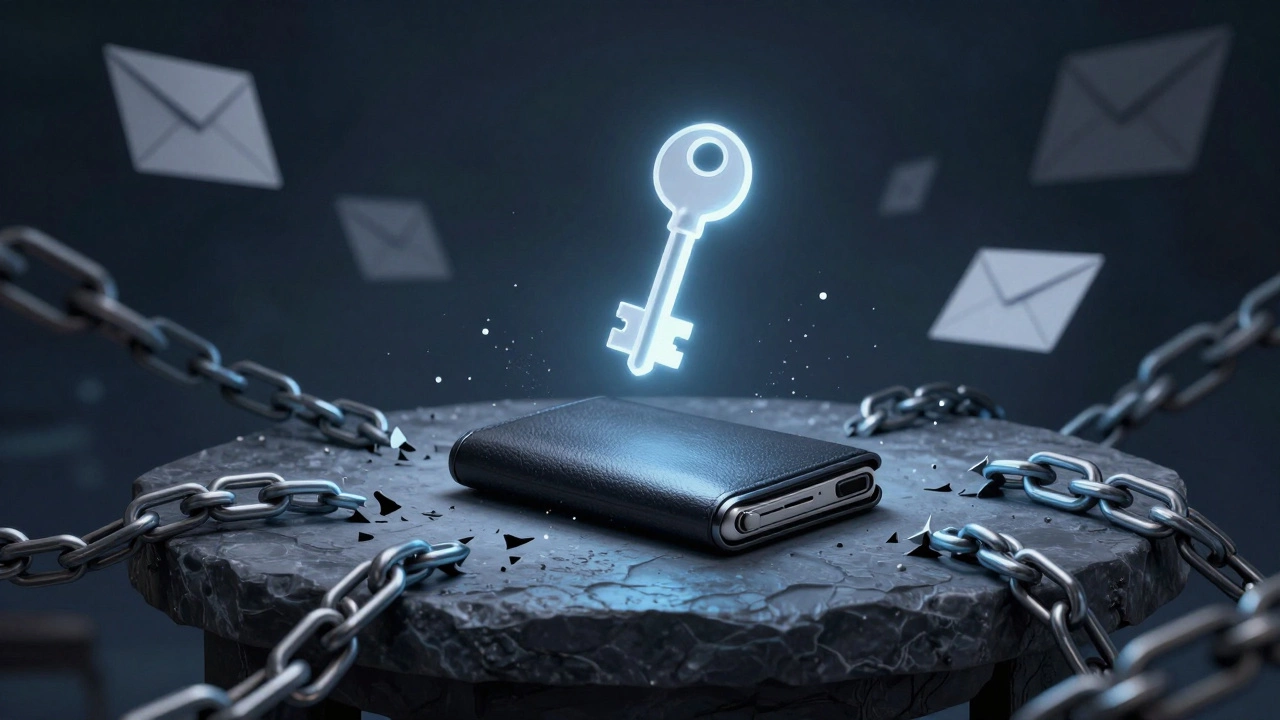
Here’s the hard truth: if you don’t control your private keys, you don’t own your crypto. Exchanges like Binance or Coinbase hold your coins for you. That’s convenient, but it’s also risky. If the exchange gets hacked - or if they decide to freeze your account - you lose access. Real ownership means holding your own keys.
What Are Private Keys and Seed Phrases?
A private key is a long string of letters and numbers - like 9f38a7d1e4b2c9f8a5d7e3c6b1a0f2d4 - that gives you full control over your crypto. Think of it like the master key to your house. Lose it? You’re locked out forever.
Most wallets use a seed phrase instead - usually 12 or 24 words like “moon river tiger clock leaf jungle...”. This phrase can regenerate your entire wallet. If you lose it, you lose everything. If someone else gets it, they can steal everything.
Here’s what you need to do right now:
- Get a hardware wallet - like a Ledger Nano X or Trezor Model T. These store your keys offline, away from hackers.
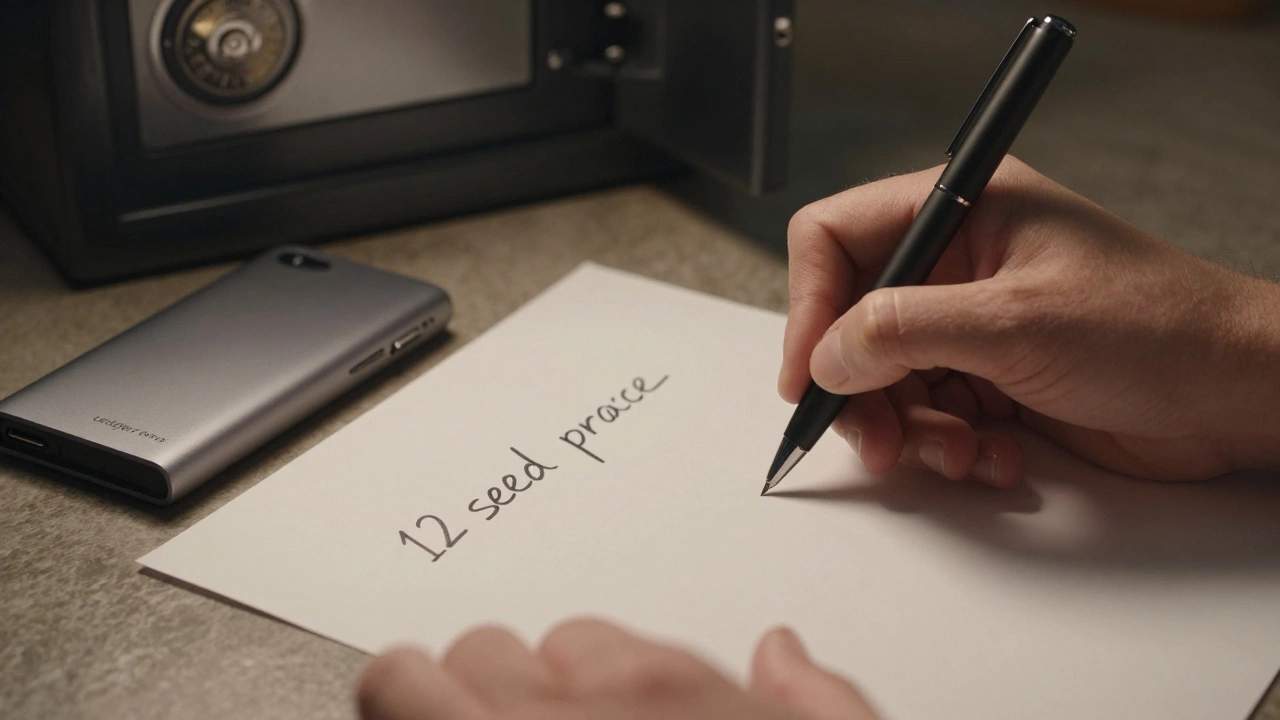
- Write down your seed phrase on paper. Don’t use a phone, cloud note, or photo.
- Store the paper in a fireproof safe or safety deposit box. Not your desk drawer.
- Never share your seed phrase with anyone. Not even “customer support.”
That’s it. That’s the foundation. Everything else - buying Bitcoin, swapping tokens, staking rewards - comes after you’ve locked down your security.
Why Wallets Are More Important Than Exchanges
You might think, “I’ll just keep my crypto on Binance - it’s easy.” But exchanges are centralized. They’re targets. In 2022, FTX collapsed and over $8 billion in user funds vanished. Even if you trust the platform today, that doesn’t mean it’ll be there tomorrow.
Hardware wallets are designed to be simple. Plug it in, connect to your computer, sign transactions with a button press. No passwords. No apps. No internet connection needed during storage. They’re built to survive hacking attempts, power outages, and even physical damage.
And here’s something most beginners miss: you don’t need to hold hundreds of coins. Start with one. Buy $50 worth of Bitcoin or Ethereum. Send it to your hardware wallet. Then test it. Send a tiny amount back to an exchange. See how long it takes. Check the fees. Understand the process. This hands-on experience is worth more than any tutorial.
Stop Following Trends. Start Building Systems.
The crypto world moves fast. New coins pop up every day. Memecoins go viral. People post screenshots of 100x gains. It’s tempting to chase them. But if you haven’t secured your wallet yet, you’re already playing with fire.
Successful crypto investors don’t chase hype. They build systems:
- They buy small amounts regularly - not all at once.
- They store everything offline.
- They verify every address before sending.
- They never click links in DMs or emails.
One person I know in Sydney bought his first Bitcoin in 2021 for $30,000. He didn’t sell when it dropped to $15,000. He didn’t panic when Dogecoin exploded. He just kept adding a little every month. Three years later, he’s still holding. He’s not rich - but he’s not broke either. And he never lost a single coin.
Common Mistakes Newcomers Make
Here are the top three mistakes beginners make - and how to avoid them:
- Using a phone wallet for large amounts. Mobile wallets are convenient, but phones get stolen, lost, or hacked. Use them only for tiny daily transactions.
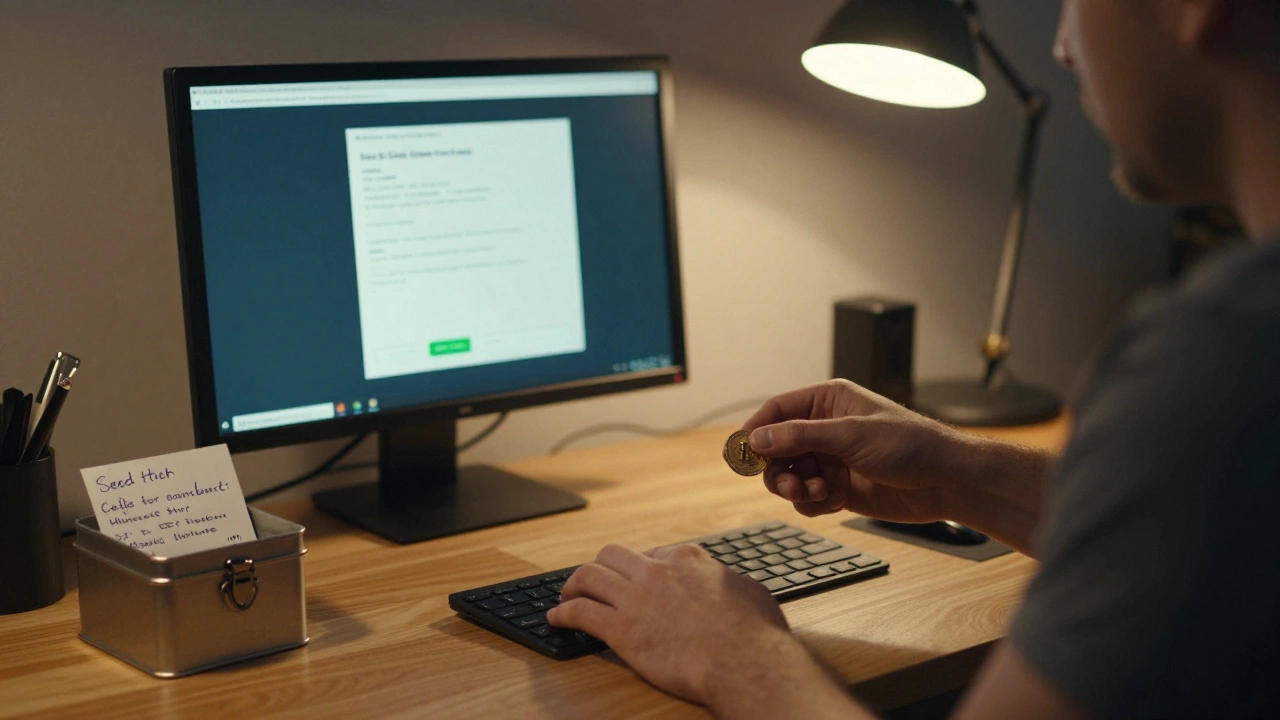
- Writing seed phrases in digital notes. If your phone is compromised, so is your crypto. Always use pen and paper.
- Trusting “free crypto” giveaways. If someone says “send me $100 and I’ll send back $1,000,” it’s a scam. Always assume every unsolicited message is malicious.
There’s no magic trick. No secret formula. No insider tip. Just discipline. If you can master these basics - secure storage, small test transactions, and skepticism - you’re already ahead of 90% of new crypto users.
What Comes Next?
Once your wallet is secure, then you can learn the rest:
- How to read blockchain explorers like Etherscan
- What gas fees are and how to minimize them
- How to swap tokens on decentralized exchanges like Uniswap
- What staking and yield farming mean
But none of that matters if you lose your keys.
Crypto isn’t about getting rich overnight. It’s about building a new kind of financial system - one where you control your money. And that starts with one simple rule: if you don’t own your keys, you don’t own your crypto.
What is the very first thing I should do when starting in crypto?
Buy a hardware wallet like a Ledger or Trezor. Then write down your 12- or 24-word recovery phrase on paper and store it securely. Do this before buying any cryptocurrency. This step protects your assets from hacks, scams, and platform failures.
Can I just keep my crypto on an exchange like Binance?
You can, but it’s risky. Exchanges are centralized and can be hacked, shut down, or freeze accounts. If you don’t control the private keys, you don’t truly own your crypto. Use exchanges only to buy or sell - then move your coins to your own wallet.
Is it safe to store my seed phrase on my phone or in the cloud?
No. Any digital storage - even encrypted notes or cloud backups - can be hacked or lost. The only safe way is to write your seed phrase by hand on paper, keep it in a fireproof safe, and never digitize it. Treat it like the title to your house.
How much crypto should I buy as a beginner?
Start with an amount you can afford to lose completely - even $20 or $50. Use it to practice sending and receiving crypto. This teaches you how wallets work without risking major losses. Never invest more than you’re comfortable losing.
Are there any free resources to learn crypto basics?
Yes. The Bitcoin Whitepaper by Satoshi Nakamoto is free and foundational. Ethereum’s official documentation explains smart contracts clearly. Websites like CryptoZombies (for coding) and CoinGecko (for market data) are reliable. Avoid YouTube influencers promising quick riches - they’re often promoting scams.