
Golden Rule Budget Calculator (50/30/20)
Enter your net income (what hits your bank account) to see how much you should allocate to Needs, Wants, and Savings according to the Golden Rule.
Your Monthly Breakdown
Rent, utilities, groceries, insurance, minimum debt payments.
Dining out, hobbies, streaming, travel, new clothes.
Emergency fund, retirement, extra debt repayment.
You’ve probably heard that you need a budget. You’ve also probably tried one, failed, and thrown it in the trash. It’s not your fault. Most budgets feel like punishment. They restrict every coffee, every movie ticket, and every spontaneous trip. But there is a different way to look at money management. It’s called the Golden Rule of Budgeting, which is a principle that prioritizes paying yourself first before covering expenses or debts. Instead of asking "What can I afford after bills?" this rule asks "How much do I save before I spend?"
This approach flips the traditional script. Usually, we earn money, pay our landlord, pay for groceries, pay off credit cards, and whatever is left over goes into savings. Often, nothing is left over. The golden rule changes the order. It forces you to treat savings as a non-negotiable bill. This simple shift creates a psychological barrier against overspending and builds wealth automatically.
The Core Principle: Pay Yourself First
The heart of the golden rule is simple: automate your savings immediately when your paycheck hits. Before you buy lunch, before you scroll through online stores, a portion of your income moves to a separate account. This isn’t just about saving; it’s about protecting your future self from your present impulses.
Think of it like gravity. If you leave a ball on a table, it stays there. If you kick it, it rolls away. Money behaves similarly. If you leave it in your checking account, it rolls toward bills and temptations. By moving it to a savings or investment account instantly, you remove the temptation entirely. You can’t spend what you don’t see.
This method works because it removes willpower from the equation. Willpower is a finite resource. By the end of a long work week, your ability to say "no" to a shopping spree is low. Automation ensures that even when your willpower is weak, your finances remain strong.
The 50/30/20 Framework: A Practical Application
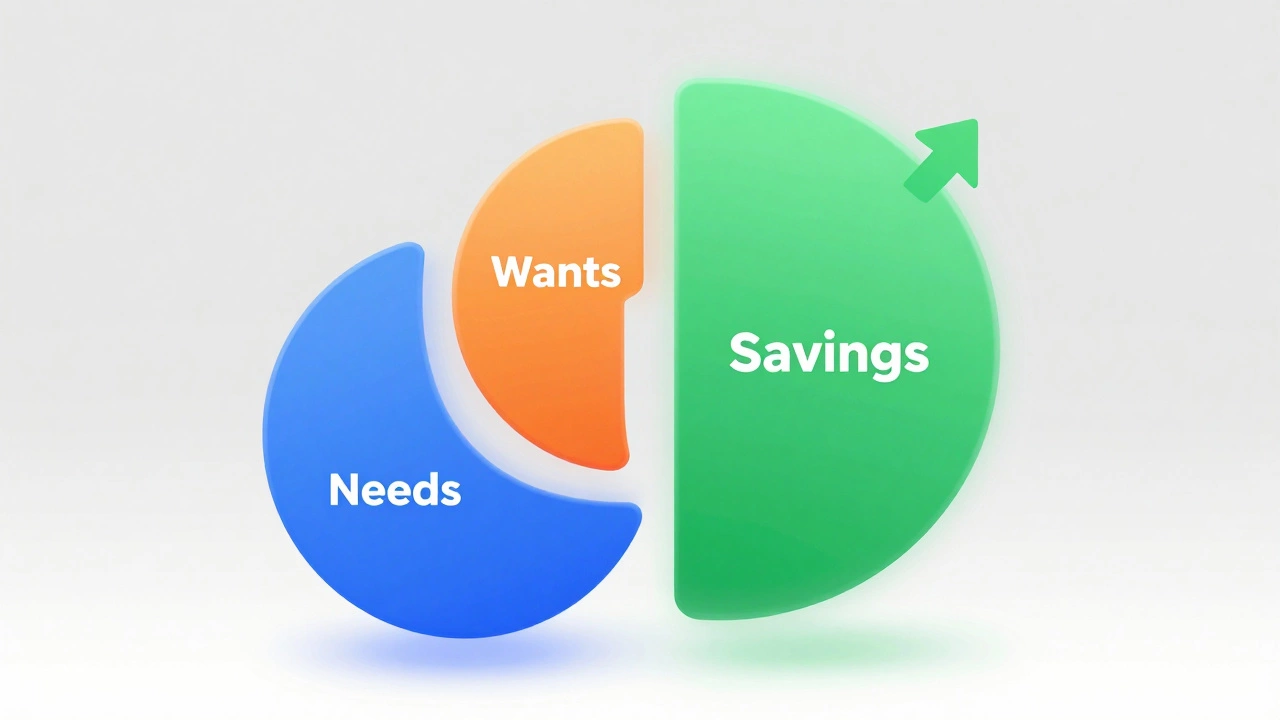
While "pay yourself first" is the philosophy, most people need numbers to make it work. The most popular framework that embodies the golden rule is the 50/30/20 Rule, developed by Senator Elizabeth Warren. This model divides your after-tax income into three buckets:
- 50% for Needs: Rent or mortgage, utilities, groceries, insurance, minimum debt payments. These are things you literally cannot live without.
- 30% for Wants: Dining out, hobbies, streaming services, travel, new clothes. These are things that make life enjoyable but aren’t essential.
- 20% for Savings and Debt Repayment: Emergency fund contributions, retirement accounts (like a Superannuation or IRA), and extra payments on high-interest debt.
This ratio provides flexibility. It doesn’t demand that you cut out all fun. In fact, it encourages you to enjoy 30% of your income guilt-free, as long as the other 70% is handled responsibly. For someone earning $5,000 a month after tax, this means $1,000 goes straight to savings and debt reduction before any other transaction occurs.
| Category | Percentage | Monthly Amount | Examples |
|---|---|---|---|
| Needs | 50% | $2,500 | Rent, electricity, basic groceries, car insurance |
| Wants | 30% | $1,500 | Dining out, Netflix, gym membership, vacations |
| Savings/Debt | 20% | $1,000 | Emergency fund, retirement contributions, extra loan payments |
Why Traditional Budgets Fail
Most people try to budget by tracking every cent they spend. They use apps, spreadsheets, or notebooks. At the end of the month, they compare their spending against their plan. If they overspent on dining, they promise to do better next month. This reactive approach has a major flaw: it relies on perfect behavior throughout the entire month.
Human beings are not machines. We get tired. We get stressed. We celebrate birthdays. When a budget requires constant vigilance, it becomes exhausting. The golden rule eliminates the need for daily monitoring. Because the savings portion is already gone, you only need to manage the remaining 80%. This reduces mental load significantly. You stop worrying about whether you’re saving enough because you know you already did.
Additionally, traditional budgets often lead to "budget fatigue." People stop tracking because they feel deprived. The golden rule prevents deprivation by allowing generous spending within the "wants" category. As long as the 20% is saved, the rest is yours to control.
Steps to Implement the Golden Rule Today
Adopting this rule doesn’t require a financial degree. It requires a few minutes of setup and a commitment to consistency. Here is how to start:
- Calculate Your After-Tax Income: Determine exactly how much money lands in your bank account each month. Use net income, not gross income.
- Determine Your 20%: Multiply your monthly net income by 0.20. This is your non-negotiable savings target.
- Set Up Automatic Transfers: Log into your banking app. Schedule an automatic transfer for the day you get paid. Move the 20% to a high-yield savings account or investment portfolio. Make this account separate from your checking account so you don’t see it daily.
- Adjust Your Lifestyle: Review your current spending. If you can’t afford to save 20% right now, reduce your "wants" category temporarily. Cut subscriptions, cook at home more, or pause discretionary spending until the habit forms.
- Monitor and Tweak: Check your balances once a month. Ensure your needs stay under 50% and wants under 30%. If your rent increases, you may need to reduce wants further. Life changes, and your percentages should adapt.

Common Pitfalls and How to Avoid Them
Even with a solid rule, mistakes happen. One common error is including irregular expenses in the wrong category. Car repairs, medical copays, or annual insurance premiums can blow up your budget if not planned for. To fix this, create a sinking fund. Treat these irregular costs as part of your "needs" or "wants" depending on the item, and save for them monthly alongside your 20%.
Another pitfall is inflating your "needs." Just because you *can* afford a large apartment or a luxury car doesn’t mean it fits in the 50% bucket. Be honest about what is truly necessary versus what is comfortable. If your housing costs exceed 30-40% of your income, you’ll struggle to save 20%. Consider downsizing or finding a roommate if this is the case.
Finally, don’t let debt hide your savings. If you have high-interest credit card debt, some experts suggest putting all extra money toward debt instead of saving. However, the golden rule advocates for a small emergency fund first-usually $1,000 to $2,000-to prevent using credit cards for emergencies. Once that mini-fund is built, split the 20% between debt repayment and long-term savings.
Adapting the Rule for Different Life Stages
The 50/30/20 rule is a guideline, not a law. It works well for young professionals starting their careers. But as life changes, so should your ratios.
If you are in a high-cost city like Sydney or London, your "needs" might naturally be higher. In these cases, aim for 60% needs, 20% wants, and 20% savings. It’s tighter, but still maintains the core principle of paying yourself first. Conversely, if you have no debt and a modest lifestyle, you might flip it to 40% needs, 20% wants, and 40% savings. This accelerates wealth building.
For families with children, "needs" often expand to include childcare, education, and larger homes. Don’t beat yourself up if you hit 60% needs. Focus on keeping the savings portion consistent, even if it’s smaller in absolute terms. Consistency beats perfection.
Is the golden rule of budgeting the same as the 50/30/20 rule?
Not exactly. The golden rule is the philosophy of "paying yourself first," meaning you save before you spend. The 50/30/20 rule is a specific mathematical framework that implements this philosophy by allocating percentages to needs, wants, and savings. You can follow the golden rule without using 50/30/20, but 50/30/20 makes the golden rule easier to execute.
What if I can’t afford to save 20% of my income?
Start where you can. If 20% is impossible, try 10% or even 5%. The goal is to build the habit of automating savings. Once you become accustomed to living without that money, increase the percentage gradually by 1-2% every few months until you reach 20%. Consistency is more important than the initial amount.
Should I pay off debt or save money first?
Prioritize high-interest debt (like credit cards) over long-term investing because the interest rates are usually higher than market returns. However, keep a small emergency fund (e.g., $1,000) in savings first to avoid adding to debt during unexpected events. Once high-interest debt is cleared, focus heavily on savings and investments.
Does the golden rule apply to variable income earners?
Yes, but it requires adjustment. Calculate your average monthly income based on the last 12 months. Use your lowest expected month as your baseline for "needs." During high-income months, allocate the surplus directly to savings or debt repayment. Automate transfers whenever possible, even if the amounts vary.
How do I handle irregular expenses like holidays or car repairs?
Create sinking funds. Identify irregular annual or semi-annual expenses, divide the total cost by 12, and set aside that amount monthly. Treat this as part of your "needs" or "wants" category depending on the expense. This ensures you have cash available when the bill arrives without disrupting your regular budget.