Bitcoin Wallet Security Assessment
Assess Your Bitcoin Security
Based on your Bitcoin holdings and usage patterns, this tool provides personalized recommendations to keep your Bitcoin safe.
Your Security Assessment
Buying Bitcoin is the easy part. The real question isn’t how to buy it-it’s what to do with it once you have it. Too many people buy Bitcoin, then forget about it. Or worse, they leave it on an exchange and lose it to a hack, a scam, or a simple mistake. If you’ve bought Bitcoin, you’ve taken the first step. Now you need to make sure it stays safe, grows in value, and actually works for you.
Don’t Leave It on the Exchange
Exchanges like Coinbase, Binance, or Kraken are great for buying Bitcoin. But they’re not designed to be long-term storage. Think of them like a public locker at the gym-you can store your stuff there temporarily, but you shouldn’t leave your wallet, phone, and passport inside overnight. The same goes for Bitcoin. Exchanges hold your private keys. That means they control your Bitcoin. If the exchange gets hacked, goes bankrupt, or freezes your account, you lose access. In 2022, FTX collapsed and over $8 billion in customer funds vanished. You don’t want to be one of those people.
Move your Bitcoin off the exchange within 24 hours of buying. It’s not complicated. Most exchanges let you send Bitcoin to an external wallet with just a few clicks. You’ll need the address of your own wallet. We’ll get to that next.
Choose a Wallet That Fits Your Needs
There are two main types of Bitcoin wallets: hot wallets and cold wallets. They’re not about temperature-they’re about internet access.
Hot wallets are apps or software that connect to the internet. Examples include Exodus, Trust Wallet, and BlueWallet. They’re easy to use, great for small amounts, and perfect if you plan to trade or spend Bitcoin often. You can send Bitcoin to a friend, pay for coffee at a cafe that accepts it, or swap it for other crypto-all from your phone. But because they’re online, they’re more vulnerable to malware or phishing attacks.
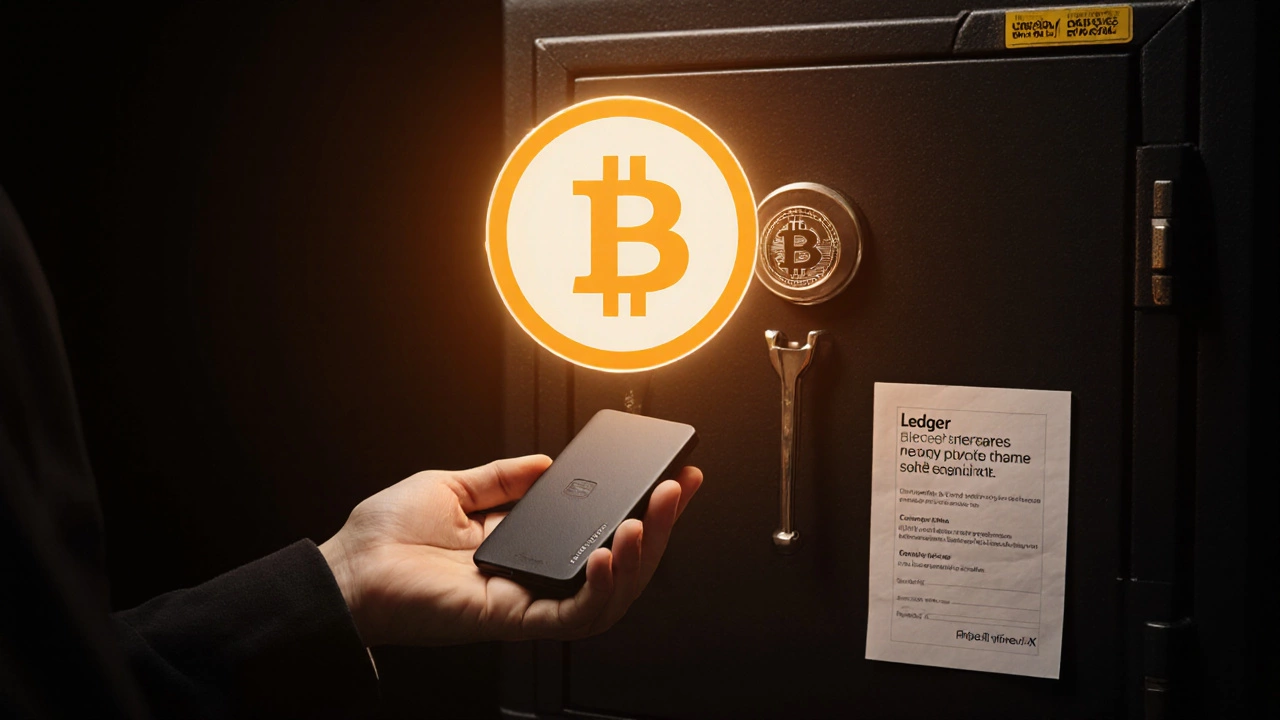
Cold wallets are offline. The most common are hardware wallets like Ledger Nano X or Trezor Model T. These are physical devices, about the size of a USB stick, that store your private keys without ever connecting to the internet. They’re the gold standard for security. If you’re holding more than $1,000 worth of Bitcoin, a hardware wallet is non-negotiable. Even if your computer gets infected with a virus, your Bitcoin stays safe.
For most people, the right move is a mix: keep a small amount (say, $200-$500) in a hot wallet for spending or trading, and store the rest in a cold wallet. It’s like keeping cash in your wallet for daily use and the rest in a safe at home.
Write Down Your Recovery Phrase-And Keep It Safe
When you set up a new wallet, you’ll be given a recovery phrase. It’s usually 12, 18, or 24 words. This phrase is your backup. If you lose your phone, your hardware wallet breaks, or you forget your password, this phrase lets you restore your Bitcoin on any new device.
Here’s what not to do: don’t take a photo of it. Don’t store it in a note on your phone. Don’t email it to yourself. Don’t type it into a cloud document. Hackers can access your phone, your email, your cloud storage. If your recovery phrase is stored digitally, it’s not safe.
Do this instead: write it down on paper. Use a pen, not a pencil. Store it in a fireproof safe, or a secure drawer you never open unless you need it. Some people even etch it onto metal plates-these won’t burn, rust, or fade. I know someone in Sydney who keeps his recovery phrase in a sealed envelope inside a safety deposit box at his bank. He checks it once a year. That’s the level of care Bitcoin demands.

Don’t Try to Time the Market
One of the biggest mistakes new Bitcoin holders make is watching the price every hour. They buy at $60,000, see it drop to $55,000, and panic-sell. Or they wait for it to hit $100,000 before doing anything. That’s not investing-that’s gambling with your emotions.
Bitcoin has always been volatile. In 2021, it jumped from $30,000 to $69,000 in six months, then fell to $30,000 again by the end of the year. In 2023, it went from $20,000 to $73,000. If you’d sold every time it dropped 10%, you’d have missed every major gain.
Instead, think long-term. If you believe Bitcoin has value as digital money, hold it. Don’t try to predict the next spike. Set a reminder to check your portfolio once a quarter. Focus on the trend over years, not the noise over days.
Use Bitcoin, Don’t Just Hoard It
Bitcoin isn’t just a store of value-it’s a payment network. You can use it to buy things. In Australia, more than 2,000 businesses now accept Bitcoin directly, from plumbing services in Melbourne to online retailers in Brisbane. Apps like BitPay and Strike let you spend Bitcoin at Amazon, Uber, and even your local grocery store by converting it to AUD instantly.
Some people use Bitcoin to send money overseas. Sending $1,000 to the Philippines via traditional banks can cost $50 and take 3-5 days. With Bitcoin, it costs under $1 and arrives in minutes. If you have family overseas, this is a real advantage.
Don’t feel like you need to wait until Bitcoin hits $100,000 to use it. Use it now. It’s not about timing-it’s about building habits. Paying for your lunch with Bitcoin isn’t a stunt. It’s proof you’re part of a new financial system.
Learn About Tax Rules in Australia
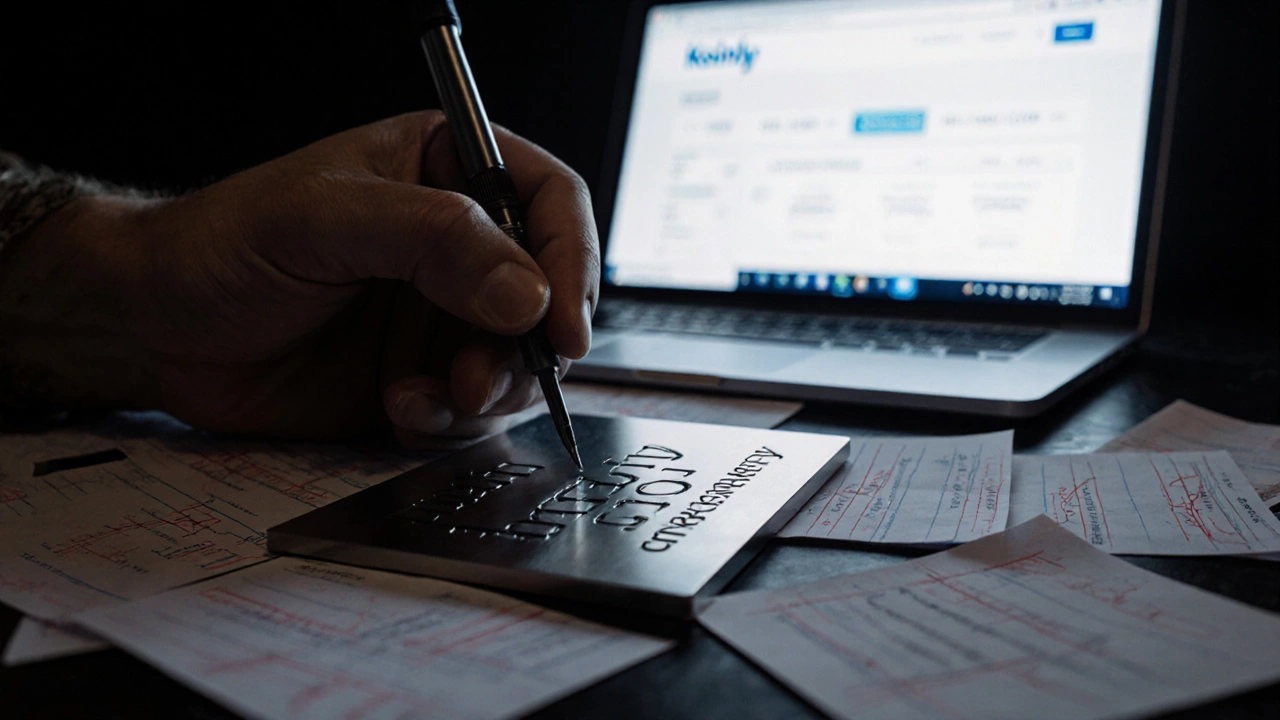
Bitcoin isn’t tax-free. The ATO treats it as property. Every time you sell Bitcoin, trade it for another crypto, or use it to buy goods, you may owe capital gains tax. If you bought Bitcoin for $30,000 and sold it for $50,000, you made a $20,000 profit. That’s taxable.
Keep a record of every transaction: what you bought, when, how much you paid, and what you did with it later. Use tools like Koinly or CoinTracker-they auto-import your exchange history and calculate your tax liability. Don’t wait until April to sort it out. Set up a simple spreadsheet now. You’ll thank yourself later.
Protect Yourself From Scams
Bitcoin scams are everywhere. You’ll get DMs on Instagram saying, “Send 0.1 BTC and I’ll send back 0.2.” You’ll get fake wallet apps that look like Trust Wallet but steal your keys. You’ll get phishing emails pretending to be from Ledger.
Here’s the rule: no one ever asks you to send Bitcoin to unlock something, get a refund, or claim a bonus. If someone says that, it’s a scam. Always double-check wallet addresses. Copy-paste carefully. Even one wrong character can send your Bitcoin to a thief.
Never click links in unsolicited messages. If you’re unsure, go directly to the official website of the wallet or exchange-not through a link someone sent you.
Keep Learning
Bitcoin isn’t static. New tools, upgrades, and ideas come out all the time. The Lightning Network lets you send Bitcoin instantly for pennies. Taproot improved privacy and lowered fees. Bitcoin ETFs are now approved in the U.S. and could come to Australia soon.
Follow one reliable source-like Bitcoin Magazine, or the official Bitcoin.org blog. Subscribe to a newsletter that explains updates in plain language. Don’t get sucked into Twitter threads or YouTube influencers promising 10x returns. Real knowledge comes from reading, not hype.
What you do with Bitcoin after buying it defines whether it becomes a life-changing asset-or a regret. Store it safely. Use it wisely. Track your taxes. Avoid scams. Keep learning. That’s it. No magic. No secrets. Just discipline.
Can I just leave my Bitcoin on the exchange I bought it from?
No. Exchanges are not secure long-term storage. They’re trading platforms. If the exchange gets hacked, shuts down, or freezes your account, you could lose your Bitcoin. Always move it to a wallet you control within 24 hours of buying.
What’s the safest way to store Bitcoin?
The safest way is a hardware wallet like Ledger or Trezor. These devices store your private keys offline, making them immune to online hacks. For small amounts you use regularly, a trusted mobile wallet like BlueWallet is fine. But anything over $1,000 should be in cold storage.
Do I have to pay tax on Bitcoin in Australia?
Yes. The ATO treats Bitcoin as property. You owe capital gains tax when you sell, trade, or spend it for a profit. Keep records of every transaction-buy price, sell price, date, and purpose. Use tax tools like Koinly to simplify reporting.
Can I use Bitcoin to pay for everyday things in Australia?
Yes. Over 2,000 Australian businesses accept Bitcoin directly. Apps like BitPay and Strike let you pay at supermarkets, cafes, and online stores by converting Bitcoin to AUD at checkout. It’s fast, cheap, and growing.
What should I do if I lose my recovery phrase?
If you lose your recovery phrase and don’t have a backup, you lose access to your Bitcoin forever. There is no reset button, no customer service that can recover it. That’s why writing it down on paper and storing it securely is non-negotiable. If you’re unsure, buy a metal backup plate and engrave it.